
Anonymised Case Study: Laminate Peaking After Kitchen Leak
An anonymised case study: laminate peaking after a kitchen leak shows how slow water ingress can cause widespread damage. Learn what an inspector looks for.
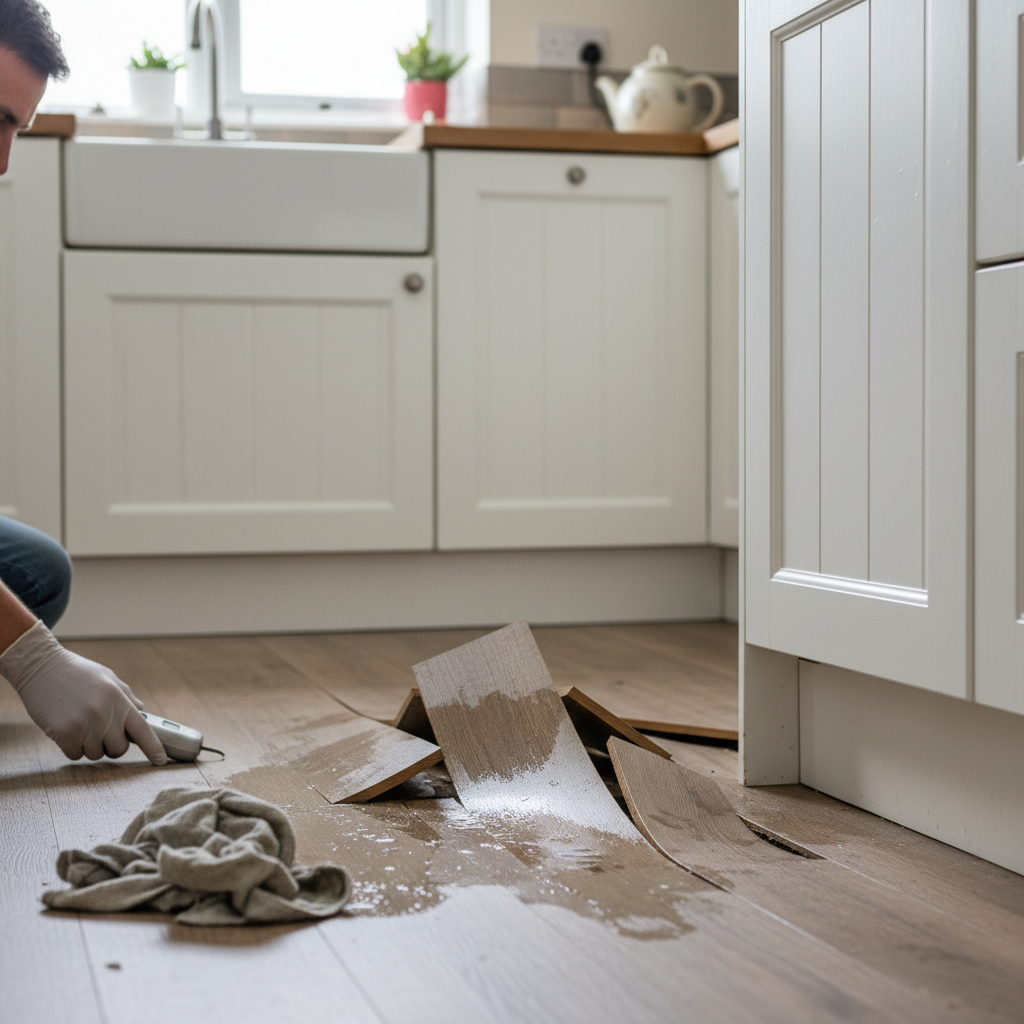
It often starts with something small. A homeowner might notice that one or two laminate boards next to the kitchen sink feel slightly raised underfoot. At first, it is easy to dismiss. But over weeks, the issue spreads. The joints between the boards begin to lift and form distinct ridges, a behaviour we call 'peaking' or 'tenting'. This is the starting point for this particular anonymised case study: laminate peaking after a kitchen leak, a common issue I am called out to inspect.
I recently attended a property where this exact scenario had unfolded. The laminate floor, which was less than two years old, had started to peak along a run of kitchen cabinets. The homeowner was concerned, and the original installer was suggesting the problem was a lack of expansion gap. My job was to determine the true cause of the failure.
What are the initial signs of a leak?
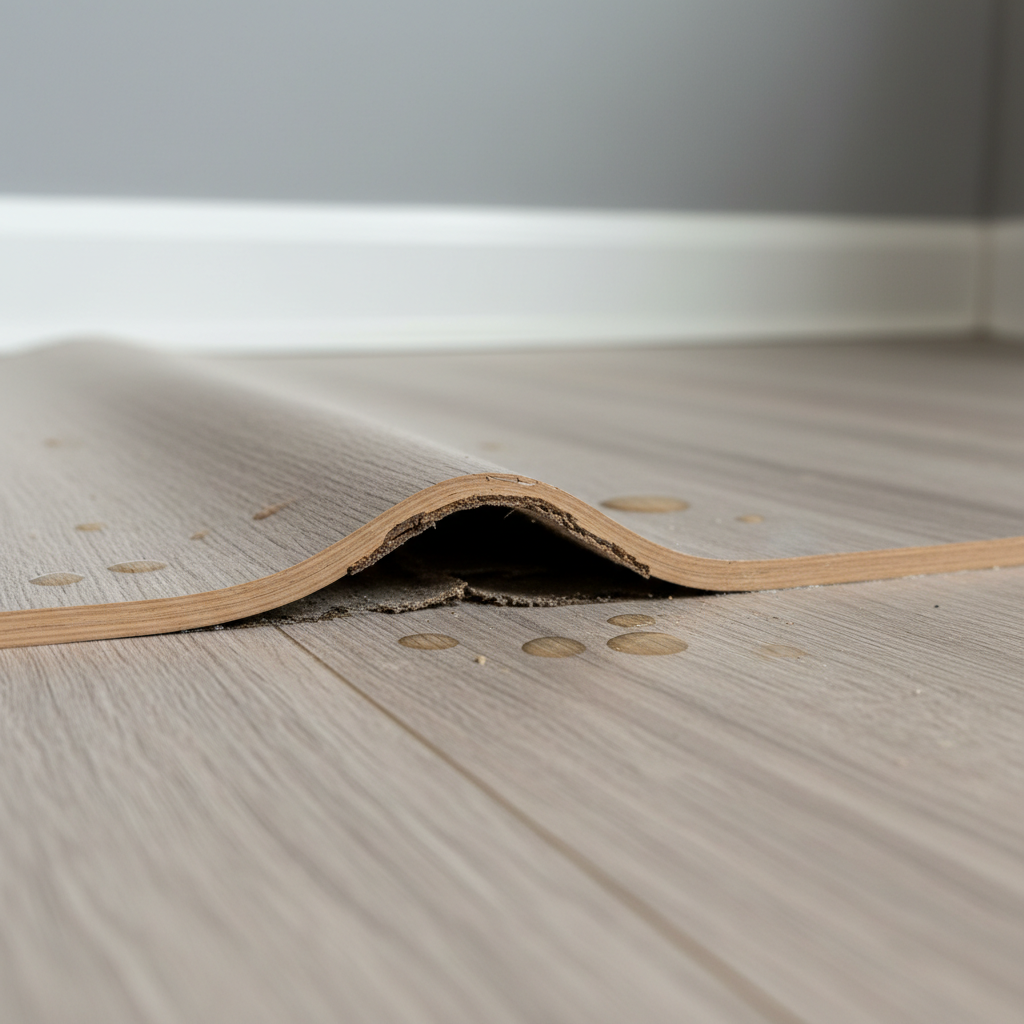
The most obvious sign is, of course, the peaking of the board joints. When the wood-based core of a laminate plank absorbs moisture, it swells. As it is constrained by the neighbouring planks, the only way it can expand is upwards, causing the joints to lift. However, this is often the final symptom, not the first.
Earlier signs can be more subtle. You might see slight discolouration or darkening along the edges of the planks. The floor may feel 'spongy' or soft when walked upon, indicating moisture in the underlay or the board itself. In some cases, a faint, musty odour can develop, which is a sign of dampness and potential mould growth beneath the floor covering. The difficulty with slow leaks from pipework or appliances hidden behind plinths is that these early signs are often concealed from view until the damage becomes more widespread.
My inspection process for laminate peaking after a kitchen leak
When I am on site for a job like this, my approach is methodical. The goal is to gather clear evidence that points to a conclusive cause.
First, a thorough visual inspection is conducted. I document the location and severity of the peaking with photographs, noting its relationship to nearby water sources like sinks, dishwashers, or washing machines. I also assess the general condition of the floor and the perimeter expansion gaps. In this case, the gaps around the room were found to be adequate and within accepted tolerances, suggesting that installation was not the primary issue.
Next, I use moisture detection equipment. A non-invasive, pinless moisture metre allows me to scan the entire floor surface quickly, building a 'map' of moisture content. This is followed by using a pin-type metre for more precise readings. To do this, I will typically take a control reading from an unaffected area, such as a hallway, to establish a baseline 'dry' reading for the material. I then take readings across the affected area. Unsurprisingly, the readings were significantly elevated in the kitchen, with the highest concentration found directly in front of the sink unit.
With the homeowner's permission, I then removed the kitchen plinth. The concrete sub-floor beneath was visibly damp, and the underside of the laminate planks showed clear signs of water damage and the start of mould growth. This provided indisputable evidence of a water source beneath the floor in that specific location.
What an insurer wants from an independent report
A key part of my role is producing a report that is useful not just for the homeowner, but also for third parties like insurers, retailers, or the party potentially responsible for the leak. They are not interested in opinion without evidence.
They need to see a clear, logical progression from evidence to conclusion. My report for this anonymised case study of laminate peaking after a kitchen leak included:
- Factual Data: Dated photographs of the damage, the moisture metre, and its readings in different locations. The report listed the specific moisture readings for the dry control area versus the wettest point.
- Causation: I demonstrated how the moisture 'map' clearly radiated from the area under the sink. The highest readings and worst physical damage were at the source, with levels decreasing further away. This establishes a clear link between the point of failure and the water source.
- Exclusion of Alternatives: The report confirmed that the perimeter expansion gaps were sufficient, in line with guidance found in British Standards such as BS 8201. It also confirmed no signs of a manufacturing defect were present. By systematically ruling out other potential causes, the report could state with a high degree of confidence that the damage was a direct result of a localised water leak.
The report concluded that a slow leak from the sink's waste pipe had saturated the sub-floor and underlay, causing the laminate's core to swell and peak. The scope of the damage was defined, recommending that the entire open-plan kitchen and dining area floor would require replacement, as the water had migrated significantly under the surface.
In my professional opinion, this level of detail is necessary to move a claim forward. It removes ambiguity and prevents the issue from descending into a dispute between homeowner, installer, and insurer. The evidence-based findings supported the homeowner's position and enabled them to seek recovery for the cost of a replacement floor from the party responsible for the plumbing fault.
When to call an independent inspector
If you are facing a flooring issue and the cause is disputed, an independent report can provide the clarity you need. As a certified inspector, I provide impartial, evidence-based assessments of failed flooring installations across the whole of the UK. My reports are recognised by retailers and dispute resolution bodies, including the Furniture and Home Improvement Ombudsman.
Depending on the complexity of your case, I offer a range of inspection levels to suit your needs. You can find out more about what is included in our our packages. If you would like to discuss your specific situation and how I might be able to help, please do not hesitate to contact us.
Have a flooring problem of your own?
We are independent UK flooring inspectors. Tell us about your case and we will recommend the right inspection package, with a fixed fee in writing before any work begins.