
Anonymised Case Study: Engineered Wood Failure & Wet Sub-floor
An anonymised case study: engineered wood failure traced to a wet sub-floor. This post details a common issue and what homeowners can check themselves.
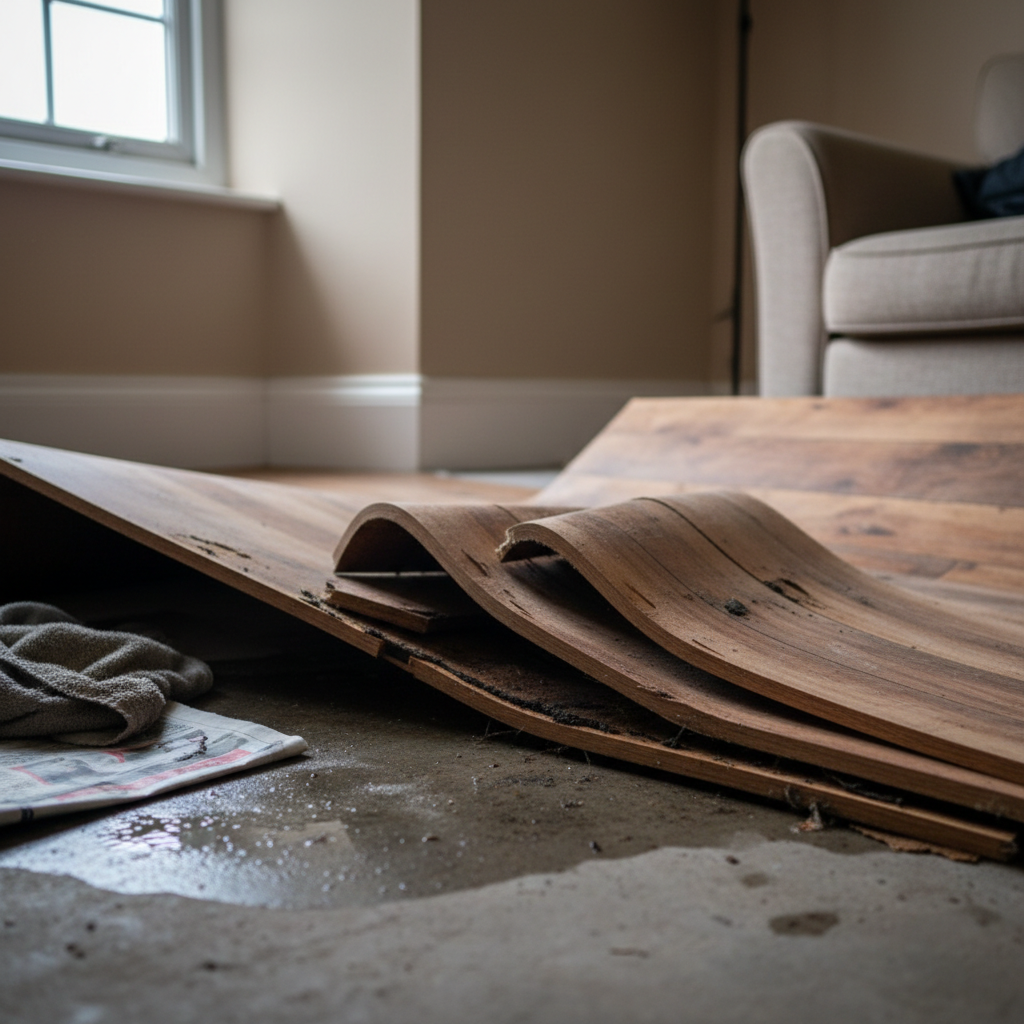
A few months after a beautiful new engineered wood floor is fitted, the boards start to lift at the edges. They look 'cupped', or concave. This is a call I receive quite often, and it is almost always a sign that the wood is taking on moisture from below. This situation frequently forms the basis of an anonymised case study: engineered wood failure traced to wet sub-floor, which is one of the most common findings in my work across the UK.
When the homeowner contacts their retailer or installer, the conversation can quickly become deadlocked. The installer might suggest a product fault, while the manufacturer may point towards a site issue. This is where an independent inspection becomes necessary to establish the facts.
What causes an engineered wood floor to 'cup'?
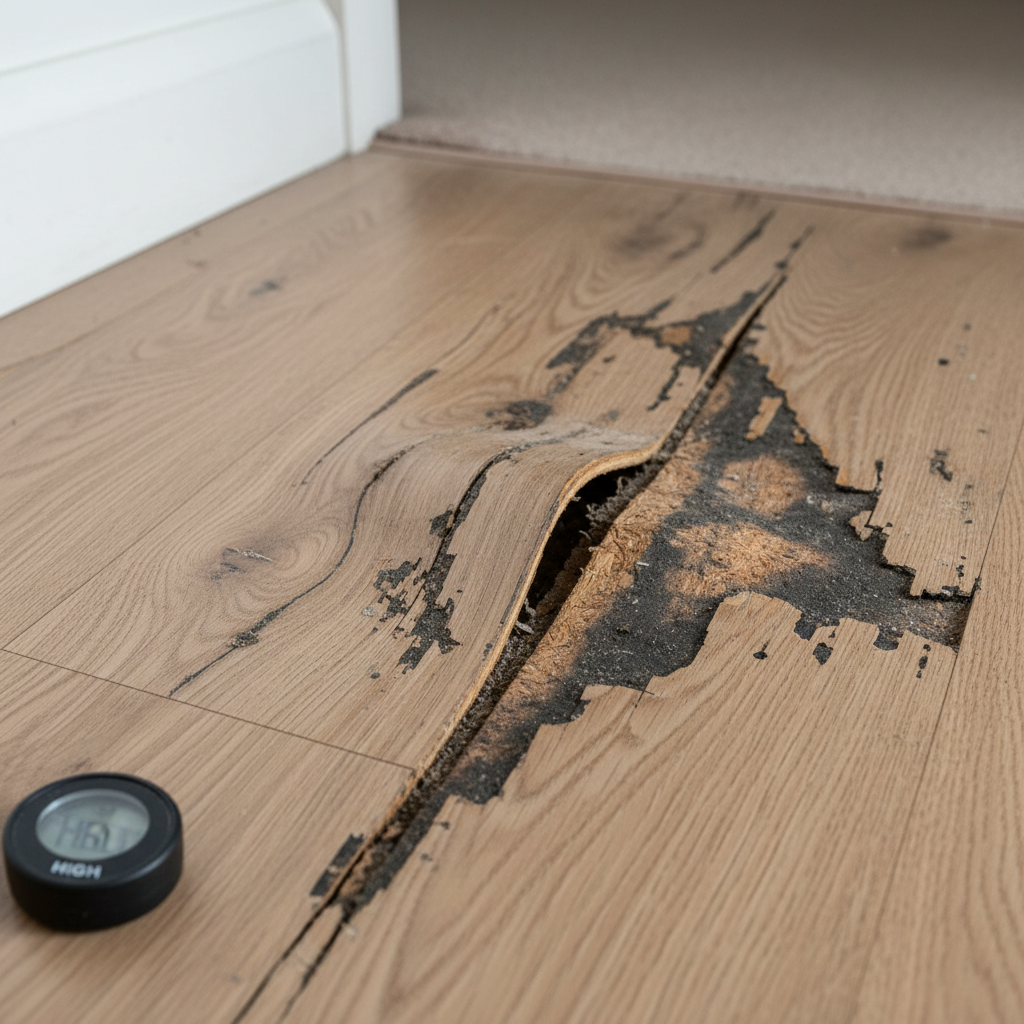
Unlike a simple spill on the surface, cupping is nearly always caused by a moisture imbalance through the thickness of the board. Wood is a natural, hygroscopic material, which means it absorbs and releases moisture from its environment. Engineered wood is more stable than solid wood, but it is not immune to this behaviour.
When the underside of the board is exposed to more moisture than the top surface, the wood fibres on the bottom expand. The finished, sealed top surface remains relatively stable. This differential causes the edges of the board to be pushed upwards, creating a concave or 'cupped' shape. The source of this moisture is, in the majority of cases I attend, the sub-floor it has been laid on.
Checks a homeowner can make before calling an inspector
Before engaging an inspector, there are a few observations a homeowner can make. These will not provide a definitive answer, but they can give a clearer picture of the situation.
- Look at the perimeter: Check the expansion gap between the flooring and the skirting boards or walls. A professional installer should leave a gap, typically covered by the skirting or a bead, to allow the floor to expand and contract naturally. If the floor has expanded so much that it is tight against the wall, this indicates significant moisture-related expansion.
- Observe the pattern: Is the cupping uniform across the entire room, or is it localised? Localised issues might point to a specific source, such as a slow leak from a radiator pipe or a damp spot near an external door. Widespread, even cupping often suggests a more general sub-floor problem.
- Check for other signs of damp: Look for any other evidence of dampness in the property. This could include peeling paint or tidemarks on the lower sections of walls, a musty smell, or visible mould growth behind furniture. These can be related issues.
These checks help to build a picture of the problem. However, the critical evidence lies in moisture measurements, which require calibrated, professional equipment.
Anonymised case study: engineered wood failure traced to wet sub-floor
I was recently called to a property where the owners had a new engineered oak floor fitted throughout the ground floor, which was a new-build extension. After approximately four months, they noticed pronounced cupping across the entire area. The installer stated the product must be defective. The manufacturer, when consulted, stated the issue was likely environmental.
At the time of inspection, my visual assessment confirmed the widespread and uniform nature of the cupping. My first action was to check the expansion gaps, which I found to be non-existent in several areas. The floor had expanded to the point of compression against the walls.
Using a calibrated, non-invasive moisture metre, I took readings from the surface of the engineered wood. These were elevated, confirming the boards were holding excess moisture. The crucial step, however, was to assess the concrete sub-floor. With the homeowner’s permission, a board was carefully lifted in a discreet area. Using a specialist concrete moisture metre, I tested the screed. The readings were significantly higher than the maximum level specified in British Standard BS 8203, which provides the code of practice for the installation of resilient floor coverings. A competent installer is expected to test the sub-floor for moisture and ensure it is sufficiently dry before commencing installation. No evidence was provided that such tests had been conducted.
In my professional opinion, based on the findings, the failure was not due to a fault with the engineered wood product. The evidence indicated that the floor was installed onto a concrete sub-floor that had not been allowed to dry adequately. This is a common finding in an anonymised case study: engineered wood failure traced to wet sub-floor.
The importance of sub-floor preparation
This case highlights why sub-floor preparation is the most important stage of any flooring installation. A new concrete or sand and cement screed contains a large volume of water from the mixing process. This water must be allowed to evaporate. A common rule of thumb is that a screed dries at a rate of 1mm per day for the first 40mm of thickness, but this can be slowed considerably by poor weather, low temperatures, or inadequate ventilation on site.
Before laying wood flooring, the installer has a duty of care to check that the sub-floor's relative humidity is within the acceptable limits set out in British Standards. If it is too high, they must not proceed. They should either wait for it to dry naturally or apply a suitable liquid damp-proof membrane (DPM) to isolate the wood flooring from the residual moisture. Skipping this step is the primary cause of flooring failures of this type.
When to call an independent inspector
If you find yourself in a dispute over a flooring installation and cannot reach a resolution with the retailer or fitter, an independent report can provide impartial, evidence-based clarity. The purpose of the report is not to assign blame, but to investigate the cause of the issue based on physical evidence and recognised industry standards.
I provide independent flooring inspections across the United Kingdom and am a registered and trusted expert for the Furniture and Home Improvement Ombudsman. For more information on the inspection process, you can view my different inspection packages, or please get in touch via the contact page to discuss your specific situation.
Have a flooring problem of your own?
We are independent UK flooring inspectors. Tell us about your case and we will recommend the right inspection package, with a fixed fee in writing before any work begins.