
Cracked Tiles and Hollow-Sounding Floors: An Inspector's View
Dealing with cracked tiles and hollow-sounding floors? An expert flooring inspector explains the common causes, from poor adhesive coverage and sub-floor issues to missing movement joints.
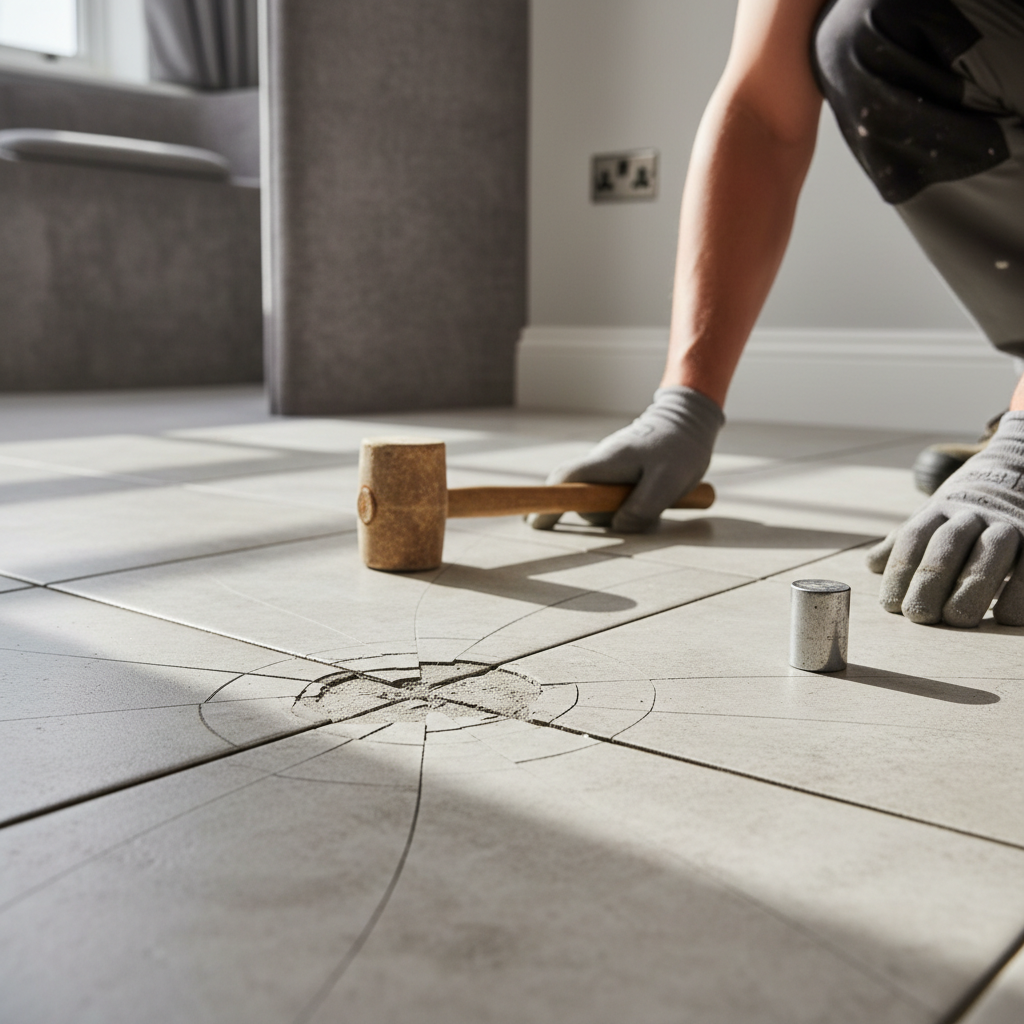
It is a common call out. A homeowner notices a single hairline crack in a kitchen floor tile. A few months later, another appears. At the same time, they begin to notice a distinct, hollow tap when walking across certain areas in shoes, a sound that was not there before. The appearance of cracked tiles and hollow-sounding floors is one of the most frequent complaints I investigate as an inspector. Based on the findings from hundreds of site visits, the causes are often related to a few key aspects of the installation process.
In my professional opinion, these issues rarely resolve themselves. The underlying stresses that cause one tile to fail will likely affect others over time. Understanding the potential causes is the first step towards getting a resolution.
The problem with poor adhesive coverage
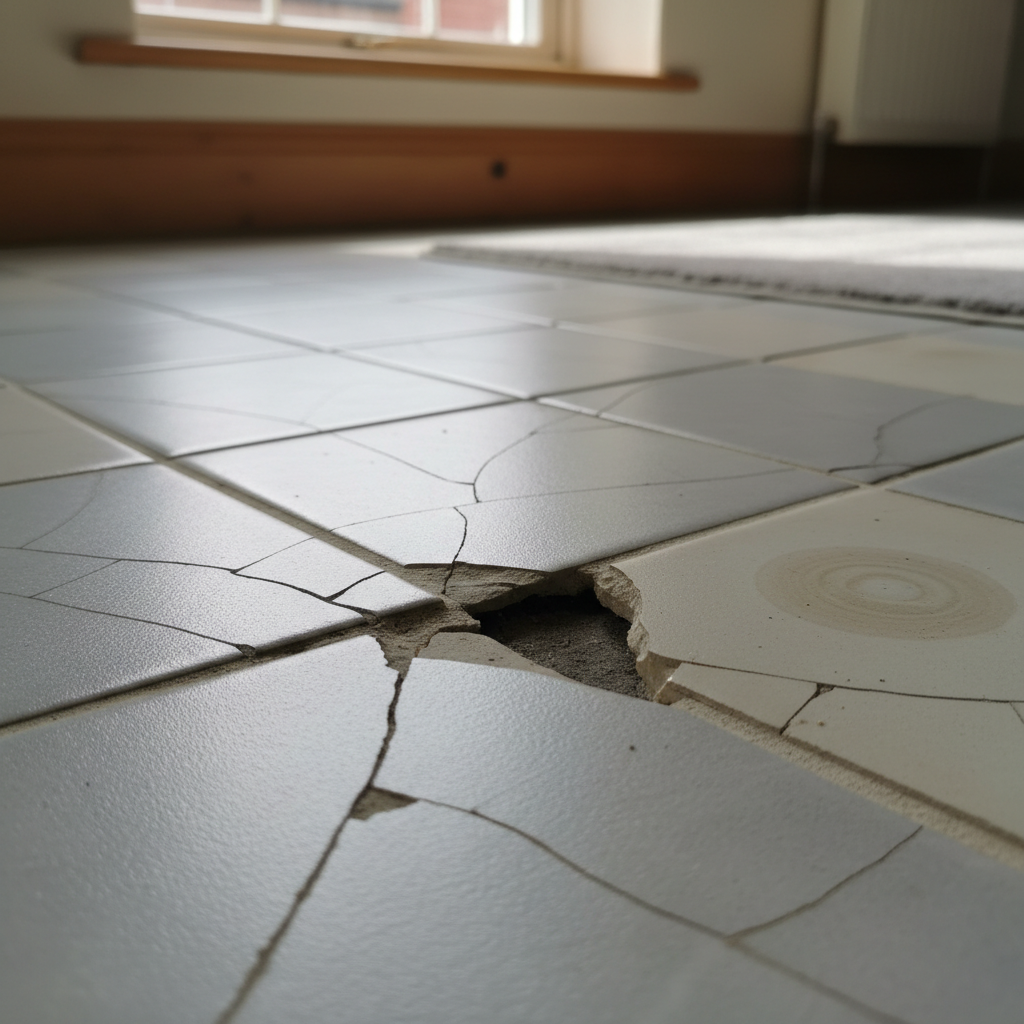
When I am on site, one of the first things I do is listen to the floor. By systematically tapping the surface of each tile with a solid object, I can build a picture of what is happening underneath. A sharp, solid sound suggests the tile is well-bonded. A lower-pitched, hollow, or drum-like sound suggests a void is present between the tile and the sub-floor.
This is often due to the method used to apply the adhesive. The British Standard for tiling, BS 5385, provides clear guidance that tiles should be fixed on a solid bed of adhesive. This means the adhesive is spread on the sub-floor with a notched trowel, and the tile is pressed firmly into it. This action spreads the adhesive ribs, creating near-total contact.
Sometimes, an installer may use a method known as 'dot and dab', where spots of adhesive are placed on the back of the tile. This is not a recognised fixing method for floors. It creates significant voids, leaving the centre and corners of the tile completely unsupported. Any impact, or even concentrated weight from a stool leg, can cause an unsupported tile to crack. No evidence was identified in the standards to support this fixing method for floor tiling.
Sub-floor movement and deflection
Ceramic and porcelain tiles are rigid and brittle. They have very little tolerance for movement in the surface they are fixed to. If the sub-floor beneath them flexes or 'bounces', that movement will transfer stress directly into the tile and the grout lines, often resulting in failure.
On timber-suspended floors, for example, floorboards or chipboard must be rigid and stable. It is common practice to overboard the timber with a suitable tile backer board or a thick, exterior-grade plywood to add stiffness and provide a stable surface. If this stage is omitted, or if the original sub-floor is not adequately secured, deflection under normal foot traffic can be enough to cause tiles to crack or work loose from the adhesive bed over time.
On a concrete or screed sub-floor, the issues can be different. A new screed must be sufficiently dry before tiling commences, a process that can take many months. Tiling onto a wet screed can cause the adhesive to fail or can trap moisture, leading to other problems. Anhydrite (calcium sulphate) screeds in particular have specific preparation requirements which, if not followed, will almost certainly lead to de-bonding of the tiles.
Investigating cracked tiles and hollow-sounding floors
Movement is a fact in all buildings. Materials expand and contract with changes in temperature and humidity. The structure itself settles. To accommodate this, floor tiling installations require movement joints, sometimes called expansion joints.
These are gaps in the tiled area, filled with a flexible material like silicone sealant, not rigid grout. BS 5385 recommends their inclusion at the perimeter of all rooms (where the floor meets the wall), over any structural movement joints in the sub-floor, and across large uninterrupted floor areas. The standard provides guidance on the frequency, typically at intervals of a certain number of metres in each direction.
When these joints are omitted, the tiled floor behaves like a single, giant tile. As it expands, it has nowhere to go. The resulting compressive stress can cause tiles to lose their bond and lift, creating hollow spots. In more extreme cases, the floor can 'tent', with tiles visibly pushing up along a line. This is often misinterpreted as a sub-floor issue, but at the time of inspection, it is frequently found to be a lack of appropriate movement joints.
During an inspection, I check all perimeters for the presence of a flexible joint. It is a common finding that tiles have been grouted directly to skirting boards or kitchen plinths, effectively preventing any movement and creating the potential for future failure.
When to call an independent inspector
If you are in a dispute with your retailer or installer about a failed tiled floor and are not making progress, an independent inspection report can provide the clarity you need. My reports are based on physical evidence gathered on site, photographic documentation, and comparison against the relevant British Standards and the manufacturers' instructions. The report provides a clear, unbiased, and expert opinion on the likely cause of the failure.
I provide inspection services across the entire United Kingdom. As a recognised expert, my reports are trusted by retailers, manufacturers, and the Furniture and Home Improvement Ombudsman to help resolve disputes. For more information on the process, please see our packages or contact me to discuss your specific situation.
Have a flooring problem of your own?
We are independent UK flooring inspectors. Tell us about your case and we will recommend the right inspection package, with a fixed fee in writing before any work begins.