
Gapping in Solid Hardwood Floors During Winter: An Inspector's View
Why do gaps appear in your solid wood floor in winter? An independent inspector explains seasonal movement and what you can check yourself.
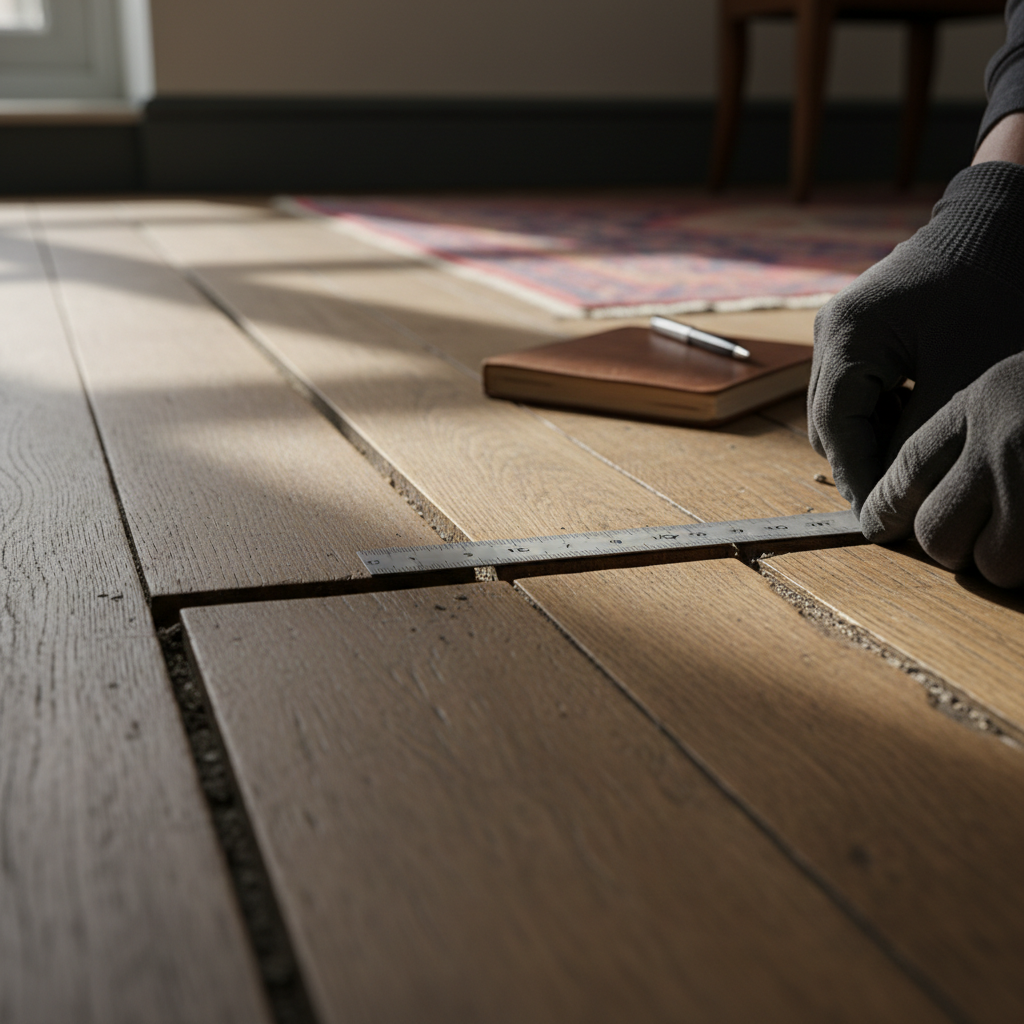
It is a common call out for me in the colder months. A homeowner invests in a beautiful solid wood floor, only to see thin gaps appearing between the boards as soon as the central heating is switched on. Understandably, this causes concern. The question I am often asked is whether this is normal behaviour for a natural product, or a sign of a fault with the product or its installation.
The appearance of some gapping in solid hardwood floors during winter is often a normal, expected process. Wood is a natural, hygroscopic material. This means it absorbs and releases moisture from the air around it. When your heating comes on, the relative humidity inside your home drops. The timber floor then releases some of its own moisture to find equilibrium with the drier air, and as it does so, it shrinks. The result is small, uniform gaps between the planks. When summer arrives and the heating is off, the ambient humidity rises, the wood reabsorbs moisture, and these gaps should close up again.
Is the Gapping on My Floor Normal?
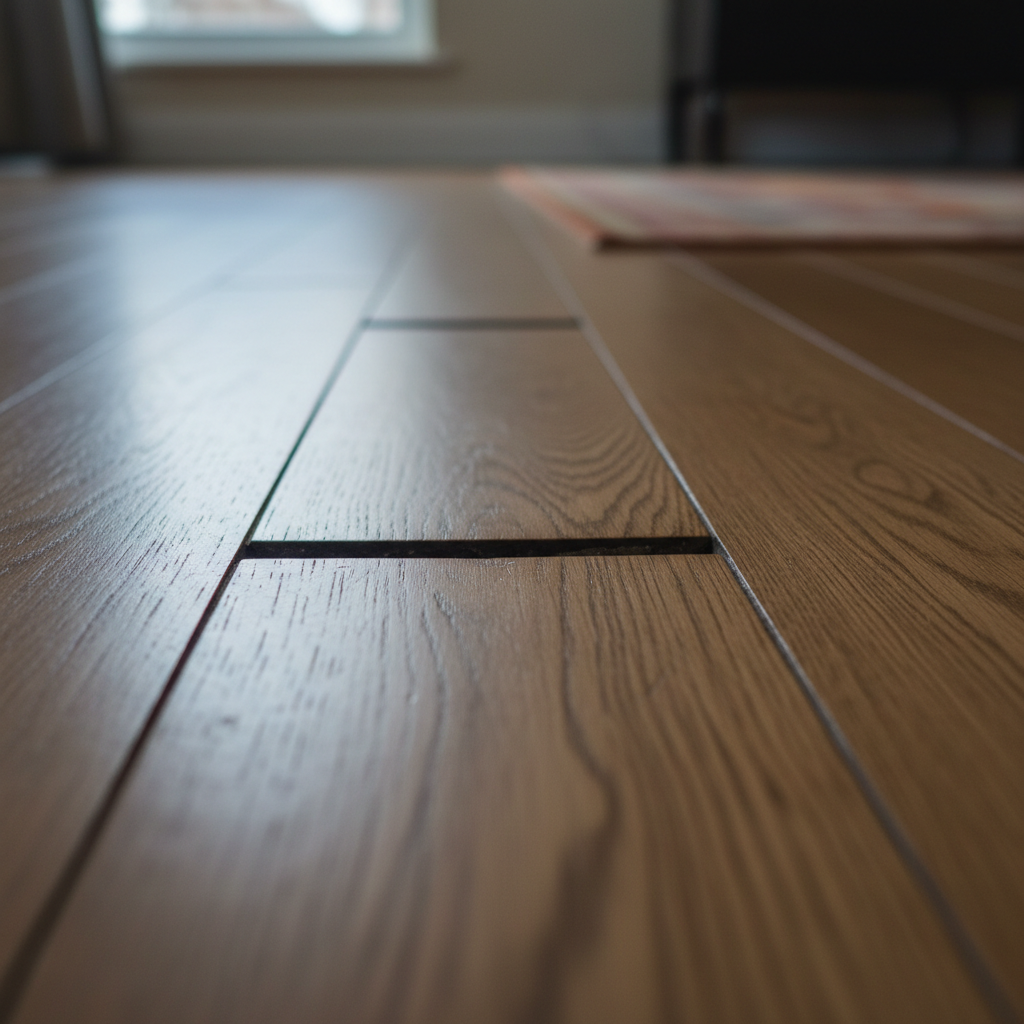
Before calling an inspector, there are a few observations you can make yourself. First, look at the nature of the gaps. Are they reasonably consistent across the entire floor? Small, even gaps, perhaps the thickness of a credit card or a business card, often suggest normal seasonal movement. They may be more noticeable on wider planks than on narrower strips. In my experience, this type of uniform, minor gapping is usually not indicative of a fault.
However, if the gaps are very wide in certain areas, or if you can see them from a standing position, it may warrant a closer look. As a rough guide on site, I sometimes use a coin. If you can easily slide the edge of a ten pence piece into a gap, it may be wider than what would typically be considered normal seasonal shrinkage. Another check is to look at the ends of the boards. Gaps appearing at the butt ends of planks, rather than along their length, can sometimes indicate an installation issue rather than simple shrinkage.
Checking the Perimeter Expansion Gap
One of the most fundamental requirements for a solid wood floor installation is the provision of an adequate expansion gap around the perimeter of the room. This gap is essential. It allows the entire floor 'raft' to expand into this space during the summer months when humidity is higher. Without it, the expanding boards would have nowhere to go, leading to problems like cupping or crowning as the pressure builds.
The installer should leave a gap between the edge of the floor and any fixed object, including walls, door frames, and radiator pipes. This gap is then typically concealed by the skirting board or by a colour-matched beading (sometimes called a scotia trim). You may be able to check for this yourself by looking carefully at the floor's edge. While a missing expansion gap is more likely to cause issues in summer, its absence can be an indicator of an installer who may not have followed other critical installation procedures, which could contribute to problems presenting in winter.
When is Gapping in Solid Hardwood Floors During Winter a Defect?
Distinguishing between normal movement and a defect is the core of the inspection. Based on my findings on site, excessive gapping in solid hardwood floors during winter often points to a problem with moisture, either before, during, or after installation. For example:
- Acclimatisation: Solid wood flooring must be acclimatised on site before installation. The packs should be opened in the room where they will be laid for a period of time specified by the manufacturer. This allows the moisture content of the wood to match the normal living conditions of the home. If this step is rushed or skipped, the wood may have a high moisture content when installed. The subsequent drying and shrinkage once the heating is on will then be excessive.
- Subfloor Moisture: The subfloor, whether concrete or wood, must be sufficiently dry before the flooring is laid over it. British Standards provide clear guidance on this. If a wooden floor is laid over a damp subfloor, it will absorb that moisture, swell, and then shrink excessively as it dries out over time.
- Localised Heat Sources: You may notice wider gaps near a specific heat source, such as a radiator, a fireplace, or directly over underfloor heating pipes. This indicates that the wood in this area is becoming much drier than the rest of the floor, causing localised shrinkage.
When I am called out to a job like this, I will use professional equipment to gather evidence. This involves using a calibrated moisture metre to measure the moisture content of the flooring and the subfloor. I will also use a thermo-hygrometer to measure the temperature and relative humidity in the room, which are critical factors. By comparing these readings to the manufacturer's installation instructions and relevant British Standards, it is possible to build a factual picture of why the gapping has occurred.
In many cases, the issue is simply seasonal movement and the floor is behaving as expected for a natural material. In other cases, the evidence points towards an installation or site-related issue. An independent report provides the clarity needed to understand the cause and determine the correct course of action.
When to call an independent inspector
If you have performed some basic checks and remain concerned about the gaps in your floor, or if you find yourself in a dispute with your supplier or installer, an independent inspection report provides an unbiased, evidence-based assessment. This can often be the key to resolving the situation fairly for all parties.
I am a fully independent inspector covering the whole of the UK and am a trusted inspector for the Furniture and Home Improvement Ombudsman. I offer a range of inspection levels to suit your needs and budget. For more information, please view our packages or contact us to discuss your specific issue.
Have a flooring problem of your own?
We are independent UK flooring inspectors. Tell us about your case and we will recommend the right inspection package, with a fixed fee in writing before any work begins.