
Peaking and Edge Swelling in Laminate Flooring: A Guide
An independent inspector explains the common causes of peaking and edge swelling in laminate flooring, from moisture to expansion gaps, and how a report can help.
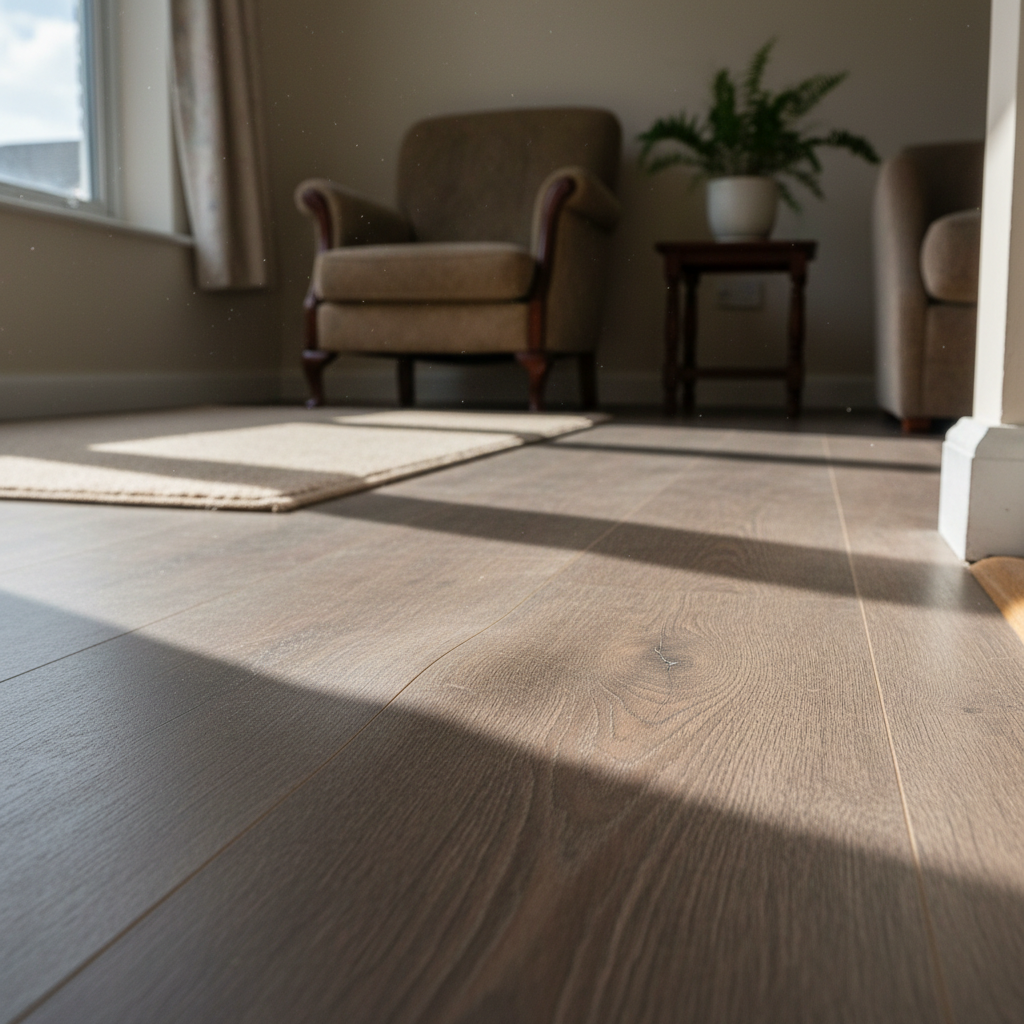
It is a call I receive quite often. A homeowner has a laminate floor, sometimes only months old, and planks are lifting up in the centre of the room. In other cases, the edges of each plank seem to be swelling and feel rough underfoot. They have followed the cleaning advice, but the problem persists or is worsening. When I arrive on site, the first things I am looking for are the two most common causes of peaking and edge swelling in laminate flooring: expansion pressure and moisture ingress.
Understanding the difference
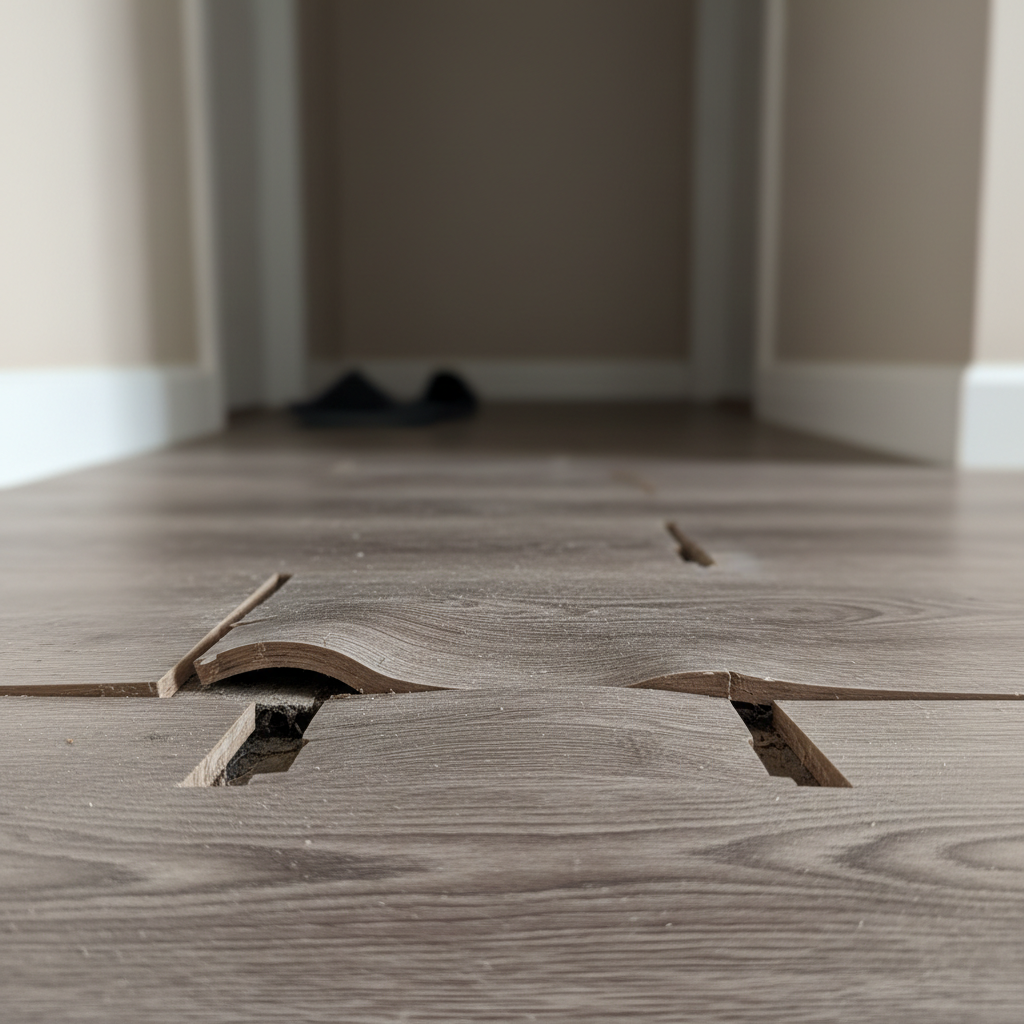
Although they can look similar to the untrained eye, peaking and edge swelling are distinct issues. It is important to distinguish between them, as they point to different root causes.
Peaking, sometimes called 'tenting', is when two planks are pushed together with such force that the joint lifts upwards, forming a peak. This is a sign of compression. The floor is expanding, but it has no room to do so, and the pressure is released at the weakest point: the joints. This is a problem that affects the entire floor system.
Edge swelling is different. This occurs when the edges of an individual plank absorb moisture and swell up. The core of a laminate plank is usually a high-density fibreboard (HDF), which is essentially wood fibre and resin. Like any wood product, it will swell when it gets wet. This results in a raised, often rough edge to the plank. Unlike peaking, this damage is localised to the planks that have been exposed to water and, in my experience, is irreversible.
The main causes: expansion and moisture
When I am called out to investigate peaking and edge swelling in laminate flooring, my process is methodical. I am looking for evidence to establish the cause of the failure. In the vast majority of cases, it comes down to one of two things.
First is a lack of an adequate expansion gap. Laminate flooring expands and contracts with changes in ambient humidity and temperature. To allow for this natural movement, installers must leave a gap around the entire perimeter of the floor. This includes against all walls, door frames, kitchen islands, and radiator pipes. The British Standard for installing wood flooring, BS 8201, gives clear guidance on this, and laminate manufacturers provide their own specific requirements. When this gap is missing, or is bridged by something like silicon sealant, the floor becomes 'pinched'. As it expands, it has nowhere to go but up, causing peaking. On an inspection, I will carefully remove sections of skirting board or beading to physically measure the gap left by the installer.
The second cause is moisture. This can come from below or from above. Sub-floor moisture, particularly from a new concrete slab that has not been allowed to dry sufficiently, can be a significant problem. I use a surface moisture metre and, if required, a hair hygrometer to test the sub-floor's relative humidity, in line with BS 8203. If the sub-floor is too damp, this moisture is absorbed by the laminate planks, causing excessive expansion and leading to peaking.
More commonly, the moisture comes from the surface. This could be from overwetting during cleaning, spills that are not wiped up quickly, or small leaks from appliances. Water gets into the joints between the planks and is absorbed by the exposed HDF core. This causes the fibres to swell up, resulting in the classic swollen edges. I use a non-invasive pinless moisture metre to scan the floor and identify areas with elevated moisture content, which often correspond directly with the visible swelling.
What a retailer or insurer looks for in a report
If you are in a dispute, the retailer or an insurer will require more than just your opinion. They need a factual, evidence-based report from an independent party. This is the purpose of my inspection. My report does not take sides; it presents findings based on the evidence collected at the time of inspection.
When reporting on peaking, my report will contain:
- Photographic evidence of where the floor is peaking.
- Measurements and photographs of the expansion gap, or lack thereof, at multiple points around the room's perimeter.
- Reference to the specific installation instructions provided by the floor's manufacturer, and the principles outlined in the relevant British Standards.
- Findings that connect the lack of expansion provision to the observed peaking.
For edge swelling, the report will document the extent and location of the damage. It will include moisture metre readings from affected and unaffected areas for comparison. It will note the proximity of the swelling to potential water sources like sinks, dishwashers, or pet bowls. This evidence allows a retailer or claims handler to make an informed decision. A report that states, 'Based on the findings, the edge swelling is consistent with exposure to topical moisture' is far more powerful than simply saying the floor is faulty.
Is the damage reversible?
This is a question I am always asked. The answer depends on the cause.
If the floor is peaking due to a lack of expansion, and the issue is caught early, it can sometimes be resolved. By creating the correct expansion gap around the perimeter, the pressure is relieved. In some cases, the floor may relax back into a flat position over a few days or weeks. However, if the pressure has been present for a long time, the locking mechanism of the planks may be permanently damaged, and they will not sit flat again.
Unfortunately, for edge swelling caused by moisture, the damage is permanent. The wood fibres in the core swell and do not return to their original size and shape once dry. The only solution is to replace the damaged planks. This can be difficult and costly, especially if you do not have spare planks from the original batch, as colour and finish can vary between production runs.
Ultimately, correct installation and proper care are the best ways to avoid the issues of peaking and edge swelling in laminate flooring. Ensuring the installer leaves the right gaps and cleaning up spills promptly will save a great deal of trouble later on.
When to call an independent inspector
If you find yourself in a dispute with a retailer or installer about your laminate floor, and you are not making progress, an independent inspection report can be invaluable. A report provides a clear, unbiased assessment of the situation, based on physical evidence and established industry standards. It moves the conversation away from opinion and towards a factual basis for resolution.
As an independent inspector covering the whole of the UK, I provide detailed reports that are recognised and trusted by retailers and the Furniture and Home Improvement Ombudsman. My Silver, Gold, and Diamond inspection packages are designed to provide the level of detail needed to support your case. If you would like to discuss your flooring issue, please get in contact.
Have a flooring problem of your own?
We are independent UK flooring inspectors. Tell us about your case and we will recommend the right inspection package, with a fixed fee in writing before any work begins.