
Screed and Latex Compound Failures Explained
A flooring inspector's guide to sub-floor issues. This article provides screed and latex compound failures explained, from on-site evidence to what your report needs to show.
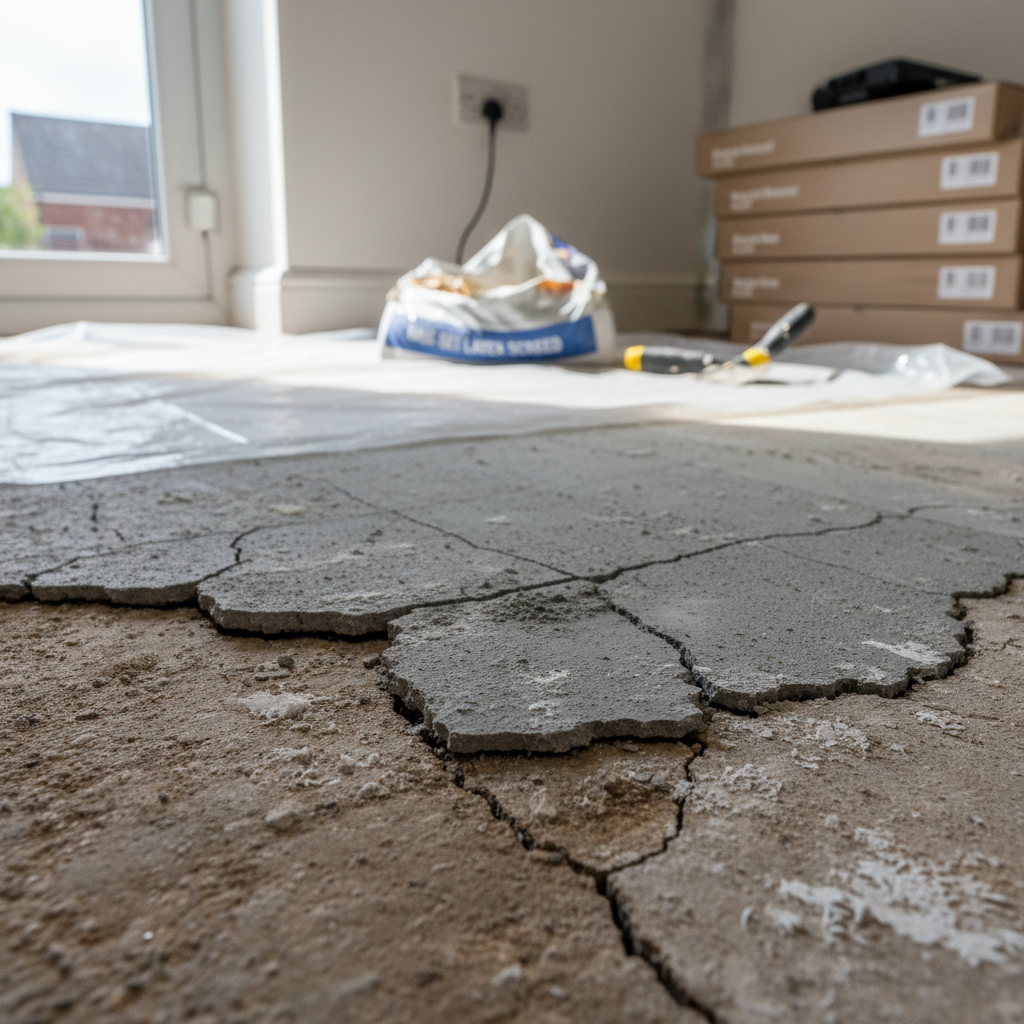
It is a situation I encounter frequently. A homeowner has a beautiful new floor, often a luxury vinyl or laminate, and within a few months, problems begin. Planks might start to lift, or a fine powder appears between the joints. The installer often blames the material, the manufacturer blames the installation, and the homeowner is left in the middle. In many of these cases, the root cause is not the flooring you can see, but the preparation layer hidden beneath it. This is where a proper understanding of screed and latex compound failures explained by an independent assessment becomes necessary.
What is the sub-floor preparation's job?
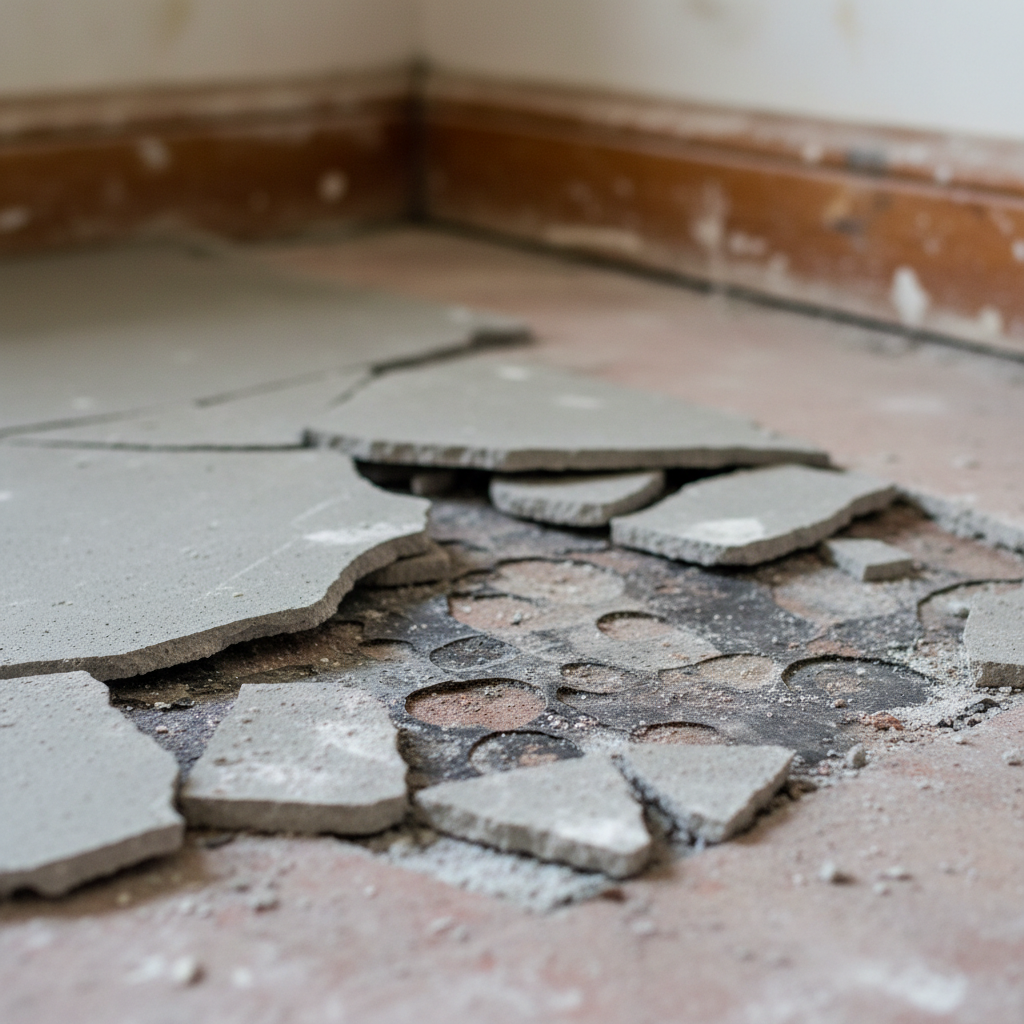
Before any modern flooring is laid, the sub-floor, whether it is concrete or timber, must be prepared. It needs to be flat, smooth, and structurally sound. This is usually achieved with a cementitious smoothing compound, often referred to as a latex screed or levelling compound. Its job is to create a perfect surface for the flooring adhesive to bond to.
Modern flooring products like Luxury Vinyl Tile (LVT) are thin and flexible. They will follow every contour of the surface they are laid on. Any imperfections in the sub-floor will eventually show through, a phenomenon known as 'photographing'. More importantly, the bond of the adhesive is only as good as the integrity of the levelling compound it is stuck to. If that compound fails, the entire flooring system above it fails too.
Common causes of screed and latex compound failures explained
When I am called to a site to investigate a failing floor, the levelling compound is one of the first things I examine. Failures rarely have a single cause, but in my experience, they often fall into a few distinct categories.
First and foremost is moisture. A concrete sub-floor can hold a surprising amount of water. In a new build, it must be allowed to dry thoroughly before being covered. British Standards provide guidance on testing for this, typically using a surface hygrometer to measure relative humidity. If a screed is applied over a damp sub-floor without an appropriate damp proof membrane (DPM), that moisture will slowly migrate upwards. This moisture attacks the binders within the levelling compound, turning it weak and powdery. On site, I test for this using both pin and pinless moisture metres to build up a complete picture of the conditions.
Another common issue is incorrect mixing of the compound itself. The manufacturer's instructions are very specific about the ratio of powder to water. Using too much water makes the compound easy to spread, but it severely weakens its final compressive strength and can lead to shrinkage and cracking. On inspection, a weak mix often appears friable and can be scraped away with little effort. This indicates it does not have the integrity required to hold the flooring in place.
Finally, the bond to the original sub-floor can fail. This is almost always due to contamination. The base floor must be clean, free of dust, grease, and any old adhesive residues. If a levelling compound is poured onto a dusty surface, it cannot achieve a proper bond. When I lift a section of the failed floor, I will examine the underside. If the levelling compound has come away cleanly from the concrete below, it often points to a preparation or contamination issue.
What insurers and retailers look for in a report
When a flooring claim is made, the retailer or their insurer will often require an independent report to establish the cause of the failure. They are not interested in opinion; they require factual, evidence-based findings.
An effective report must contain clear data. This includes moisture readings from calibrated metres, with notations of where they were taken. It should also include relative humidity readings if a hygrometer box test was performed, as this is the industry-recognised method for concrete slabs. The report needs to document the state of the levelling compound. Is it hard and well bonded, or is it soft and friable? I often perform field adhesion tests, which are documented with high-resolution photographs.
Photographic evidence is non-negotiable. Clear images showing the failure, the state of the sub-floor, the underside of the lifted flooring, and any test areas are essential. They allow a claims handler who is not on site to see the evidence for themselves.
Finally, the report should reference the relevant standards (such as BS 8203 for resilient floorings or BS 5325 for textiles) and, crucially, the flooring manufacturer's own written installation instructions. If the instructions require a specific primer to be used and no evidence of it can be found, this is a significant finding. The report builds a logical case, step by step, to identify the point of failure. It is this clarity that allows retailers and insurers to make a final determination.
When to call an independent inspector
If you find yourself in a dispute over a failing floor and the conversation is going in circles, an independent inspection report can provide the clarity needed to move forward. The report provides objective, evidence-based findings that establish the likely cause of the problem, allowing for a fact-based discussion about the solution.
My inspection services cover the entire UK. As a recognised and trusted expert for major retailers and the Furniture and Home Improvement Ombudsman, my reports are designed to be clear, fair, and conclusive. I offer several levels of service, from a Silver package for initial assessments to a comprehensive Diamond evidence pack. You can learn more about these on my packages page or contact me to discuss your specific circumstances.
Have a flooring problem of your own?
We are independent UK flooring inspectors. Tell us about your case and we will recommend the right inspection package, with a fixed fee in writing before any work begins.