
Underfloor Heating and Wood Floors: What Can Go Wrong?
An independent inspector's guide to underfloor heating and wood floors: what can go wrong. A look at surface temperatures, commissioning records and why an early report is vital.
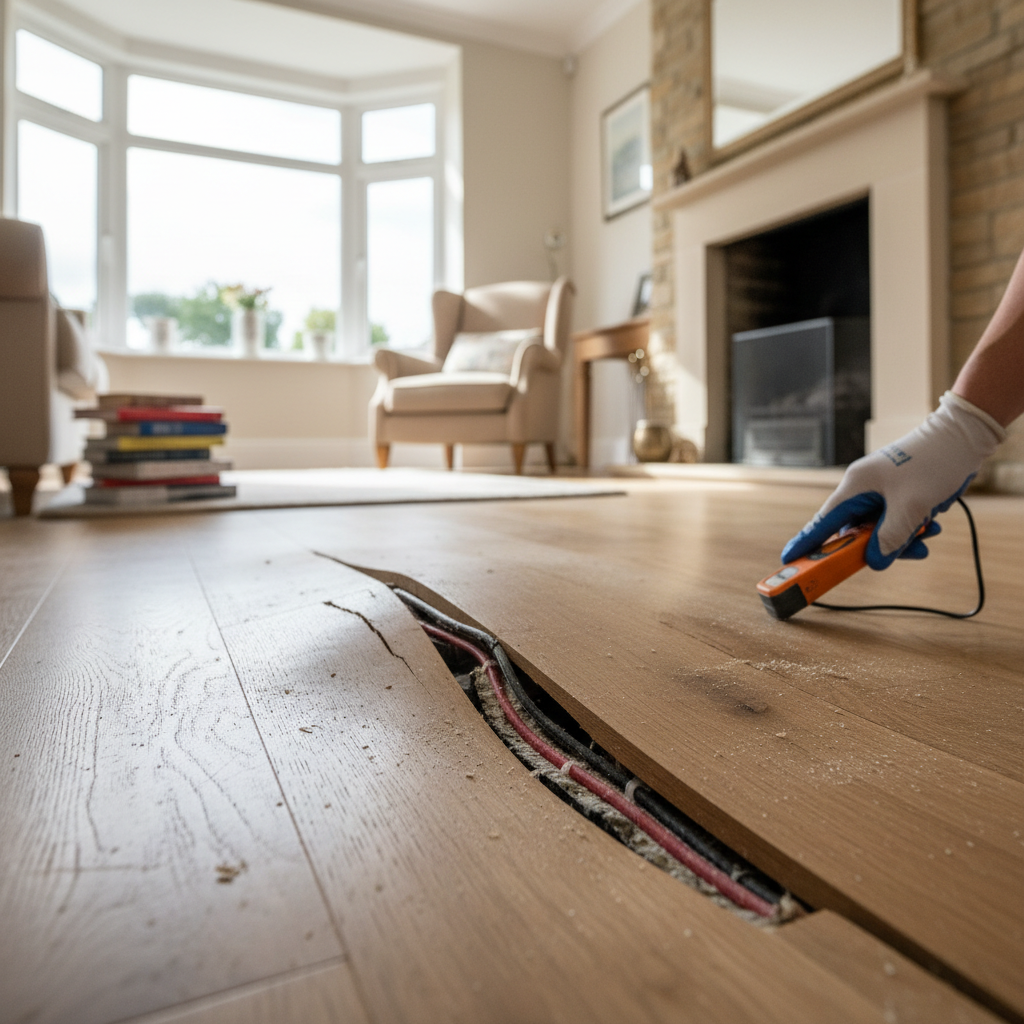
It is a call I receive with some regularity. A homeowner has invested in a beautiful new wood floor, complete with the luxury of underfloor heating. Yet a few months later, the boards are starting to lift at the edges, a phenomenon we call 'cupping', or gaps are appearing between them. The conversation that follows is often one of confusion and frustration. Understanding underfloor heating and wood floors: what can go wrong is the first step in diagnosing the problem correctly.
In my professional opinion, many of these issues could be avoided with a better understanding of the materials and systems involved from the start. When I am called to a site, I am there to gather evidence and report on the facts as I find them, not to apportion blame. The evidence, however, often points to one of a few common causes.
Underfloor heating and wood floors: what can go wrong in practice?
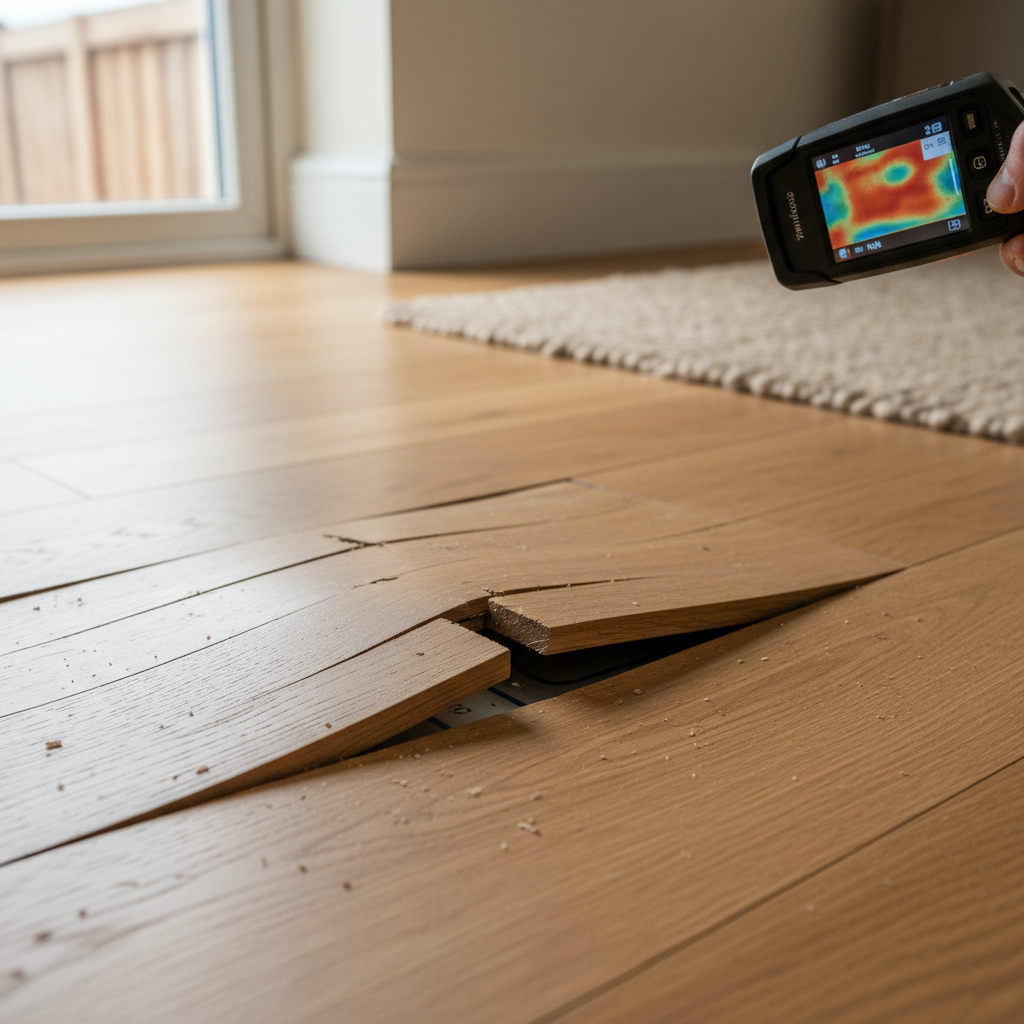
When a wood floor is installed over a heating system, it is placed into a dynamic environment. Wood is hygroscopic, meaning it absorbs and releases moisture to balance with its surroundings. Heating it from below accelerates this process. If not managed correctly, this can lead to a number of visible defects.
Cupping, where the edges of a board are higher than its centre, is a frequent complaint. This often occurs when there is a moisture imbalance through the thickness of the board. The heated underside becomes very dry, causing it to shrink, while the cooler top surface does not. This differential pulls the edges of the board upwards.
Conversely, excessive gapping can occur if the whole environment is too dry, causing the boards to shrink uniformly. In some cases, delamination can be an issue, where the layers of an engineered board begin to separate under the stress of heat and moisture changes. The key is that the flooring, the adhesive, and the heating system must all be compatible and installed in accordance with all relevant manufacturer instructions and British Standards.
The 27-degree question: surface temperature limits
On site, one of the first things I will assess is the surface temperature of the floor. Most flooring manufacturers stipulate a maximum surface temperature for their wood products, which is very often around 27°C. It is important to state that this is not a universal figure; the specific flooring manufacturer's own technical guidance always takes precedence. Regrettably, this limit is sometimes exceeded.
Homeowners may not be aware of this specific temperature limit, or the heating system may have been set incorrectly by the installer or the user. A simple infrared thermometer allows for a quick spot check during an inspection, but a more thorough investigation might involve leaving data loggers in place to monitor the temperature over a period of time. It is important to remember that the temperature of the water in the pipes is not the same as the temperature on the surface of the wood. A properly designed and commissioned system will have safeguards, such as floor probes, to prevent the surface from overheating.
Commissioning records: the missing piece of the puzzle
When a wet underfloor heating system is embedded in a concrete or sand and cement screed, that screed must be perfectly dry before any flooring is laid. British Standards provide clear guidance on this. The heating system itself must be used to facilitate the drying, in a process known as 'commissioning'. This involves slowly raising the temperature of the system over a number of days and then cooling it back down, sometimes repeating the cycle. This process stabilises the screed and drives out residual construction moisture.
A complete commissioning record is documentary evidence that this vital step was performed correctly. It should log the dates and temperatures for the entire cycle. In my experience, this document is frequently unavailable at the time of an inspection. Without it, it is very difficult for an installer or contractor to prove that the subfloor was in a suitable condition to receive the flooring. No evidence is identified to confirm the screed was prepared correctly, which can be a significant finding in a report.
Why an early inspection can prevent larger costs
When problems arise with a new floor, the homeowner can find themselves caught between the retailer who supplied the floor, the fitter who installed it, and sometimes the builder or heating engineer. Each party may feel they are not at fault. This is the point where a dispute can become protracted and expensive.
Instructing an independent inspector early on can provide a clear, evidence-based assessment of the situation. A detailed report, based on a physical inspection and analysis of the available documents, can establish the most probable cause of the failure. For example, a report that finds high moisture readings in the subfloor, an absence of a commissioning record, and surface temperatures exceeding the manufacturer's limits provides a clear factual basis for a discussion. In my experience, this often supports the homeowner's position and can lead to a resolution without the need for litigation. It moves the conversation away from opinion and towards the evidence, which is always the most productive path.
When to call an independent inspector
If you are experiencing issues with your wood flooring and underfloor heating, and you are not getting a satisfactory resolution, an independent report can provide the clarity you need. I provide a range of inspection services across the entire United Kingdom, from initial assessments to comprehensive expert witness reports.
My services are recognised and trusted by retailers, manufacturers, and the Furniture and Home Improvement Ombudsman. For more information on the different levels of inspection available, please see my Silver, Gold, and Diamond packages. To discuss your specific situation, please do not hesitate to get in touch.
Have a flooring problem of your own?
We are independent UK flooring inspectors. Tell us about your case and we will recommend the right inspection package, with a fixed fee in writing before any work begins.