
Why LVT Lifts, Telegraphs and Gaps: An Inspector's View
An inspector explains why LVT lifts, telegraphs and gaps. Common causes include sub-floor issues, incorrect adhesive, and moisture problems.
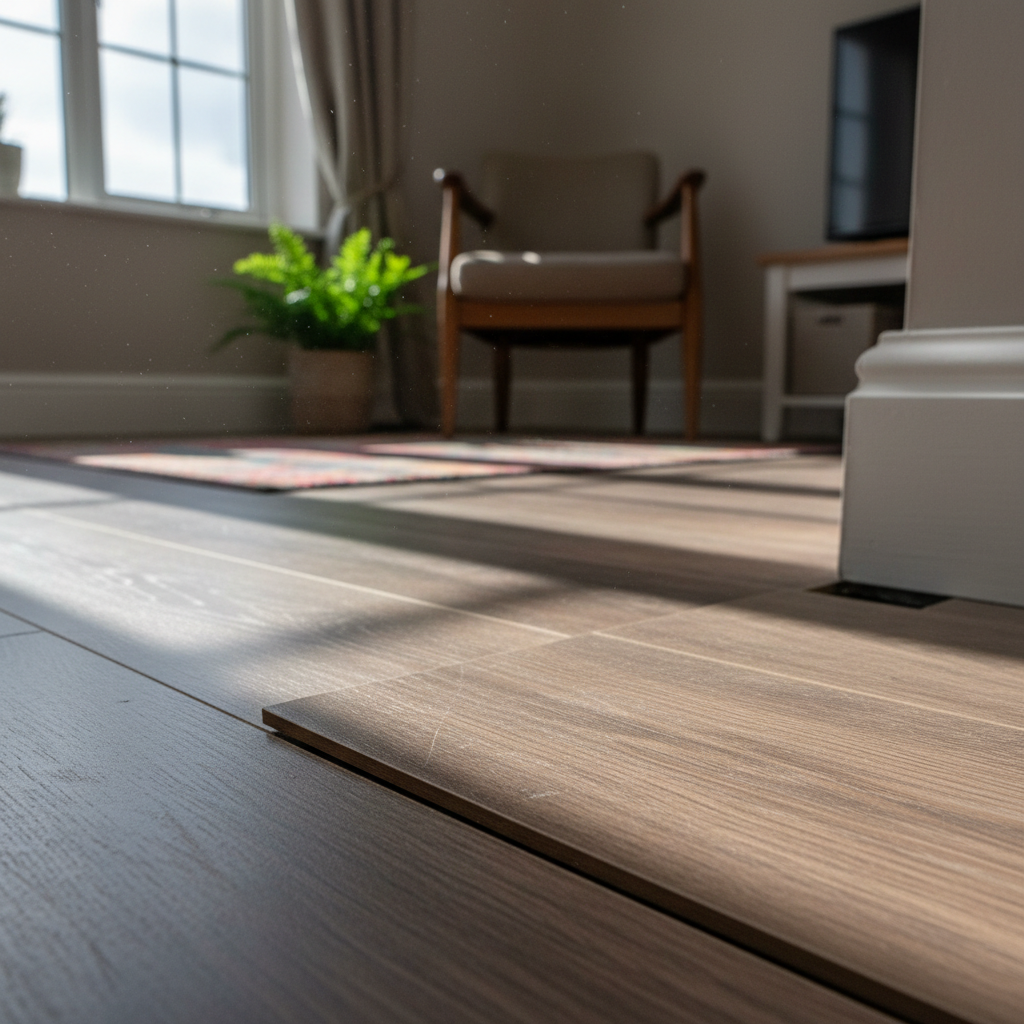
A new luxury vinyl tile floor often looks perfect on the day it is finished. A few months later, things can look very different. Perhaps you have noticed a plank lifting at the edge, or fine ridges appearing across the surface, especially when the light hits it at a low angle. When I am called to a site to investigate a failing LVT floor, the fundamental question I am there to answer is why LVT lifts, telegraphs and gaps.
In my experience, the answer is almost always found by looking down, underneath the vinyl itself. The success or failure of an LVT installation is determined long before the first tile is placed. It is all in the preparation.
The Sub-floor: The Foundation of Your Floor
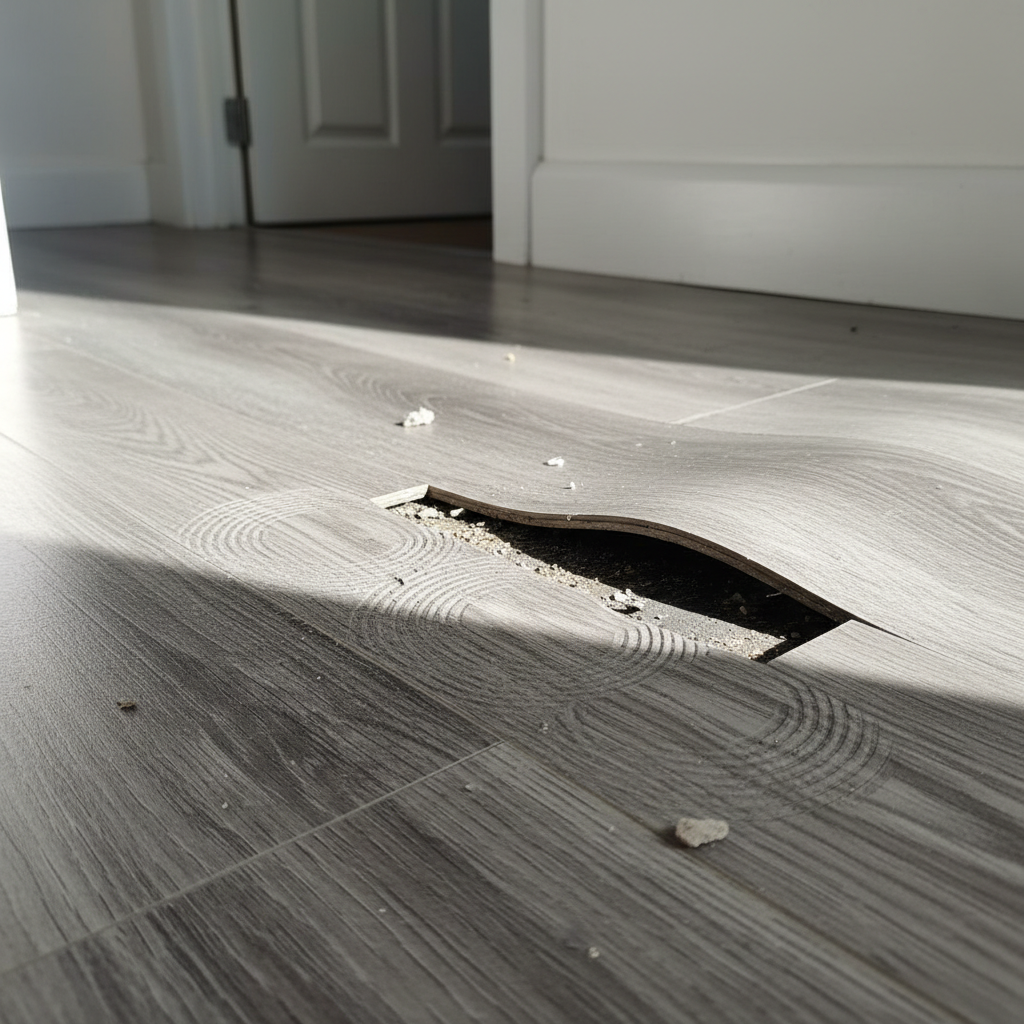
The most common cause of LVT failure that I observe is inadequate sub-floor preparation. Luxury vinyl tile is a relatively thin and flexible material. This means it will conform to the shape of whatever is beneath it. If the sub-floor has bumps, dips, or even small specks of debris, these imperfections can 'telegraph' through to the surface over time, becoming visible as ridges and indentations.
British Standard BS 8203 gives clear guidance on the required smoothness for a sub-floor, often referred to as Surface Regularity 1 (SR1). On site, I assess this with a straightedge and feeler gauges. More commonly, however, the issue is not smoothness but moisture. A concrete sub-floor that appears dry to the touch can still hold significant residual moisture. When this is trapped under a non-breathable vinyl floor, it can emulsify the adhesive, causing it to break down and release its bond. This is a very frequent reason for planks or tiles lifting. A professional fitter should always conduct and record moisture tests before proceeding. On my inspections, I use a combination of pin and pinless moisture metres, and where required, a sealed surface hygrometer to measure the relative humidity of the slab itself.
Adhesives, Acclimatisation, and Why LVT Lifts, Telegraphs and Gaps
Not all adhesives are created equal. The choice of adhesive is another area where things can go wrong. Manufacturers specify which type of adhesive should be used with their products, and getting this wrong can lead to failure. For instance, areas that receive direct, strong sunlight through large windows or bi-fold doors, or rooms with underfloor heating, require a specific high-temperature adhesive. Using a standard adhesive in these conditions can cause it to soften, allowing tiles to move, shift and create gaps.
When investigating why LVT lifts, telegraphs and gaps, the adhesive is a primary suspect. At the time of inspection, I will often carefully lift a section of the flooring to examine the adhesive bed. I am looking for full and even coverage, and to identify the type of adhesive used, if possible. A 'tacky' or wet feel to an adhesive that should be hard can indicate a moisture problem from the sub-floor, as described above.
Acclimatisation is also a factor. The flooring material must be left in the room of installation for a set period, as stated by the manufacturer, to allow it to adjust to the ambient temperature and humidity. Skipping this step can cause the tiles to expand or contract after they have been fitted, leading to gapping between planks or 'tenting' where they push up against each other.
What an Insurer or Retailer Looks For in a Report
When a dispute over a failed floor reaches a retailer, manufacturer, or even an insurer, they will often request a report from an independent inspector. They are not looking for opinions; they are looking for evidence. My job is to provide a factual, evidence-based account of the conditions on site.
A robust report, in my professional opinion, should contain the following:
- Documented moisture readings of the sub-floor.
- Photographic evidence of the condition of the sub-floor, the adhesive pattern, and the nature of the failure.
- An assessment of the sub-floor's smoothness against recognised standards.
- Confirmation, where possible, that the correct type of adhesive was used for the environment (e.g. high temperature for underfloor heating).
- An examination of expansion gaps and site conditions.
Based on the findings, the report will state the most probable cause of the failure by linking the evidence to the guidance provided by British Standards and the flooring manufacturer's own installation instructions. It is this clear, methodical approach that allows retailers and other bodies to make an informed decision. No evidence was identified is as important a finding as positive proof. A report that simply says 'bad fitting' without providing this detail is unlikely to be sufficient.
Ultimately, the reasons LVT fails are rarely a mystery. The causes are well-documented and understood within the industry. By focusing on meticulous preparation and following the manufacturer's instructions to the letter, most of these issues can be avoided entirely.
When to call an independent inspector
If you have a dispute with a retailer or installer about a failing floor and are not getting a satisfactory resolution, an independent report can provide the factual evidence needed to move forward. My reports establish the probable cause of the failure based on evidence gathered on site, which often supports a constructive dialogue with the other party.
I cover the entire UK and am a trusted inspector for the Furniture and Home Improvement Ombudsman. I offer a range of inspection levels to suit your needs, from a preliminary Silver report to a comprehensive Diamond package for complex cases. You can learn more about these on my packages page or contact me to discuss your specific situation.
Have a flooring problem of your own?
We are independent UK flooring inspectors. Tell us about your case and we will recommend the right inspection package, with a fixed fee in writing before any work begins.