
Anonymised case study: carpet pile reversal complaint resolved
Anonymised case study: carpet pile reversal complaint resolved after independent inspection confirmed natural pile shading, allowing both parties to find common ground.

A newly carpeted lounge often looks immaculate until natural light strikes the floor from a low winter sun. On a recent domestic call-out, a homeowner had spent weeks worrying over irregular, dark shapes appearing across the centre of a high-quality cut-pile carpet, convinced that dampness had risen through the floorboards or that a dye fault had developed. In this anonymised case study: carpet pile reversal complaint resolved through methodical testing, an objective inspection helped both parties see precisely what had taken place.
The homeowner had initially raised a complaint with the supplying retailer, suspecting defective yarn or contamination during manufacture. The retailer dismissed the issue as standard shading, leaving the homeowner feeling ignored. By the time I arrived on site, communications had stalled completely.
What was observed during the inspection
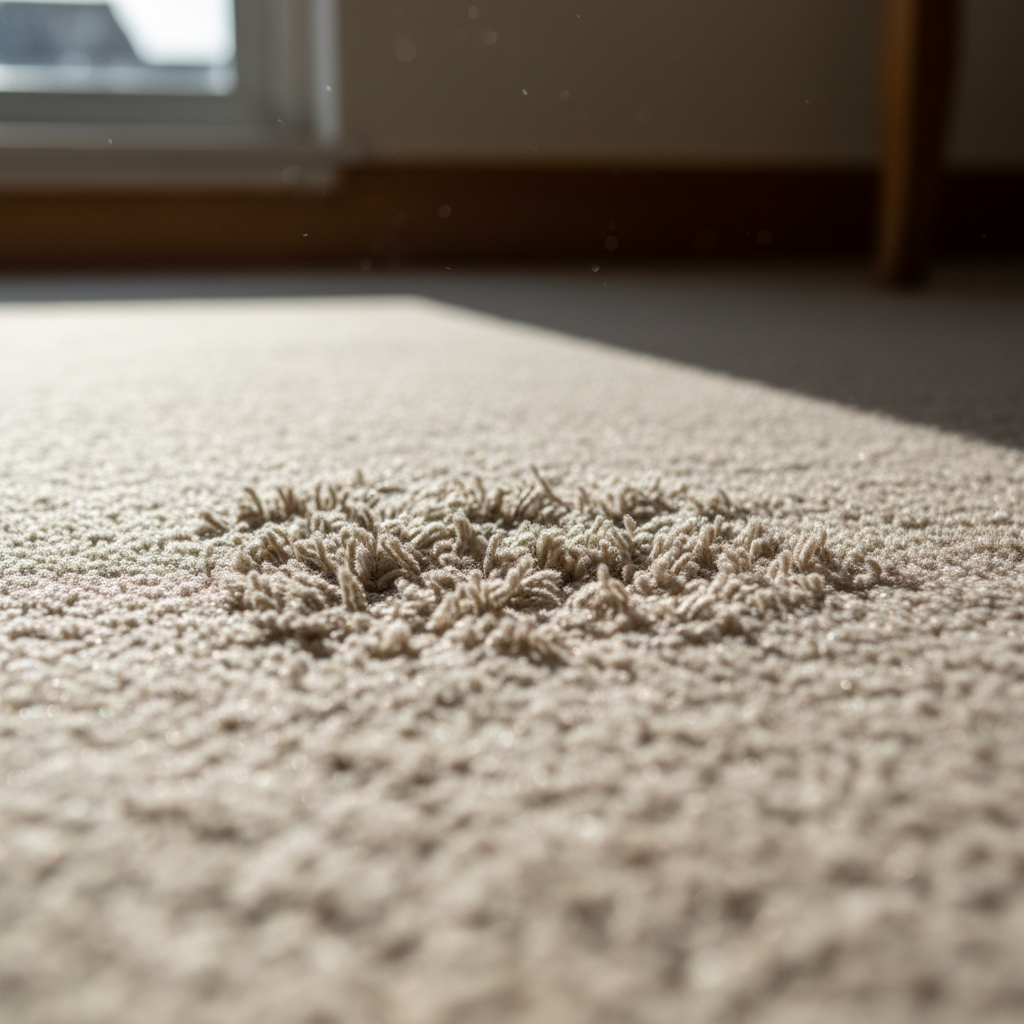
When I stepped into the room, two irregular, pool-shaped patches were visible in front of the main sofa. Under overhead lighting, one patch appeared distinctly darker than the surrounding floor, whilst the adjacent area looked several shades lighter. When viewed from the opposite corner of the room, these tonal differences reversed entirely: the dark area became light, and the light area appeared dark.
My primary task was to separate optical phenomena from physical defects. I examined the floor systematically:
- Visual assessment under controlled artificial light and diffused daylight, noting how surface reflections changed with viewing angles.
- Physical inspection of the tufts using a mechanical pile brush, observing how the yarn recovered when brushed in the direction of the original pile lay.
- Moisture testing across the affected areas using a calibrated non-destructive impedance metre, alongside pin probe checks into the perimeter floorboards.
- Examination of the carpet backing, underlay, and grippers by carefully easing the carpet off the pins along the threshold.
At the time of inspection, moisture readings were uniform across both the marked and unmarked areas, sitting comfortably within dry baseline limits for the property. No evidence was identified of fluid ingress, pet accidents, or subfloor dampness. The underlay was dry, properly fitted, and showed no localised collapse. Installation complied with the general principles set out in BS 5325 for domestic textile floor coverings.
Anonymised case study: carpet pile reversal complaint resolved
Based on the findings, the condition was identified as permanent pile reversal, commonly known in the flooring trade as watermarking or pooling. This phenomenon occurs almost exclusively in dense, cut-pile carpets. Over time, patches of tufts alter their permanent direction of lay, often through a combination of foot traffic, room air currents, and localized pressure. Because cut yarn reflects light differently along the sides of the fibres compared to the cut tips, areas where the pile leans in opposite directions create strong optical contrast.
Brushing the fibres temporarily adjusted the shading, but the tufts drifted back to their altered orientation once walked upon. There was no dye variation, yarn loss, or backing failure. In my professional opinion, the carpet complied with manufacturing specifications, and no manufacturing or installation defect could be substantiated.
For homeowners, hearing that a disfigurement is normal behaviour can feel frustrating. That is why the wording and structure of the report matter so much when resolving a dispute.
What insurers and retailers look for in an independent report
Retailers, manufacturers, and claims handlers deal with hundreds of carpet queries each year. They quickly discount subjective complaints that rely solely on photographs or frustrated emails. To accept an independent report and act on it constructively, they look for specific evidential standards:
First, they look for verifiable testing. A report that merely states 'the carpet is fine' carries little weight. They expect to see recorded moisture values, confirmation that subfloor checks were carried out, and a clear description of the pile recovery tests. This proves the inspector ruled out genuine defects like delamination or dye migration.
Second, commercial teams look for balanced, dispassionate analysis. An independent report must not take sides. It should reference recognised trade guidance, explain the physical mechanics of the flooring, and state plainly whether British Standards or manufacturer guidelines were breached.
Finally, decision-makers look for clarity on causation. When a report clearly confirms that the issue is an inherent characteristic rather than negligence by the installer or a fault by the mill, it removes the adversarial tension. The retailer knows they are not facing a justified breach-of-contract claim under consumer legislation, which makes them far more willing to help the customer find a compromise.
Reaching a fair resolution
When reviewing this anonymised case study: carpet pile reversal complaint resolved without litigation, the retailer recognised that the customer had genuinely misunderstood the product characteristics rather than acted in bad faith. Because the sales staff had not discussed the risk of pile reversal before the order was placed, the retailer offered a generous goodwill allowance towards an alternative loop-pile carpet, which is not prone to pooling.
The homeowner received closure from an impartial expert, understanding that their floor was not faulty or water-damaged. Both parties avoided legal fees, and the matter was settled quickly and politely.
When to call an independent inspector
If you are facing a deadlock with a retailer, fitter, or manufacturer over a carpet or hard floor, an objective technical report can help resolve the dispute. I provide clear, evidence-based assessments for domestic and commercial floors across the whole UK, and my independent findings are regularly accepted by the Furniture and Home Improvement Ombudsman.
Whether you need an initial site assessment or formal documentation for dispute resolution, I offer Silver, Gold, and Diamond inspection packages tailored to your circumstances. You can explore the right option on my inspection packages page or get in touch directly via the contact page to discuss your floor.
Have a flooring problem of your own?
We are independent UK flooring inspectors. Tell us about your case and we will recommend the right inspection package, with a fixed fee in writing before any work begins.