
Anonymised Case Study: Engineered Wood Failure Traced to Wet Sub-floor
An anonymised case study: engineered wood failure traced to a wet sub-floor. A look at a common scenario and the evidence that settled the dispute.
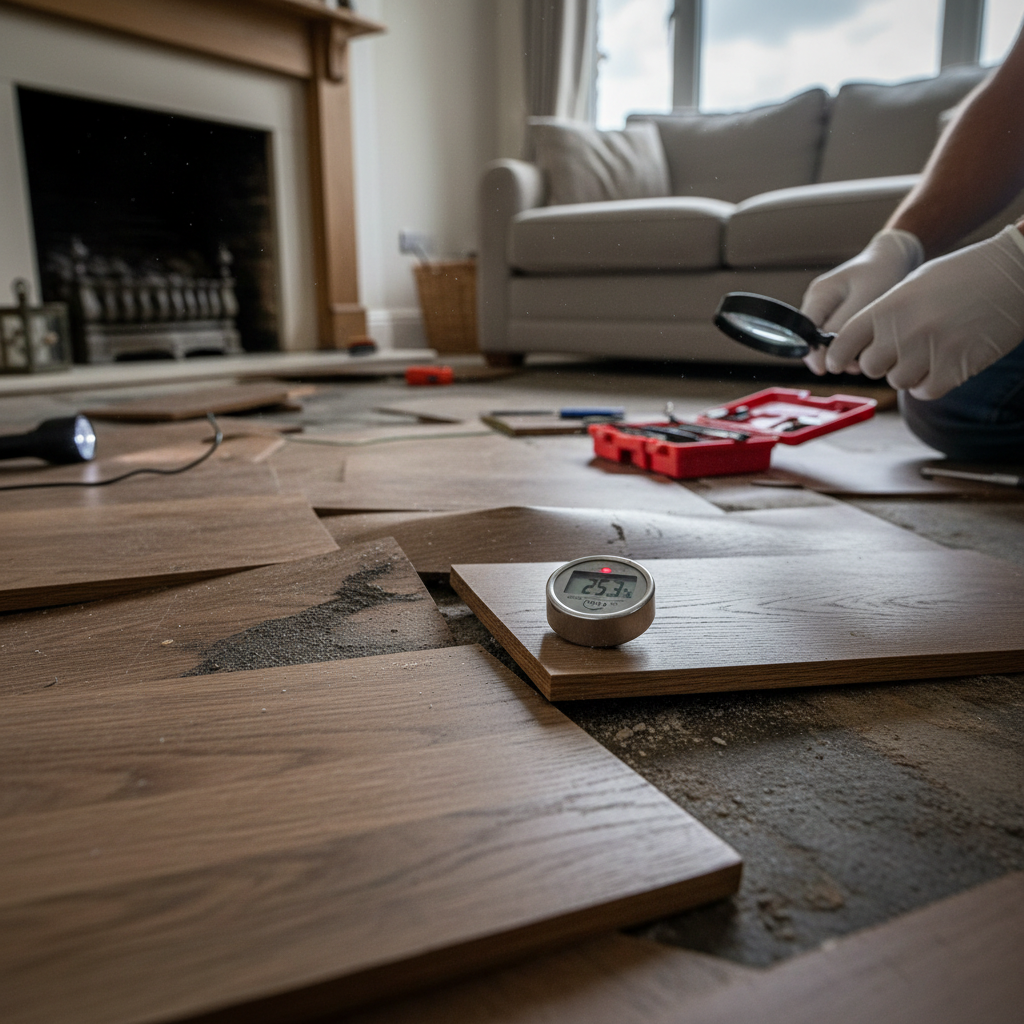
It is a call I receive often. A homeowner has a beautiful new engineered wood floor, installed just a few months ago. Now, the edges of the boards are raised, creating a washboard effect across the room. They have complained to the retailer, who has suggested the problem is caused by the homeowner's cleaning regime or the humidity in the house. The homeowner feels certain this is not the case, but they have no way to prove it. This situation is the basis for this composite report, a typical anonymised case study: engineered wood failure traced to a wet sub-floor.
Common Myths When a Floor Fails
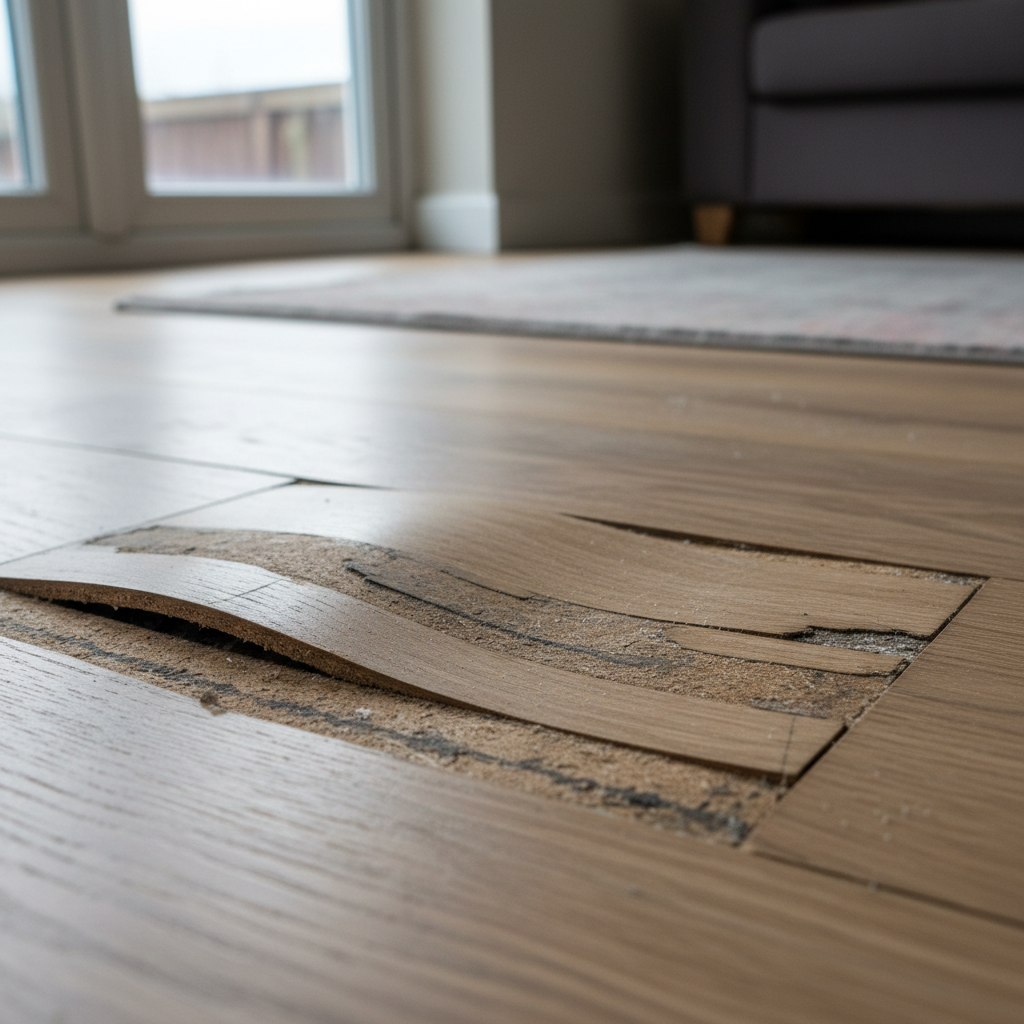
When I am called out to a job like this, the homeowner has often been given a list of reasons why the failure is their fault. These are usually the same few points. The most common is improper cleaning, with suggestions that the floor has been 'soaking wet' during mopping. Another is that the ambient humidity in the home is too high, perhaps due to a lack of ventilation, causing the wood to absorb moisture from the air.
Occasionally, the issue is described as 'settling', a vague term implying the problem will resolve itself. In my experience, cupping or crowning in an engineered wood floor is rarely a temporary issue that will simply disappear. It is a physical sign that the boards are under stress. Based on the findings in many inspections, the cause is very often not related to surface water or air humidity at all.
The On-Site Inspection Process
At the time of inspection, my first step is always a visual assessment of the entire floor. I examine the extent of the cupping, noting the direction and severity. I also check for other signs, such as crowning (where the centre of the board is higher than the edges) or buckling. A critical part of this initial survey is checking the perimeter of the room. Wood floors need space to expand and contract with changes in temperature and humidity. An insufficient expansion gap at the skirting boards can cause problems, so I always check this carefully.
Following the visual check, and with the homeowner's permission, I will seek to lift a board. This is not always possible without causing damage, but it is invaluable when it can be done. It allows direct inspection of the underlay, the adhesive used (if any), and most importantly, the sub-floor itself. In this particular anonymised case study, the sub-floor was a concrete screed, which is very common in new builds and extensions.
Moisture Readings: The Decisive Evidence
This is where an independent inspection moves from observation to quantifiable evidence. I use professional, calibrated moisture metres to take readings. First, I use a non-invasive pinless metre across the surface of the engineered wood. This gives me a baseline reading for the moisture content of the flooring itself. In the scenario we are examining, these surface readings were within the expected range for a healthy wood floor in a domestic environment.
This finding immediately challenges the theory that the homeowner's cleaning or the room's air humidity is the cause. If significant moisture was being absorbed from the top down, I would expect to see elevated readings on the surface of the boards. The next step is to test the sub-floor. Using a specialist concrete moisture metre, I took readings from the exposed screed. The results were consistently high, well above the recognised limits for installing a wood floor as outlined in British Standards such as BS 8201.
Anonymised case study: engineered wood failure traced to a wet sub-floor
The evidence gathered on site allowed for a clear conclusion. The engineered wood boards themselves were not defective. The installation, in terms of expansion gaps and general fitting, appeared adequate. The single factor that was outside of acceptable tolerances was the high moisture content of the concrete sub-floor.
Engineered wood is more stable than solid wood, but it is not waterproof. Its core is made of layers of plywood or similar materials. When laid on a damp sub-floor, this core absorbs moisture from below. The underside of the board swells, while the top surface remains relatively dry. This differential causes the edges of the board to curl upwards, resulting in the 'cupping' effect seen by the homeowner. The issue was not caused by wet mopping. It was caused by the floor being installed before the sub-floor had been allowed to dry to the required standard.
My report detailed these findings in a clear, factual sequence, supported by the moisture readings taken on site. There was no evidence identified to support the claims that the homeowner was at fault. In my professional opinion, the failure was a direct result of the sub-floor's condition at the time of installation. This type of evidence-based report often helps to resolve disputes, as it replaces opinion with documented fact.
When to call an independent inspector
If you have a problem with a recently installed floor and are in dispute with the supplier or installer, an independent report can be invaluable. It provides an impartial, expert assessment of the situation, based on physical evidence gathered on site. My reports are used by homeowners and retailers, and are recognised by the Furniture and Home Improvement Ombudsman as a basis for resolving complaints.
I provide a range of inspection packages to suit different needs and budgets, from an initial Silver report to a comprehensive Diamond package with on-site attendance. I cover the whole of the UK. For more information on the services I provide, please see my packages page or get in touch via the contact page to discuss your specific case.
Have a flooring problem of your own?
We are independent UK flooring inspectors. Tell us about your case and we will recommend the right inspection package, with a fixed fee in writing before any work begins.