
Anonymised case study: laminate peaking after kitchen leak
This anonymised case study: laminate peaking after kitchen leak examines how a slow pipe weep caused board failure and dispelled common retail excuses.
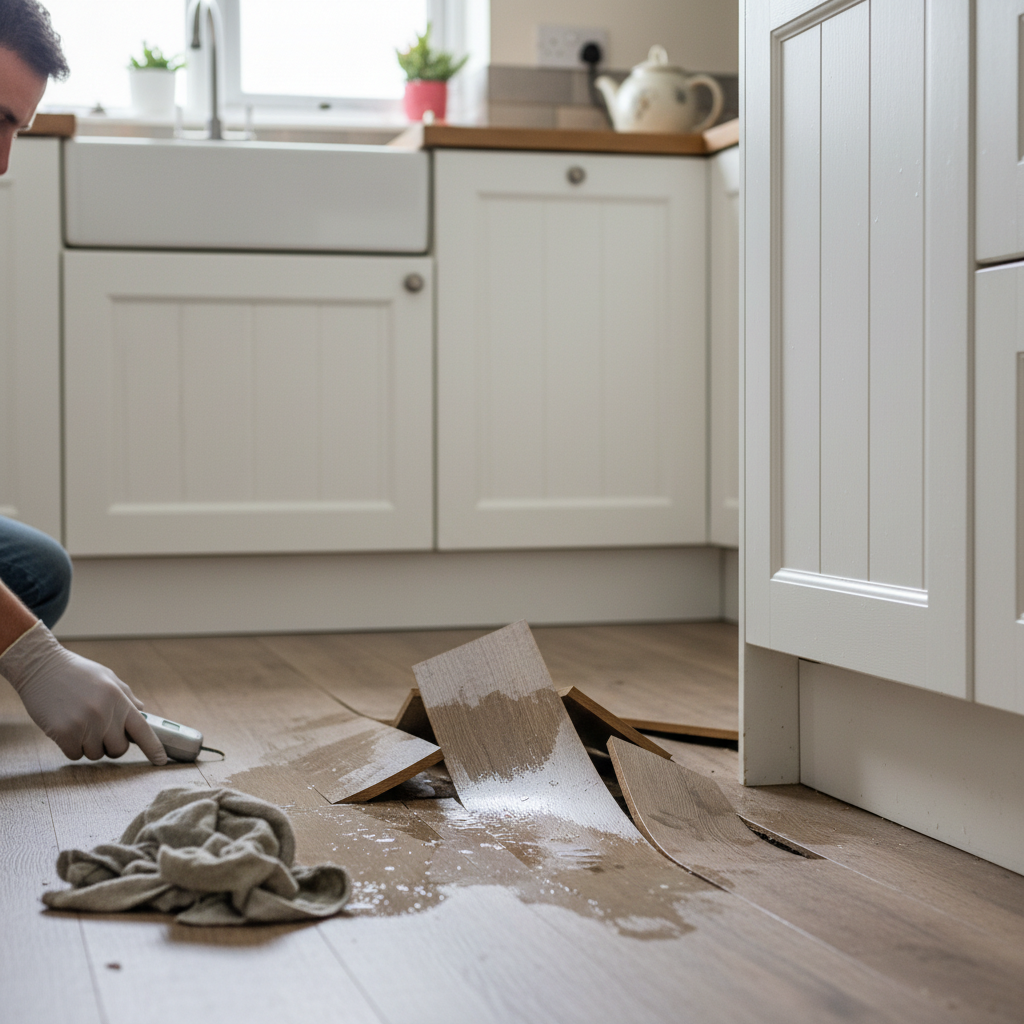
A slow weep from an isolated compression fitting behind kitchen cabinetry can go completely unnoticed for months. The water rarely pools on the surface where anyone can see it. Instead, it tracks along the concrete base, beneath the damp-proof membrane or underlay, until the high-density fibreboard core of the floor absorbs the moisture from below. In this anonymised case study: laminate peaking after kitchen leak, we examine how a modest plumbing defect produced widespread board displacement in an open-plan kitchen and dining area, and how technical evidence separated factual causation from retailer deflection.
The homeowner had purchased a high-specification click-system laminate floor eighteen months prior to the complaint. Approximately six weeks before my visit, the joints across the walking areas began to swell upwards, creating hard, raised ridges along every board edge. When walked upon barefoot, the floor felt sharp and uneven. The retailer sent an informal response stating that the issue was purely environmental, declining any liability.
Common myths homeowners encounter after reporting floor distortion
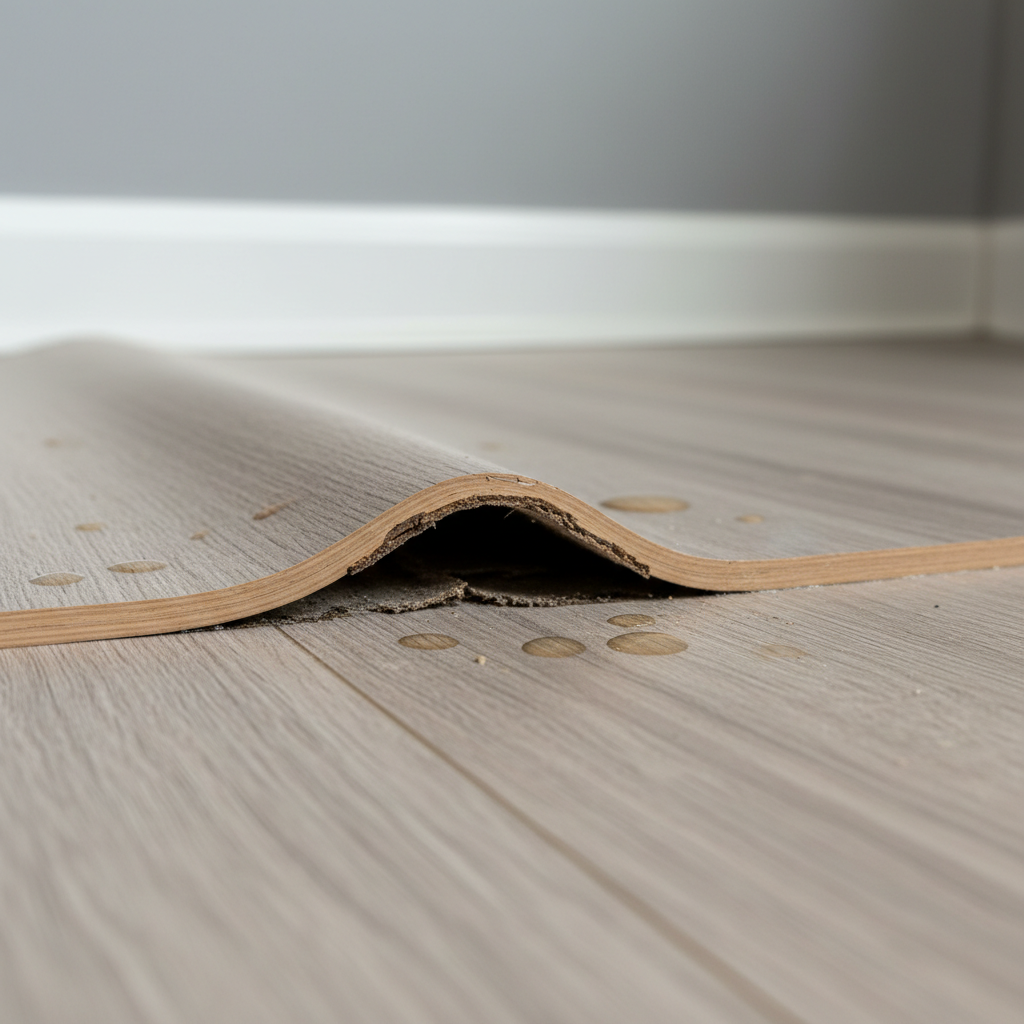
When laminate joints push against one another and peak, retail customer service teams often issue standard explanations that shift responsibility back to the consumer. Over years of site visits, I hear the same explanations repeated:
- 'The room has experienced natural humidity swings, which the plank core cannot tolerate.'
- 'The installer failed to leave an adequate perimeter expansion gap beneath the skirting boards.'
- 'Washing the floor with a damp mop has forced water between the joints from the surface.'
While improper washing and lack of expansion gaps certainly cause flooring failures, attributing every defect to them without inspecting the sub-floor is bad practice. Laminate planks do expand and contract with relative humidity changes in line with manufacturer tolerances and British Standard BS 8201. However, generalised humidity rarely creates localised, violent joint swelling without affecting the entire installation uniformly. Furthermore, if a floor lacks perimeter clearance, the whole field tends to tent or crown, which is distinct from edge swelling driven by direct moisture ingress into the fibre core.
Anonymised case study: laminate peaking after kitchen leak
At the time of inspection, visual examination confirmed pronounced peaking along both the short and long edges of the laminate planks. The distortion was particularly heavy in the transition zone between the kitchen worktops and the central dining space.
To establish the underlying mechanism, I carried out non-destructive moisture mapping across the floor area. Using an impedance-type moisture metre, readings across the open dining room registered normal baseline levels for the surface material. However, as the testing approached the kitchen base units, the readings increased steadily. Removing the kickboards beneath the integrated sink unit revealed the origin. A cold-water isolation valve was weeping at roughly one drip every ten minutes.
No pool of water was visible on top of the underlay. However, moisture readings taken against the sub-floor beneath the cabinets showed saturation levels well above standard thresholds. The water had travelled beneath the foam underlay, wicked up through the unsealed underside of the laminate planks, and concentrated along the milled click joints. The core material had swollen irreversibly.
Establishing the chain of causation for recovery
During this anonymised case study: laminate peaking after kitchen leak, pin and pinless moisture readings demonstrated an unmistakable moisture gradient radiating outward from the plumbing defect. Based on the findings, the floor failure was not caused by room humidity, mop water, or poor installation craft. The perimeter expansion gaps beneath the skirting boards were measured and found to comply with manufacturer guidelines and BS 8201 recommendations.
In my professional opinion, the physical damage was directly attributable to hidden escape of water from the leaking supply pipe. Because the leak occurred at a joint fitted during an appliance installation arranged under a recent home services contract, the homeowner required documented proof to demonstrate that the plumbing failure caused the floor failure.
The finished inspection report detailed the exact moisture gradient, documented the condition of the sub-floor, and clearly eliminated manufacturing defects and installation errors. As demonstrated in this anonymised case study: laminate peaking after kitchen leak, a clear technical audit provides the factual foundation needed when presenting a claim to insurers or third-party contractors.
When to call an independent inspector
If you find yourself in a dispute with a retailer, fitter, or insurance firm regarding damaged laminate or hardwood, an objective site survey helps establish the true facts. I provide nationwide coverage across the UK, carrying out thorough, evidence-based assessments that adhere strictly to industry standards. My independent reports are recognised and trusted by the Furniture and Home Improvement Ombudsman to resolve complex disputes fairly.
Homeowners and businesses can choose between Silver, Gold, and Diamond inspection packages depending on whether a preliminary defect assessment or a full formal legal report is required. To review which level of reporting suits your circumstances, view my inspection packages or get in touch directly via the contact page to discuss your floor.
Have a flooring problem of your own?
We are independent UK flooring inspectors. Tell us about your case and we will recommend the right inspection package, with a fixed fee in writing before any work begins.