
Anonymised Case Study: LVT Lifting on a New Build
An anonymised case study: LVT lifting on a new build. An inspector's view on why sub-floor preparation is often the cause, not the flooring material.
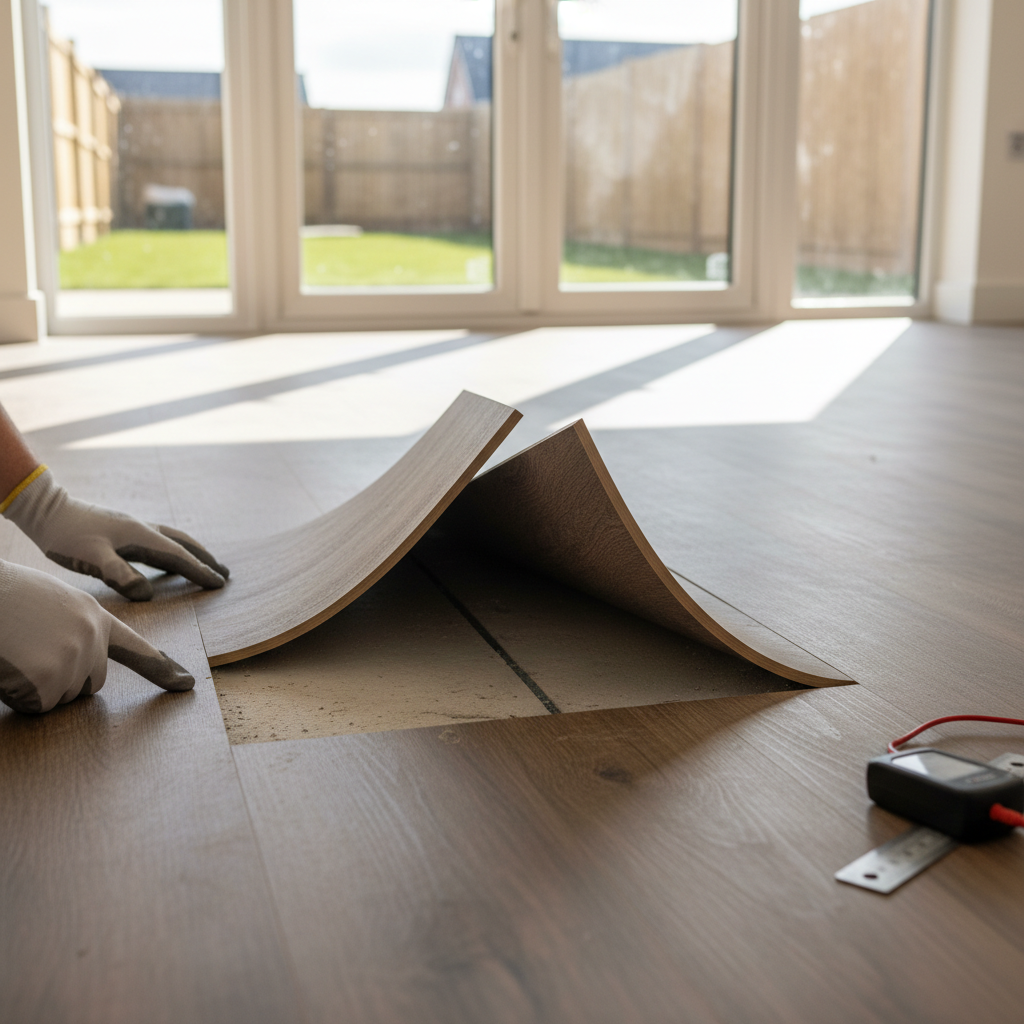
A call from a homeowner in a new property is a common scenario. Often, the flooring was chosen from the developer's range and looked perfect on moving-in day. Months later, however, problems appear. Edges of tiles may start to lift, or bubbles might form in the centre of a plank. This is a typical starting point for an investigation, and this anonymised case study: LVT lifting on a new build, based on many similar inspections, explores the likely causes.
When I am called out to a job like this, the homeowner understandably suspects the flooring material is faulty. After all, it is the planks and tiles themselves that are physically lifting. My first task is always to assess the situation with an open mind and analyse the evidence on site.
Initial findings on site
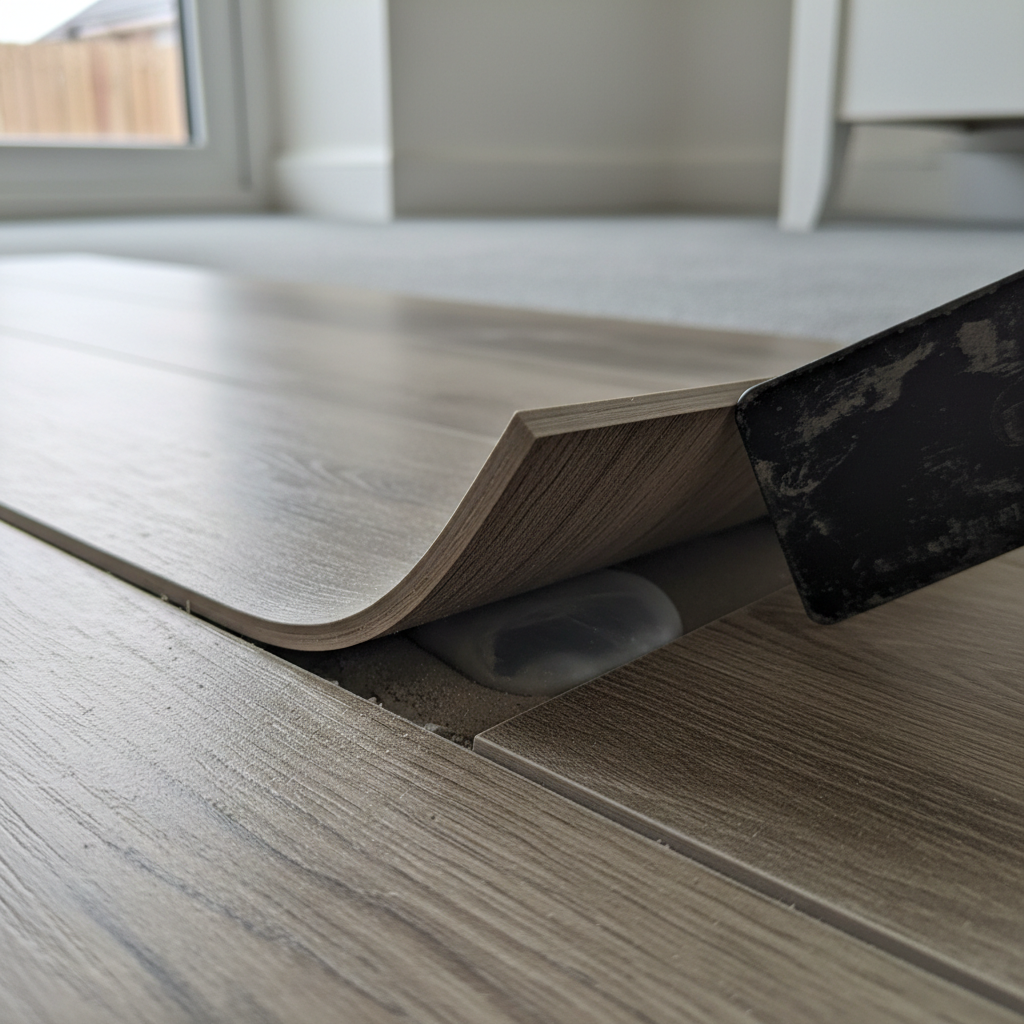
At the time of inspection, the visual evidence is the starting point. I will walk the entire installation, noting where the lifting or gapping occurs. Is it localised to one area, such as near a patio door, or is it widespread? Are the joints between planks opening up, or are the edges of the tiles curling upwards?
In my experience, a true manufacturing defect is rare. If the material were at fault, I would expect to see issues such as delamination of the wear layer, inconsistent colour between packs, or significant size variations from tile to tile. More often than not, the tiles themselves appear to be in good condition, aside from the lifting.
This leads me to consider the installation. LVT, or Luxury Vinyl Tile, is a resilient and stable product, but its performance is almost entirely dependent on what lies beneath it. My inspection then turns from the surface of the floor to the hidden elements: the sub-floor, the preparation, and the fitting method.
Anonymised case study: LVT lifting on a new build
I attended a new build property where the homeowner reported lifting LVT throughout the ground floor. The problem was most pronounced in the kitchen-diner area. The tiles were tenting at the joints and some had become loose enough to move underfoot. The homeowner was concerned the product was 'shrinking' and therefore defective.
Based on the findings, no evidence of a manufacturing fault was identified. The tiles were measured and found to be dimensionally stable. The wear layer was correctly bonded. With the client's permission, I carefully lifted a loose tile to examine the underside and the sub-floor.
The adhesive underneath was weak and tacky, with very poor adhesion to the concrete screed. This is a significant finding. It suggests that something has interfered with the adhesive's ability to cure and form a permanent bond. In new build properties, the primary suspect is often residual moisture in the sub-floor.
The vital importance of sub-floor preparation
All floor coverings require a sub-floor that is suitably dry, smooth, and sound. British Standard BS 8203, the code of practice for installing resilient floor coverings, provides clear guidance on this. New concrete screeds contain a large volume of water from the mixing process. This water must be allowed to evaporate and the screed must dry to an acceptable level before any flooring is laid.
If LVT is installed prematurely, the remaining moisture in the screed becomes trapped. It will slowly migrate upwards as vapour, and this vapour can break down the flooring adhesive over time, causing it to fail. This process explains why a floor can look perfect for several months before problems begin to emerge.
When on site, I use a calibrated surface moisture metre to get an indication of conditions. If high readings are found, a more in-depth test using a digital hygrometer may be required to measure the relative humidity within the screed itself. In the case study mentioned, the readings confirmed that the screed was not sufficiently dry at the time the flooring was likely installed.
Furthermore, the sub-floor was not perfectly smooth. Minor lumps and bumps in the concrete were telegraphing through the LVT, creating pressure points and contributing to the failure of the bond. A suitable levelling compound should have been applied to create a flat, smooth surface prior to the adhesive being spread.
In my professional opinion, the cause of the failure was not the LVT product. The evidence pointed towards an installation failure stemming from inadequate sub-floor preparation, specifically the installation of the floor covering onto a sub-floor that was not sufficiently dry or smooth. This is a common finding in these types of disputes.
When to call an independent inspector
If you are in a dispute with a retailer, installer, or developer about a failing floor, an independent report can provide a clear, evidence-based assessment of the situation. My reports are used by homeowners and can be submitted as evidence to support a claim, including for organisations such as the Furniture and Home Improvement Ombudsman.
I provide a range of inspection packages to suit different needs and budgets, from a preliminary Silver report to a comprehensive Diamond package with on-site testing. I cover the whole of the UK. For more information on the services I offer, please see my packages. To arrange an inspection, please visit my contact page.
Have a flooring problem of your own?
We are independent UK flooring inspectors. Tell us about your case and we will recommend the right inspection package, with a fixed fee in writing before any work begins.