
Five Questions to Ask Any Flooring Installer Before They Start
To prevent common disputes, here are five questions to ask any flooring installer before they start work, from a UK independent flooring inspector.
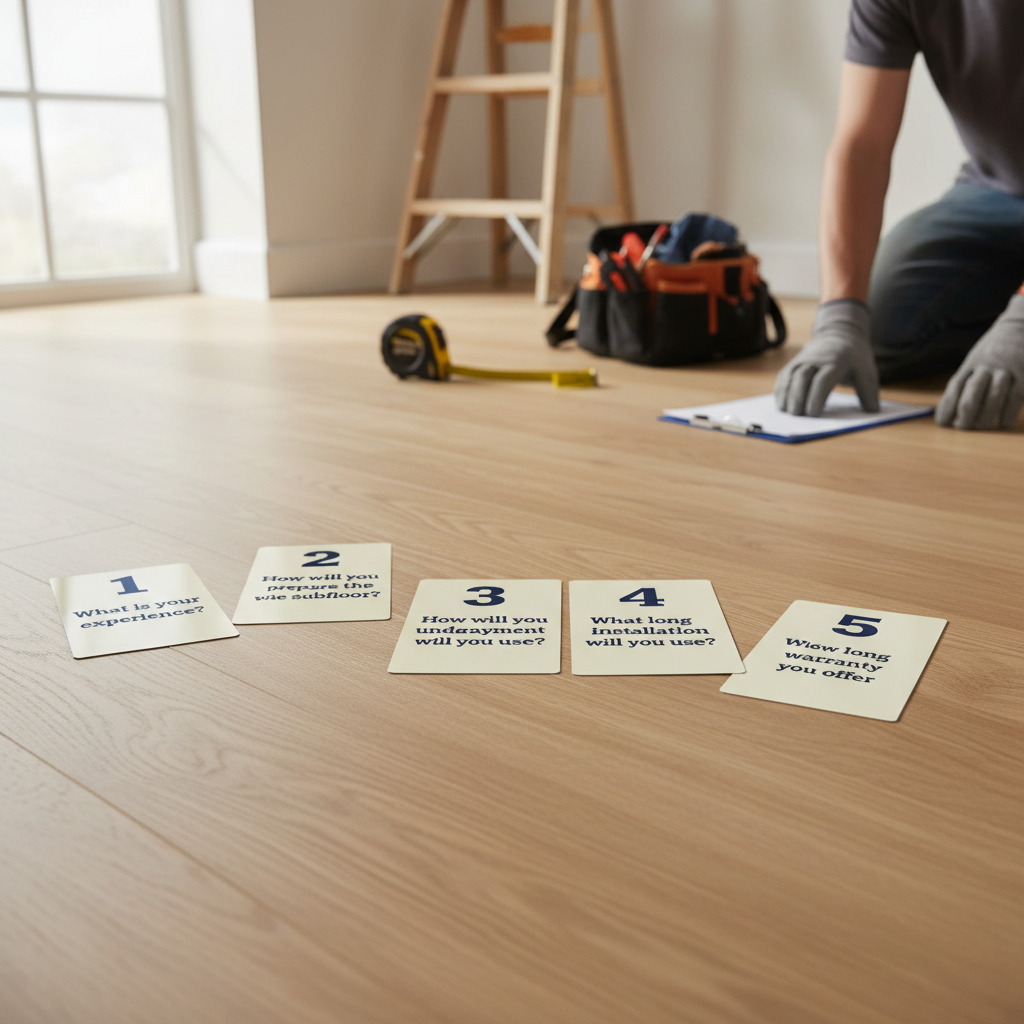
A significant part of my work involves visiting properties where a new floor has failed. The homeowner is understandably distressed. The floor, which they invested a great deal of money in, might be lifting, cupping, or showing unsightly gaps. When they complain, they are often caught between the retailer and the installer, each potentially blaming the other, the product, or even the conditions in the home itself. In my professional opinion, many of these issues could be avoided. Asking the right questions at the right time is key, which is why I have compiled these five questions to ask any flooring installer before they start work.
Have you tested the sub-floor?
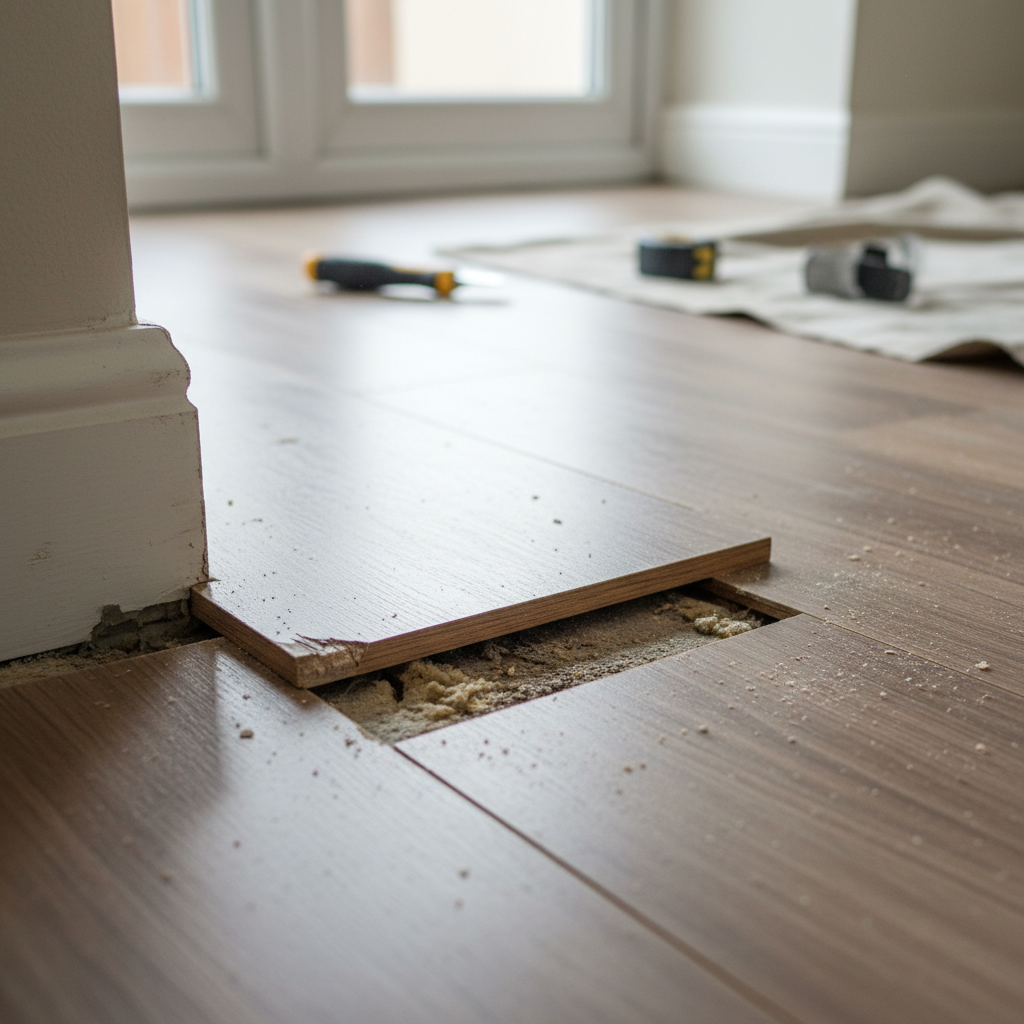
Almost every flooring failure I inspect can be traced back, in some way, to the sub-floor. It is the foundation for the entire installation. A floor covering is only as good as the surface it is laid upon. Before any new flooring is installed, the sub-floor must be confirmed as sound, smooth, and suitably dry. For concrete or screed sub-floors, this involves checking for levelness and moisture. An uneven surface can cause planks to flex and click-systems to fail. A damp sub-floor can cause wood to swell, laminate to warp, and vinyl to lose its bond.
On site, I will use a straight edge or laser level to check for deviations. I also look for evidence that the installer has done the same. If the sub-floor is not sufficiently flat, a levelling compound should be used. This is a basic requirement of British Standards and manufacturers' instructions. Skipping this step to save time or money is a false economy that often leads to problems later.
What are the moisture readings?
This is perhaps the single most important question. All sub-floors contain some moisture. The critical point is whether the amount of moisture is within the acceptable limits for the specific flooring being installed. A competent installer should carry, and know how to use, professional moisture testing equipment.
For concrete floors, this could involve a surface moisture metre (a pinless digital metre) for an initial check. The definitive test, however, is to measure the Relative Humidity (RH) of the slab using a hygrometer, as detailed in BS 8203. This involves placing a small, sealed box on the floor for a set period to get an accurate reading. For timber sub-floors, a metre with two pins is used to measure the wood's moisture content directly. The installer should take these readings, record them, and confirm they are within the limits set by the flooring manufacturer before a single board is laid. If they cannot provide these readings, they are, in effect, working without evidence.
The five questions to ask any flooring installer before they start
When your installer arrives on site, a short conversation can prevent a great deal of future difficulty. Based on the issues I see most frequently, here are the key points to clarify before work commences. These are the five questions to ask any flooring installer before they start.
- Have you tested the sub-floor for moisture, and can you confirm the readings are acceptable for this product? This shows they take sub-floor conditions seriously.
- Is the sub-floor sufficiently flat and, if not, what do you propose to do about it? This confirms they have checked for levelness and have a plan to rectify it if needed.
- How long does this specific product need to acclimatise in the room, and has it done so? Acclimatisation allows the flooring material to adjust to the temperature and humidity of the space, reducing the risk of expansion or contraction after fitting.
- What expansion gap does the manufacturer require, and how will it be managed around the room? All 'floating' floors (like laminate, LVT, and engineered wood) need space to expand. Without an adequate gap, hidden by skirting or beading, the floor can lift and buckle. I check this on nearly every inspection.
- Are you working to the manufacturer's fitting instructions and the relevant British Standard? This is a professional commitment. For example, BS 8201 is the code of practice for timber flooring, and BS 5325 covers textile floor coverings.
Getting answers to these questions is not about catching the installer out. It is about establishing a shared, clear understanding of the job's technical requirements from the outset.
Common myths when things go wrong
When I am called to inspect a failed floor, the homeowner has often been told a story to explain the problem. A common one is that 'the floor will settle down'. While some minor settling can occur, significant issues like cupping (where the edges of boards are higher than the centre) or peaking at the joints will not resolve themselves. These are usually symptoms of an underlying moisture issue or a lack of expansion space. No amount of waiting will fix this.
Another frequent claim is that 'the problem is your house'. The homeowner might be told their house is too damp, or that they have a leak. While this is sometimes the case, the installer's pre-installation checks are designed to identify this before the floor is laid. If the recorded moisture readings were acceptable at the start of the job, it becomes much more difficult to blame the property's environment later without new evidence, such as a confirmed leak. A professional installation is based on evidence, not assumption.
Ultimately, a well-installed floor begins with careful preparation and measurement. It is my experience that when these steps are documented, disputes are far less likely to occur. When they are skipped, problems are almost inevitable.
When to call an independent inspector
If you find yourself in a dispute over a newly installed floor and cannot reach a resolution with the retailer or installer, an independent inspection report can provide the clarity you need. I provide impartial, evidence-based reports that analyse the installation against recognised standards and manufacturer instructions. My reports are trusted by legal professionals and the Furniture and Home Improvement Ombudsman.
From my base in the North West, I provide flooring inspection services across the entire UK. I offer a range of inspection levels to suit your needs, from an initial Silver appraisal to a comprehensive Diamond report. For more information, please see my packages or contact me to discuss your situation.
Have a flooring problem of your own?
We are independent UK flooring inspectors. Tell us about your case and we will recommend the right inspection package, with a fixed fee in writing before any work begins.