
Gapping in Solid Hardwood Floors During Winter: An Expert View
Experiencing gapping in solid hardwood floors during winter? A UK flooring inspector explains seasonal movement versus installation or manufacturing defects.
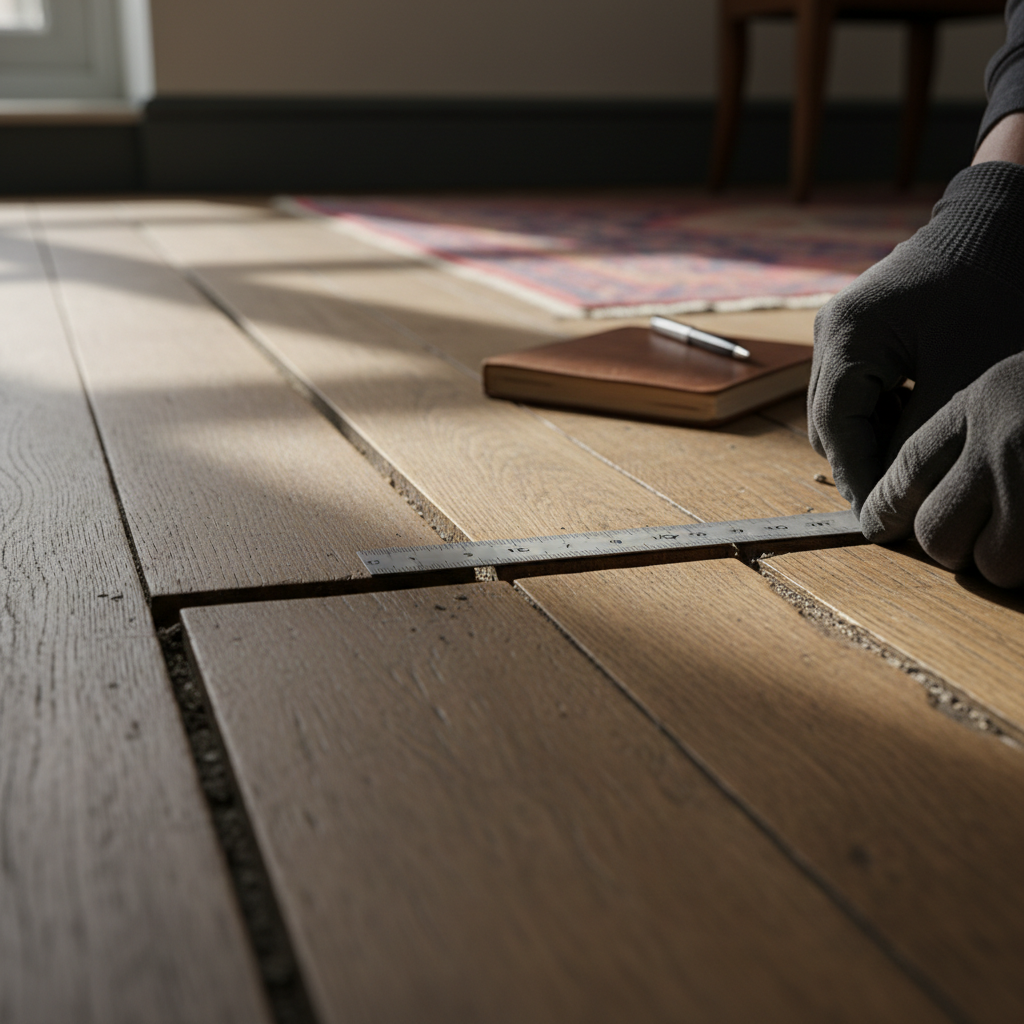
It is a common call I receive in the new year. A customer is concerned about their solid wood floor, which was beautiful and uniform in the summer, but has now developed fine gaps between the boards. They are often worried that the floor is failing. The first thing to establish is whether this is normal seasonal behaviour or a sign of a more significant problem. Understanding the cause of gapping in solid hardwood floors during winter is the first step in any assessment.
Solid wood is a natural, hygroscopic material. This means it absorbs and releases moisture from the air around it. In the UK, the air in our homes is typically more humid during the summer months. The wood absorbs this moisture and expands. In winter, we turn on the central heating, which dries the air out. The wood then releases its stored moisture and contracts, or shrinks. This is a completely normal process.
Seasonal Movement or an Installation Fault?
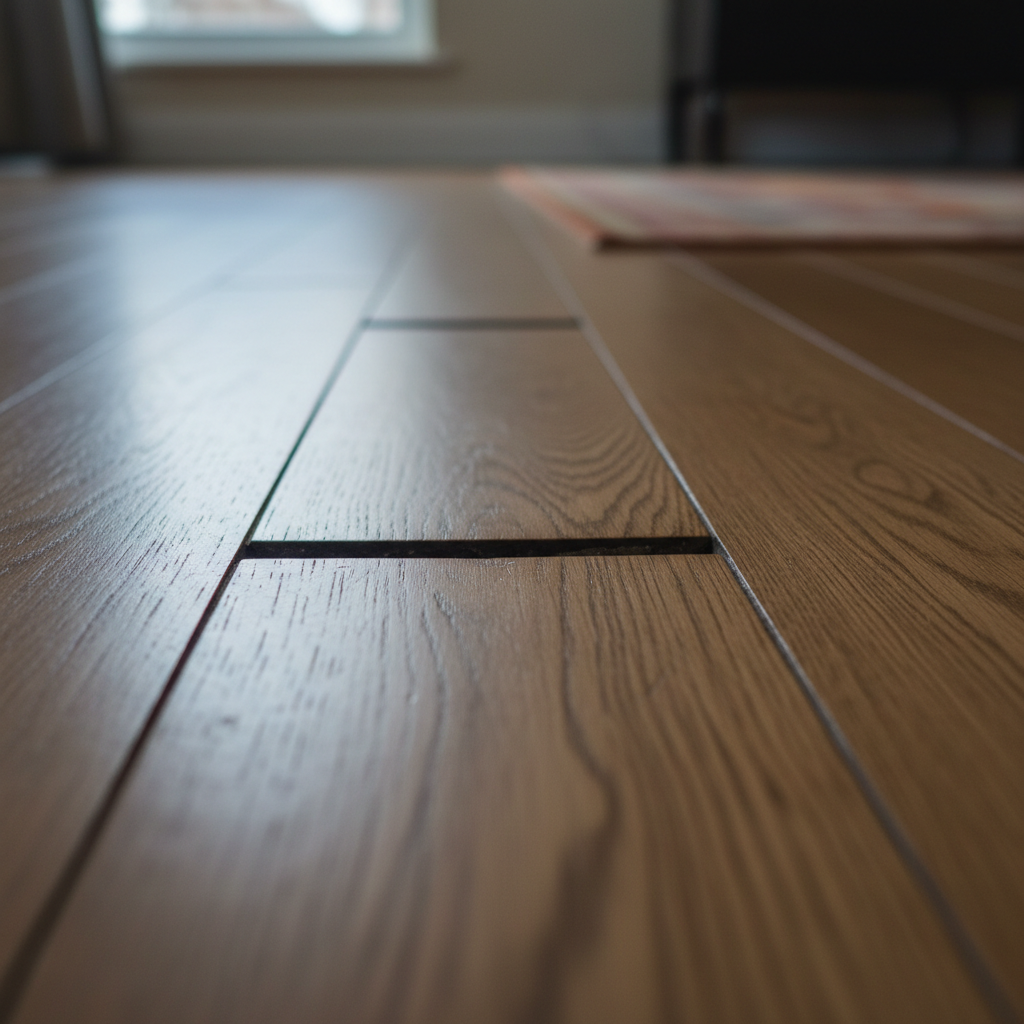
This seasonal cycle of expansion and contraction is why a professional fitter must leave an expansion gap around the perimeter of the room, concealed by the skirting boards or a scotia bead. Without this gap, a floor can buckle as it expands in summer. Conversely, the contraction in winter can cause small, uniform gaps to appear between boards.
In my experience, if the gaps are consistent across the entire floor, and are roughly the thickness of a business card, this often points towards normal seasonal movement. These gaps will typically close up again as the ambient humidity rises in the spring and summer.
However, wider or localised gaps can suggest an installation issue. When I attend a site, one of the first questions I ask relates to the acclimatisation of the flooring. The wood should be left in the room where it will be installed for a period of time to allow its moisture content to stabilise to the home's environment. Fitting boards straight from a cold warehouse can lead to excessive shrinkage later on. Another key area of investigation is the sub-floor. A damp concrete or timber sub-floor will force moisture into the new flooring from below, causing it to swell abnormally. As it inevitably dries out to match the room's conditions, it will shrink far more than it should, causing significant gaps.
Understanding Gapping in Solid Hardwood Floors During Winter
When assessing gapping in solid hardwood floors during winter, it is my job to separate the different potential causes. The evidence on site usually points towards one of three things: normal movement, an installation error, or, less commonly, a manufacturing defect.
To determine the likely cause, I conduct a thorough inspection. This involves using electronic moisture metres to take readings from the surface of the flooring. I will often use both pin-type and pinless metres to build a complete picture. These readings are then compared with measurements taken from the sub-floor. A significant discrepancy can indicate a problem with residual moisture. I also use a thermohygrometer to record the temperature and relative humidity within the room. British Standards provide guidance on the expected service conditions for wood flooring, and these readings help establish whether the environment is within a normal range.
On some occasions, it is necessary to carefully lift a board, if possible without causing damage. This allows for a direct visual inspection of the sub-floor, the fixings used, and the underside of the floorboards themselves.
Could It Be a Manufacturing Defect?
While most issues I see are related to site conditions or installation, manufacturing defects can occur. The most common in relation to gapping is incorrect kiln drying at the factory. If the timber was not dried to the correct moisture content before being machined, it will hold excess moisture. Once installed in a centrally heated home, it will lose this moisture and shrink excessively, far beyond normal seasonal tolerances. This typically results in large, uniform gaps across the entire floor.
Another, more subtle, issue can be poor milling. If the tongue and groove profiles on the boards are not machined accurately, it can prevent a tight fit from being achieved during installation. This can lead to small gaps being present from day one, which may then be exacerbated by seasonal shrinkage.
Based on the findings of a full inspection, it is usually possible to determine the primary cause of the gapping. A detailed report can then be produced, outlining the evidence gathered and providing an independent, professional opinion on the likely cause. This evidence-based approach is essential when a dispute arises between a homeowner and a retailer or installer.
When to call an independent inspector
If you are in a dispute with a retailer or installer about a floor that is not performing as you expected, an independent inspection report can provide the clarity and evidence you need. A report from a recognised expert can often break a deadlock and help all parties reach an amicable resolution without the need for court action.
As an inspector trusted by the Furniture and Home Improvement Ombudsman and working across the entire UK, I provide impartial, evidence-based assessments for homeowners, retailers, and manufacturers. We offer a range of inspection levels to suit your needs, detailed in our packages. If you would like to discuss your issue, please do not hesitate to contact us.
Have a flooring problem of your own?
We are independent UK flooring inspectors. Tell us about your case and we will recommend the right inspection package, with a fixed fee in writing before any work begins.