
Gapping in Solid Hardwood Floors During Winter Explained
Investigating gapping in solid hardwood floors during winter, examining when seasonal timber shrinkage crosses the line into an installation or manufacturing defect.
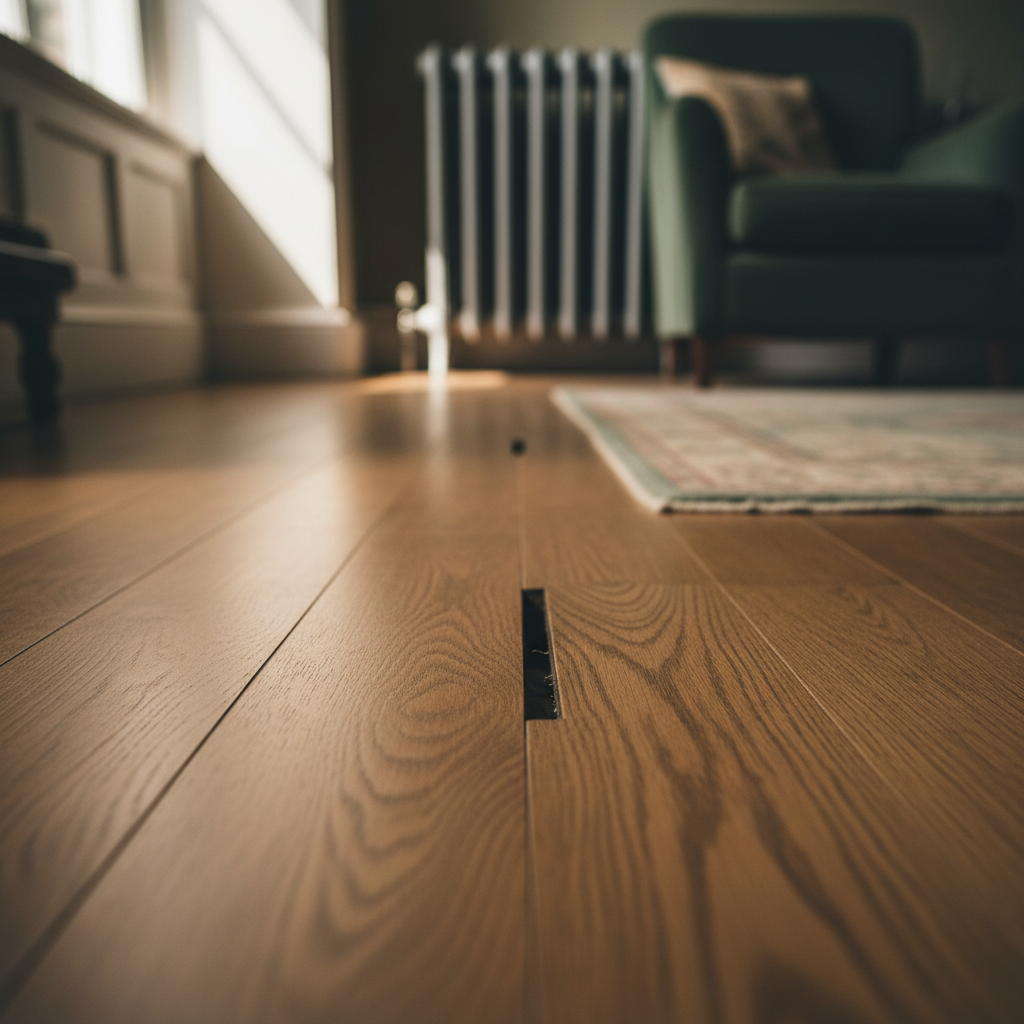
By late November, the heating goes on across the country and the calls start coming in. Homeowners look down at their floorboards and notice dark lines appearing between the planks where tight seams used to be. Gapping in solid hardwood floors during winter is one of the most common issues I am asked to inspect, particularly on installations completed during the warmer, more humid summer months. Sometimes the timber is simply behaving as natural wood always behaves, but in other cases the separation indicates a failure in planning, acclimatisation, or manufacturing.
Solid timber never truly stops moving. It responds continually to the moisture content of the air around it. When the indoor climate shifts radically, the floor responds in kind.
How indoor heating alters solid wood
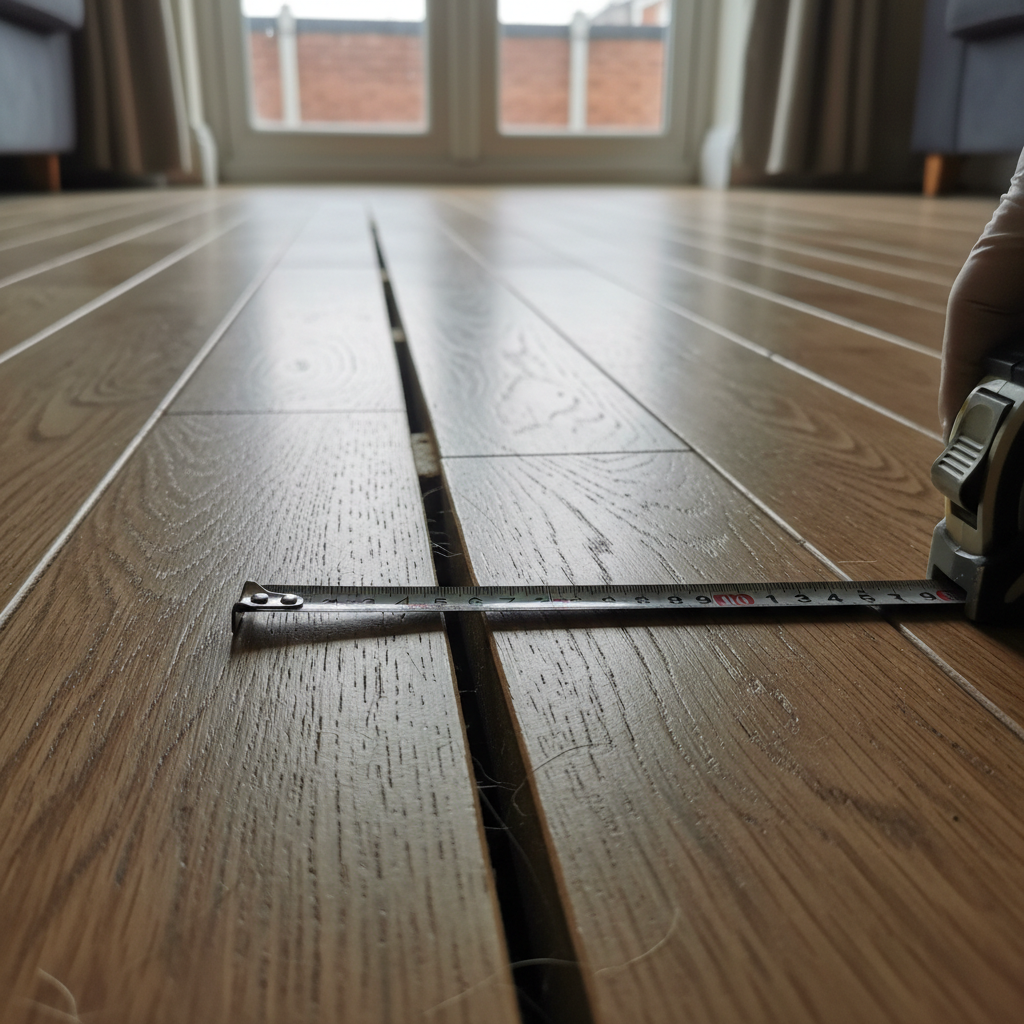
Wood is a hygroscopic material. Planks absorb moisture when the air is damp and release it when the environment dries out. During a British winter, external air holds relatively little moisture. When that cold air is brought indoors and heated by radiators or underfloor systems, the relative humidity inside the property can drop markedly.
As the timber gives up its moisture to reach equilibrium with the dry indoor air, the boards shrink across their width. If a room has fifty boards laid side by side, even a fraction of a millimetre of shrinkage per board can accumulate into noticeable gaps throughout the floor. In a balanced installation, this movement is distributed evenly across the floor area, and the gaps generally close up again when spring and summer humidity returns. When that movement is uneven, excessive, or permanent, I have to look deeper into the physical evidence.
Gapping in solid hardwood floors during winter: Normal movement or a defect?
Homeowners naturally worry when they can slip a ten-pence piece between their floorboards, but seasonal movement alone does not automatically constitute a defect. In my professional opinion, the distinction between normal seasonal behaviour and a genuine fault comes down to uniformity, board width, and whether the timber returns to an acceptable profile once conditions normalise.
When evaluating gapping in solid hardwood floors during winter, I look for several telltale indicators:
- Isolated wide gaps appearing in only two or three locations, which often points to boards being bonded together or restricted elsewhere.
- Consistent, hairline gaps across the entire expanse, which typically indicates uniform seasonal contraction rather than a structural failure.
- Lipping or edge crush, where boards expanded previously against a solid restriction and then shrank back with damaged tongue-and-groove joints.
- Cupping or crowning across the face of the planks accompanying the gaps, suggesting a moisture differential between the top surface and the sub-floor.
Where the gaps appear evenly distributed across a wide floor area and the sub-floor remains stable, the condition is frequently environmental. However, if the floor gaps excessively despite the property maintaining reasonable indoor humidity levels, the focus must shift to installation practices and the quality of the timber itself.
Separating installation defects from manufacturing issues
When a floor develops unacceptable gaps, the dispute usually centres on who is responsible: the manufacturer, the fitter, or the environment. Establishing the timeline and the underlying cause requires careful on-site testing.
Installation defects frequently stem from inadequate acclimatisation. If solid timber planks are delivered to a cold, newly plastered site and installed before reaching equilibrium moisture content with the living environment, significant shrinkage is inevitable once the central heating is commissioned. Similarly, if the installer failed to leave adequate expansion gaps around the perimeter beneath the skirting boards, or alternatively pinned through boards incorrectly, the natural movement cycle is compromised. When planks are prevented from moving outward during humid phases, they crush together at the edges, resulting in permanent wider gaps when dry winter air arrives.
Manufacturing defects, while less frequent, do occur. Timber that was improperly dried in the kiln can retain internal stresses or an unstable core moisture content. When these boards are machined, they may conform to dimensional tolerances initially, but release those stresses unevenly once exposed to standard domestic conditions. In other cases, irregular machining of the tongue-and-groove profile prevents adjacent boards from engaging correctly, leading to localised gaps that appear independent of seasonal humidity changes.
Normal wear and tear rarely causes gaps between solid planks. Wear tends to manifest as surface finish erosion, scratching, or minor indentations in high-traffic zones. If a gap has opened between boards, it is almost invariably linked to moisture variation, sub-floor movement, or fixity.
What happens during an independent inspection
When I arrive at a property to assess a floor, visual inspection is only the starting point. I do not guess what has happened beneath the surface. At the time of inspection, I use calibrated pin and pinless moisture metres to measure the electrical resistance and moisture content across multiple points on the timber.
I also evaluate the ambient conditions using thermo-hygrometers to record the air temperature, relative humidity, and dew point within the living space. If underfloor heating is present, floor surface temperatures must be measured across the zones to ensure the system is operating within acceptable limits.
Where accessible, I examine the perimeter of the room. Removing a section of skirting board or using a borescopic camera allows me to confirm whether the correct perimeter expansion clearance was provided. If the floor has been laid over a concrete sub-floor, assessing the presence and integrity of the damp-proof membrane is essential. Based on the findings gathered through these non-destructive tests, it becomes clear whether the shrinkage is a predictable seasonal response, an installation shortfall, or an inherent material defect.
When to call an independent inspector
If your floor has developed wide, unsightly gaps and discussions between your installer, retailer, or builder have reached a stalemate, an independent expert report provides the factual clarity needed to resolve the matter. Based on verifiable testing and standards recognised across the trade, my reports offer an impartial assessment of whether your floor complies with good industry practice.
I provide independent flooring inspection services across the entire UK and am recognised by the Furniture and Home Improvement Ombudsman for dispute resolution. Whether you require a concise assessment or a comprehensive diagnostic report, you can review my inspection packages or contact me directly to discuss your situation.
Have a flooring problem of your own?
We are independent UK flooring inspectors. Tell us about your case and we will recommend the right inspection package, with a fixed fee in writing before any work begins.