
Peaking and Edge Swelling in Laminate Flooring
A guide to peaking and edge swelling in laminate flooring, covering expansion gaps, moisture ingress, and checks homeowners can make.
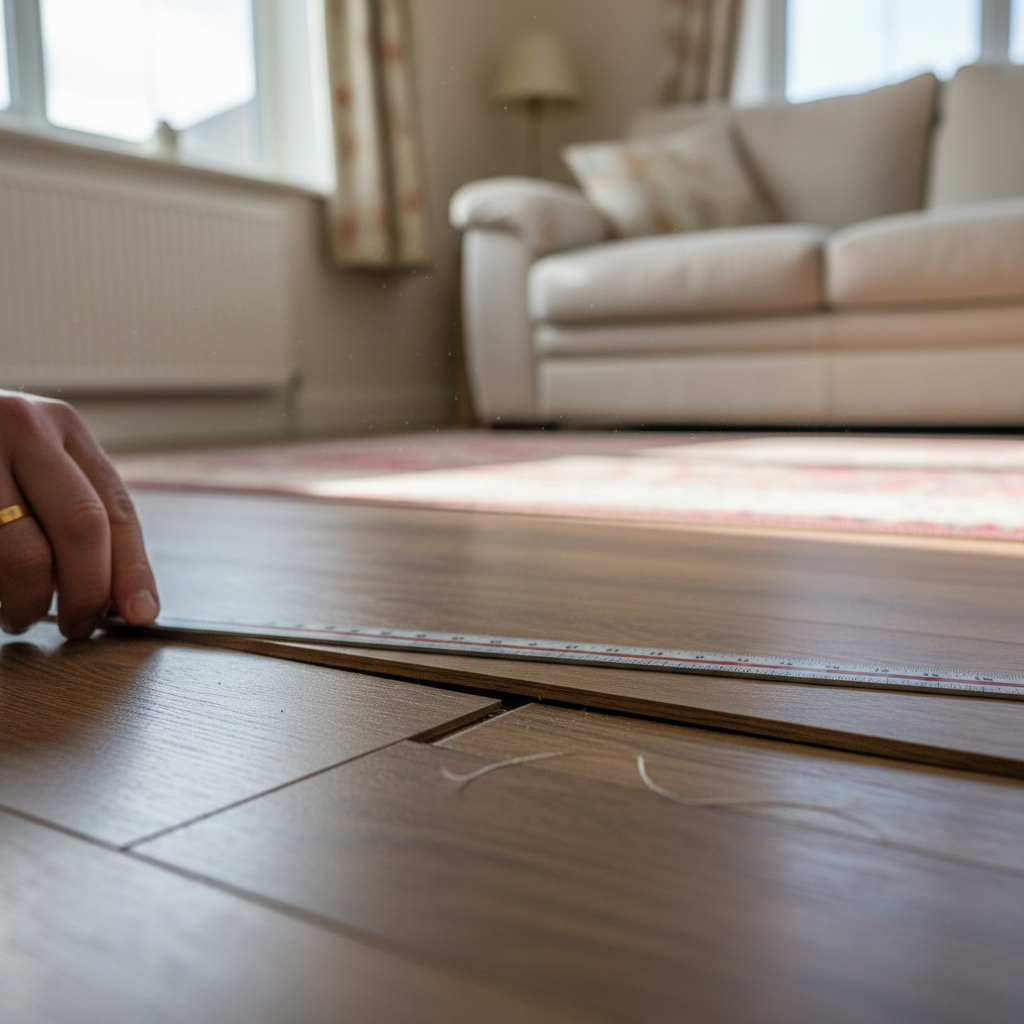
On a recent site visit to a modern townhouse, the homeowner ran a hand across their hallway floor and described it as feeling like a series of tiny ridges underfoot. In daylight, you could see the joints lifting where the plank edges met, casting faint shadows across the room. Peaking and edge swelling in laminate flooring is one of the most frequent reasons I am asked to inspect a property, and while the surface symptoms can look identical to an untrained eye, the underlying causes are usually distinct.
In broad terms, two separate mechanisms produce raised edges: mechanical pressure caused by restricted movement, or direct exposure to liquid and excessive atmospheric moisture. Distinguishing between them requires careful on-site examination, but there are several practical checks a homeowner can perform before arranging an independent report.
Understanding peaking and edge swelling in laminate flooring
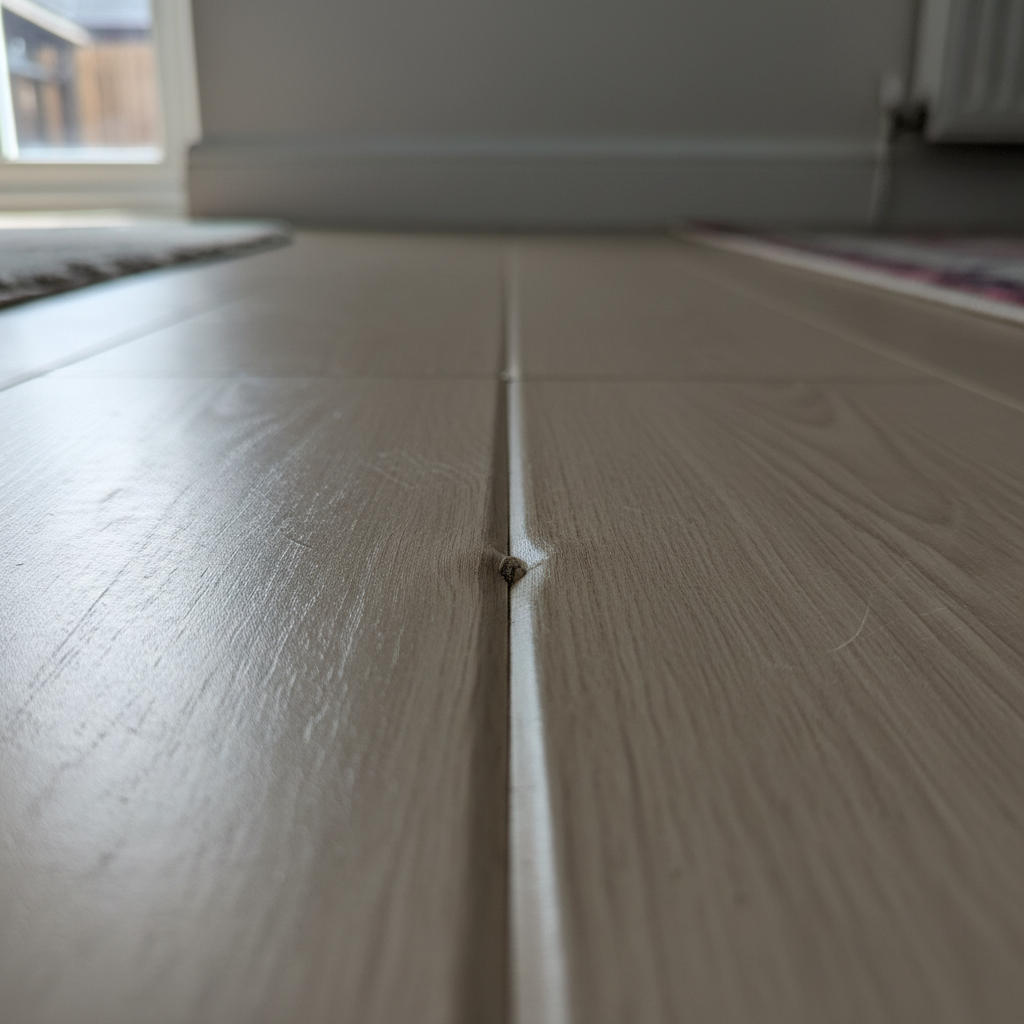
Laminate planks are manufactured with a high-density wood fibre core, which naturally expands and contracts as ambient temperature and relative humidity change throughout the seasons. British Standard BS 8201 provides clear guidance on the installation of floating wood-based panel products, emphasising the necessity of allowing the floor to move freely across its entire surface.
When a floor expands without adequate perimeter clearance, the planks push against the surrounding walls, door frames, or radiator pipes. Because the planks have nowhere else to go, the lateral pressure forces the click joints upwards, creating raised ridges at the joints. This is classic peaking. Edge swelling, by contrast, occurs when moisture penetrates the protective wear layer and enters the vulnerable core at the joints, causing the fibreboard to absorb water and expand locally.
What causes moisture-induced joint damage?
Water ingress at joints often stems from wet maintenance routines. Modern laminate surfaces are durable, but prolonged contact with liquids from steam mops, saturated string mops, or untended household spills can quickly compromise unsealed joints.
When liquid sits on the surface, capillary action draws it down into the click mechanism. Once the high-density fibre core absorbs that water, it swells. Unlike natural timber, swollen fibreboard rarely returns completely to its original dimensions after it dries out. On site, I look closely for associated signs such as white residue along the bevels, slight discolouration of the decorative paper layer, or localised damage confined to kitchen sink areas and utility doorways.
Simple checks you can carry out at home
Before calling in an expert, there are a few straightforward observations you can make to help narrow down what is happening:
- Check the perimeter clearances by removing a small section of scotia beading or looking inside fitted cupboards where the flooring terminates.
- Examine radiator pipes to verify whether the holes drilled around them leave several millimetres of free space or grip the pipes tightly.
- Observe whether heavy kitchen islands, fitted wardrobes, or large domestic appliances have been installed directly on top of the floating floor.
- Assess whether the ridges run throughout the entire room or appear only near external doors, pet bowls, or plumbing fixtures.
If the flooring is hard up against the skirting board or pinned down by heavy fitted furniture, the floating mechanism has been compromised. In my experience, if the floor is completely tight at the walls, relieving that perimeter tension by trimming the perimeter can sometimes allow minor peaking to settle over several weeks, provided the joint tongues have not broken.
How an inspector identifies the root cause
When I arrive at an inspection, my role is to establish the facts objectively. I use calibrated non-destructive pinless moisture metres across the floor surface to map any patterns of dampness. Where suspended timber or solid concrete sub-floors are present, I assess whether moisture could be rising from beneath, checking for an appropriate damp proof membrane underlay.
Where accessible, lifting a threshold strip or removing a single perimeter board allows me to measure the exact expansion gap left by the installer. If water ingress is suspected from cleaning habits, the moisture readings at the raised seams will often differ significantly from the centre of the planks. In my professional opinion, distinguishing between mechanical pinching and moisture-related edge degradation requires systematically ruling out each potential failure point until the evidence points clearly to one conclusion.
Based on the findings recorded at the time of inspection, it is usually straightforward to determine whether the issue stems from an installation fault, site conditions, or post-installation maintenance.
When to call an independent inspector
If you have checked your expansion gaps and found nothing obvious, or if you are involved in a formal dispute with an installer, retailer, or manufacturer, an independent expert report provides the clarity needed to resolve the matter. An impartial assessment cuts through competing opinions by evaluating the installation strictly against recognised industry standards and manufacturer guidelines.
I provide independent flooring inspection services across the entire United Kingdom and am trusted by the Furniture and Home Improvement Ombudsman to deliver thorough, unbiased reports. Whether you require a focused assessment or a comprehensive diagnostic report, you can review my Silver, Gold, and Diamond inspection packages or get in touch directly via the contact page to discuss your floor.
Have a flooring problem of your own?
We are independent UK flooring inspectors. Tell us about your case and we will recommend the right inspection package, with a fixed fee in writing before any work begins.