
Peaking and Edge Swelling in Laminate Flooring: Causes & Checks
An expert guide to peaking and edge swelling in laminate flooring. Learn how missing expansion gaps and moisture cause these common issues.
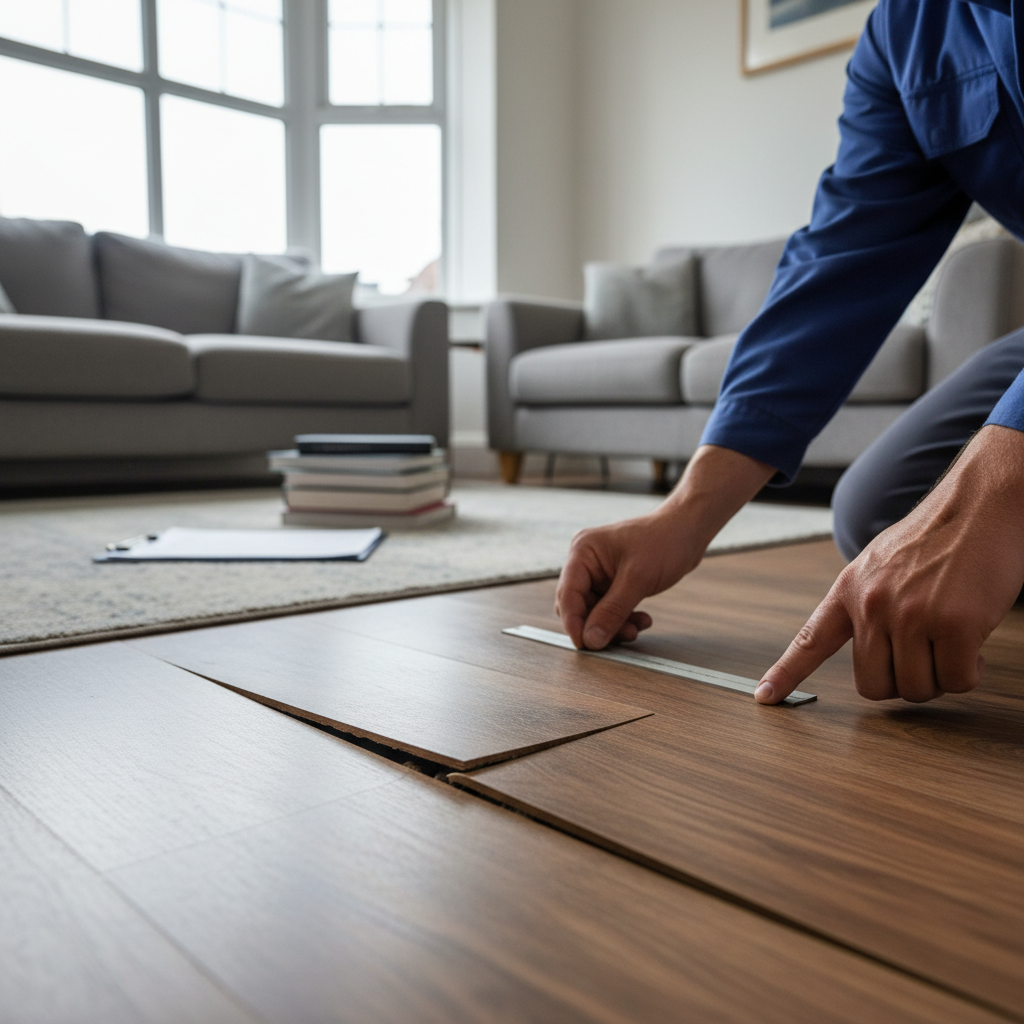
A call I often receive is from a homeowner concerned about their new laminate floor. It looked perfect when first installed, but after a few weeks or months, ridges have appeared along the joints, or the whole floor has lifted slightly in the middle of the room. This is a common and frustrating situation. This phenomenon is often described as peaking and edge swelling in laminate flooring, and it is a frequent reason for a site inspection. Based on my findings on site, the cause is almost always related to one of two factors: expansion or moisture.
What is the difference between peaking and swelling?
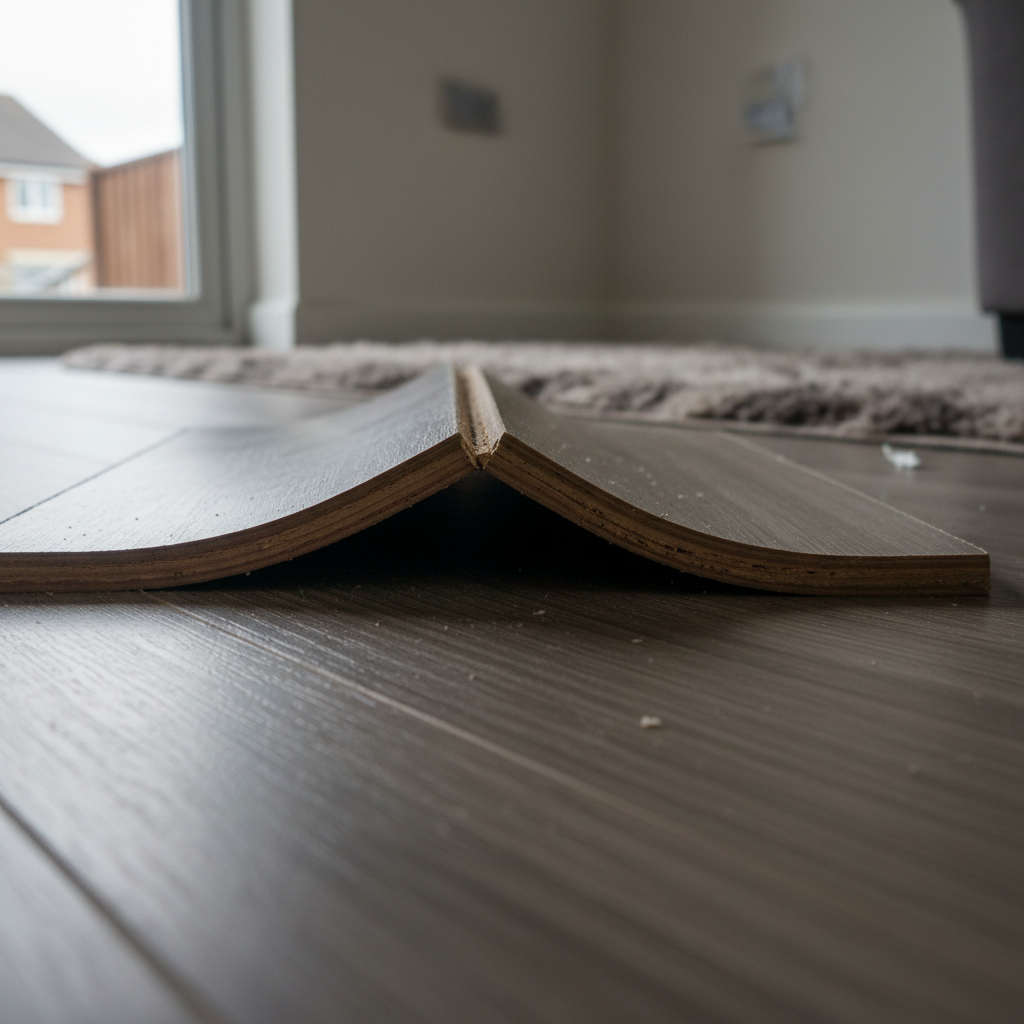
Although they can look similar to the untrained eye, peaking and swelling are distinct issues. At the time of inspection, I will first determine which one is present, or if it is a combination of both.
Peaking, sometimes called 'tenting', is when two adjacent boards are pushed together with such force that the joint lifts upwards, forming a peak. If you run your hand over it, you feel a distinct ridge. This affects the entire length of the board joint. This is a classic sign of compressive stress within the floor, where the boards are expanding but have nowhere to go.
Edge swelling is different. This occurs when the core material of the laminate board, which is usually a high-density fibreboard (HDF), absorbs moisture. This causes the material itself to swell. The swelling is localised to the edges of the boards where the moisture has penetrated the joint. The result is that the edges of a plank will feel raised and proud, but the centre of the plank remains flat. This is often caused by water from cleaning, spills, or even high atmospheric humidity.
The critical role of the expansion gap
Laminate flooring is what we call a 'floating floor'. It is not fixed directly to the subfloor with nails or glue. The boards are designed to expand and contract naturally with seasonal changes in temperature and humidity within the home. To allow for this movement, a small gap must be left around the entire perimeter of the room.
This is known as the expansion gap. It is typically hidden from view by the skirting boards or by a small quadrant beading fitted after the floor is laid. British Standards, such as BS 8201, provide guidance on the installation of wood-based flooring, and leaving an adequate expansion gap is a fundamental requirement.
When I am called out to a job like this, the first thing I look for is evidence of this gap. If an installer has fitted the floor flush to the walls, or tight around radiator pipes, kitchen islands or door frames, they have created 'pinch points'. As the floor expands, it presses against these fixed points. With nowhere else to go, the pressure builds until the floor relieves the stress by lifting upwards, causing peaking.
What you can check before calling an inspector
Before you make a call, there are a few simple checks you can perform. This can help you understand the potential problem and provide useful information. Be careful not to cause any damage during your checks.
- Look for the gap: Get down low and see if you can spot a gap between the edge of the flooring and the wall or skirting. If a beading is fitted, you may not be able to see it. Check around door casings and radiator pipes, as these are common areas where gaps are forgotten.
- Check for fixed points: Is there a very heavy piece of furniture, like a kitchen island or a fitted bookcase, that has been installed on top of the floating floor rather than before it was laid? This can pin the floor down and prevent movement.
- Consider moisture: Think about how the floor is cleaned. Is a very wet mop being used? Have there been any leaks or significant spills recently? Check around pet water bowls, radiators, and kitchen sinks. High humidity in a new-build property that is still drying out can also contribute enough moisture to cause issues.
- Use a straight edge: Place a known straight edge, like a spirit level, across the joints. If it rocks over a distinct peak, that indicates peaking. If the edges of each board feel raised but the centre is lower, that points towards edge swelling.
These observations can provide a good initial indication of the likely cause. However, a conclusive determination often requires a professional inspection.
Investigating peaking and edge swelling in laminate flooring
When I conduct a formal inspection, I use specialist equipment to gather evidence. My investigation of peaking and edge swelling in laminate flooring is a methodical process.
First, I will visually assess the entire floor area, noting the location and extent of the issue. I will then take multiple readings across the floor surface using a pinless moisture metre to detect any signs of elevated moisture. If required, and with permission, I may use a pin metre to test the subfloor. I also use a thermohygrometer to measure the ambient temperature and relative humidity in the room, as this is a key factor in how flooring behaves.
To confirm the presence or absence of an expansion gap, it is sometimes necessary to carefully remove a length of beading. In some cases, and only with the homeowner's consent, it may be appropriate to lift a single plank at the edge of the installation to directly measure the gap and inspect the subfloor condition. No evidence of an adequate expansion gap is a significant finding.
In my professional opinion, a methodical, evidence-based approach is the only way to correctly identify the root cause. Distinguishing between peaking caused by installation error and swelling caused by localised moisture is essential, as the responsibility for the fault will differ.
When to call an independent inspector
If you have an issue with your laminate flooring and are in dispute with your retailer or installer, an independent report can provide the clarity needed to move forward. My reports are based on physical evidence gathered on site and are written in accordance with Civil Procedure Rules, making them suitable for formal proceedings if required.
I am based in the North West but provide flooring inspection services across the entire UK. As a recognised expert trusted by the Furniture and Home Improvement Ombudsman, I provide impartial, evidence-based reports to homeowners, retailers, and manufacturers. To find out more about the process, please review my inspection packages or get in touch via my contact page to discuss your specific issue.
Have a flooring problem of your own?
We are independent UK flooring inspectors. Tell us about your case and we will recommend the right inspection package, with a fixed fee in writing before any work begins.