
Pile Reversal, Shading and Tracking on New Carpets
Explaining pile reversal, shading and tracking on new carpets. Understand what causes these effects and how an independent report can clarify the issue.
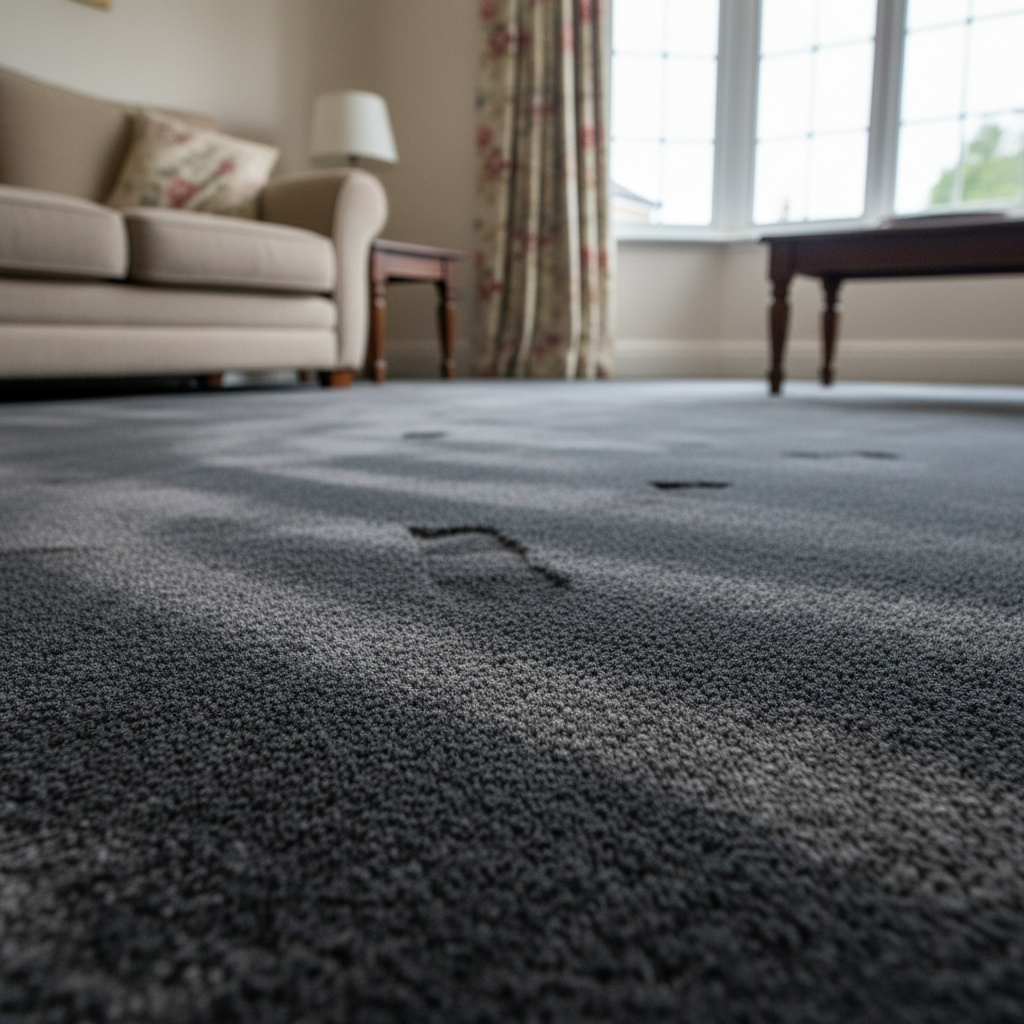
A call I often receive involves a new carpet that has developed dark and light patches, almost like pools of water. The homeowner is understandably concerned, having spent a good deal of money on their new floor. The patches seem to change or move depending on the viewing angle and the time of day. This is a classic description of a very common issue. Concerns about pile reversal, shading and tracking on new carpets are one of the most frequent reasons for an inspection request.
In my experience, the visual effects are rarely a sign that the colour has faded or that the carpet is faulty. Instead, they relate to how the fibres reflect light.
What are shading and pile reversal?
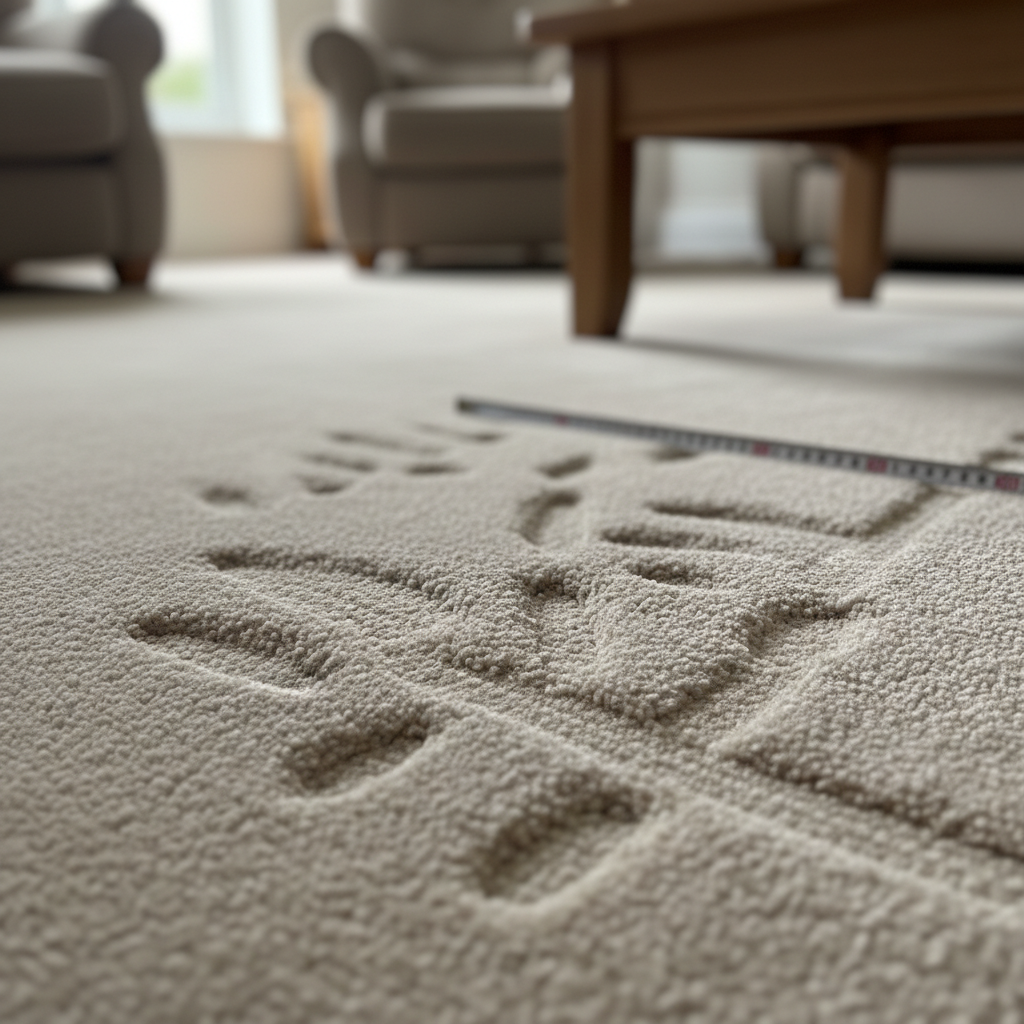
Most cut pile carpets, particularly those with a uniform, plush, or velvet-like surface, are susceptible to this phenomenon. During use, the pile fibres become disturbed. Foot traffic, vacuuming, and even simple movements across the floor will push the tufts in various directions.
When the pile lies in one direction, it might reflect light towards you, appearing light in colour. When it is pushed the other way, it absorbs more light and appears darker. This is known as shading. Tracking refers specifically to the marks left by footprints. In most cases, these marks can be brushed out or will disappear after the next vacuum clean.
Permanent pile reversal is a more pronounced version of this. It describes areas where the pile has changed direction permanently and will not brush back to its original orientation. These areas often appear as distinct patches. It is important to state that, within the flooring industry, pile reversal is considered an inherent characteristic of certain carpet styles. It is not classified as a manufacturing defect.
The importance of installation standards
The way a carpet is installed can influence the initial appearance of shading. The British Standard for the installation of textile floor coverings, BS 5325, provides guidance for fitters. A key principle is that all separate pieces of carpet in a single area should be laid with the pile running in the same direction.
When I am called to a site, I will always check the pile direction, especially at seams or on staircases. If one piece has been laid with the pile running against an adjacent piece, the difference in light reflection can be obvious from day one. This would be an installation issue. However, even with a perfect installation, normal shading and tracking will still occur over time as the carpet is used. An installer cannot prevent this from happening.
Assessing pile reversal, shading and tracking on new carpets
Disputes often arise because the homeowner believes the carpet is faulty, while the retailer or manufacturer states it is exhibiting normal behaviour. My role is to provide an objective, evidence-based assessment. When on site, I analyse the situation methodically.
First, I examine the carpet under different lighting conditions: natural light from windows and artificial light from overhead fittings. I view the areas of concern from multiple angles around the room. I will then brush the pile with my hand to see how easily the shading effect can be altered. This helps to differentiate temporary tracking from more permanent pile reversal.
I also identify the carpet's construction. Is it a twist pile, a saxony, or a velour? The construction is a major factor in its propensity to show shading. A long, loose pile will show tracking more readily than a short, dense twist pile. My findings are then compared against the accepted characteristics for that specific type of carpet. The report I produce will state whether, in my professional opinion, the carpet's behaviour is consistent with its type or if there is any evidence of a genuine manufacturing fault, such as colour banding, which is an entirely different issue.
Ultimately, the phenomenon of pile reversal, shading and tracking on new carpets is one of light reflection, not of colour loss or fibre damage. While it can be visually distracting, it is not a sign that the carpet is wearing out prematurely. The best course of action is often to be aware of this possibility at the point of purchase, especially if choosing a plain, single-colour velour or saxony carpet.
When to call an independent inspector
If you find yourself in a dispute with a retailer or installer over your new carpet and cannot reach an agreement, an independent inspection report provides a factual basis for your discussions. I provide a clear, unbiased assessment of the flooring based on decades of on-site experience, which can be used to help resolve the complaint.
As a fully independent inspector trusted by the Furniture and Home Improvement Ombudsman, I provide services across the entire United Kingdom. I offer several report types to suit your needs, from a preliminary Silver appraisal to a comprehensive Diamond report. For more information on the options available, please see my packages page. To discuss your specific situation, please contact me directly.
Have a flooring problem of your own?
We are independent UK flooring inspectors. Tell us about your case and we will recommend the right inspection package, with a fixed fee in writing before any work begins.