
Pile Reversal, Shading and Tracking on New Carpets
Learn how to assess pile reversal, shading and tracking on new carpets, understand normal fibre behaviour, and check your floor before booking an inspection.
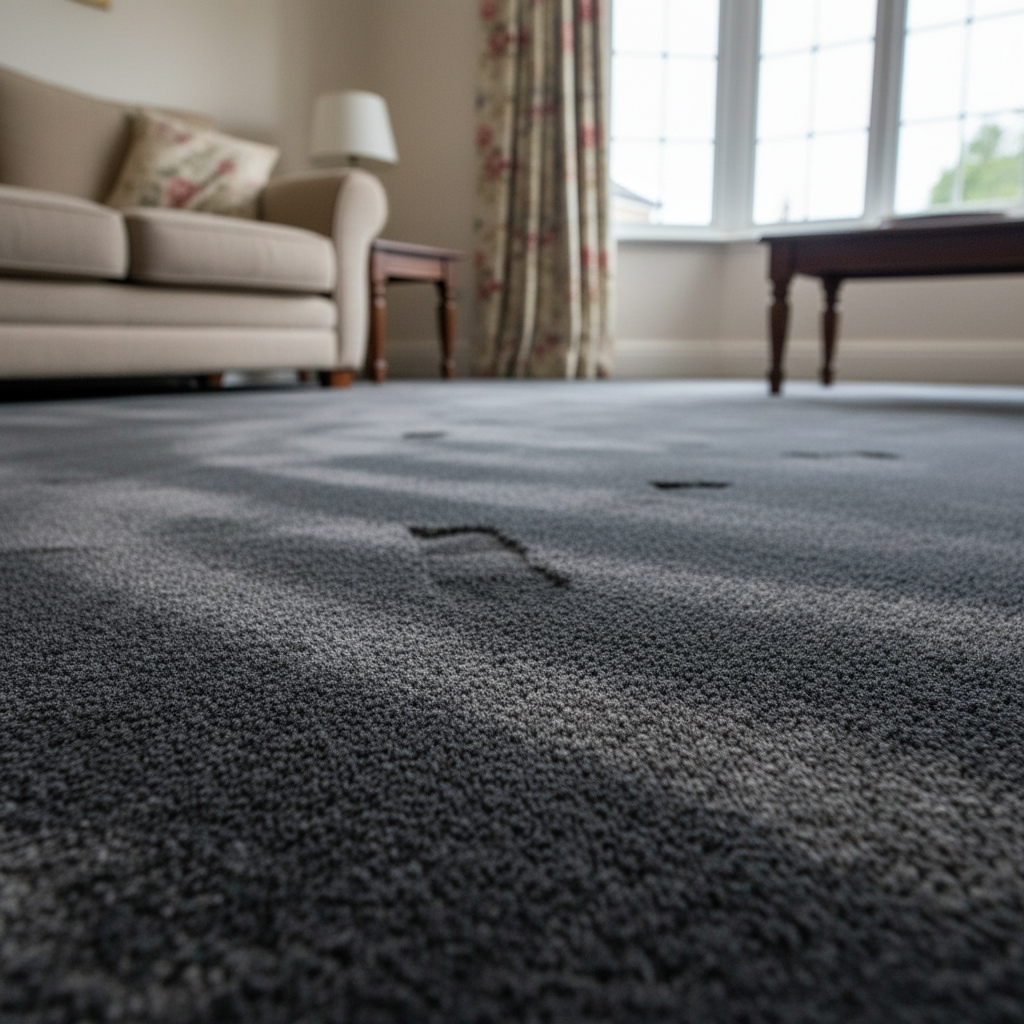
A newly fitted carpet represents a major investment, so it is understandable that homeowners feel aggrieved when dark bands, pale patches, or footprint marks appear within days of installation. Pile reversal, shading and tracking on new carpets often cause significant alarm, leading many people to assume their new flooring has a serious manufacturing fault.
In my experience on site, the situation is frequently more nuanced. While manufacturing defects do occur, changes in surface appearance are very often optical effects inherent to cut-pile textiles. Distinguishing between normal textile behaviour and a genuine manufacturing or installation failure requires a systematic approach based on physical evidence.
Understanding the difference between tracking and permanent shading
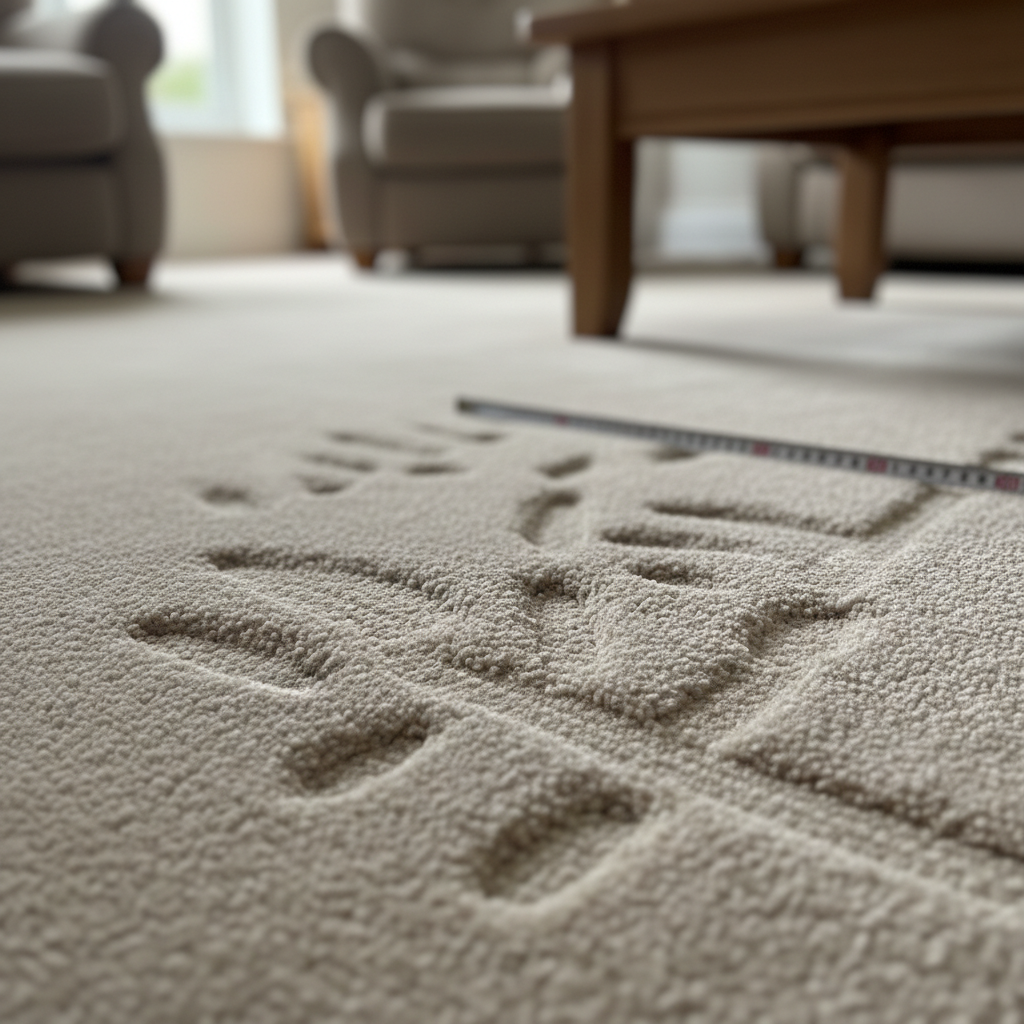
Tracking is the temporary depression of carpet pile caused by foot traffic. When you walk across a plush, cut-pile carpet, the weight of your step pushes the upright tufts sideways. Because light reflects differently off the side of a carpet yarn compared to the tip, the flattened area looks lighter or darker than the surrounding floor. Vacuuming the room or brushing the tufts back against the lay will usually restore the original appearance. Tracking is an inherent characteristic of many carpet constructions, particularly saxonies and deep velvet piles, rather than a defect.
Permanent shading, often referred to as watermarking or pooling, presents differently. It appears as irregular, smooth-edged patches that look like wet spills on a dry floor. Under closer inspection, the tufts in these areas have permanently altered their direction of lay. Light hits the slanted fibres at a different angle, creating an optical contrast. Despite decades of industry research, no single external trigger has been proven to cause this phenomenon. It can occur on expensive wool carpets as easily as on synthetic blends, and it does not affect the physical durability of the pile.
Practical checks homeowners can carry out first
Before commissioning an independent report, there are several straightforward checks you can carry out yourself to gather preliminary evidence.
First, test the direction of the pile using a clean sheet of white paper. Place the paper flat on the surface and rub your hand back and forth over it. The sheet will tend to move in the direction that the carpet pile naturally leans. Check whether the pile lay runs consistently towards the entrance of the room, as recommended by British Standard BS 5325 for textile floor coverings. If adjacent breadths of carpet have been fitted with the pile pointing in opposite directions, the resulting colour difference is an installation error, not pile reversal.
Second, observe the floor at different times of day. Natural daylight entering through low windows will exaggerate surface shading, whereas artificial overhead lighting may minimise it. Take photographs from several viewpoints, both looking with the pile direction and looking against it.
Third, examine the sub-floor beneath the affected areas if access permits. Occasionally, localised unevenness or sudden variations in underlay thickness can concentrate foot pressure along specific lines, creating localized tracking that mimics a manufacturing fault.
Pile reversal, shading and tracking on new carpets in formal disputes
When a homeowner contacts a retailer about pile reversal, shading and tracking on new carpets, the initial response is almost always that shading is a recognised natural phenomenon. Retailers and manufacturers often point to standard trade terms stating that permanent pile reversal is not covered under warranty.
However, this does not mean every visual anomaly is benign shading. On site, I look carefully for evidence of manufacturing irregularities, such as:
- Variations in yarn tension during tufting, which create physical ridges or bands across the roll width.
- Inconsistent dye application or streaks along the length of the broadloom.
- Missing tufts or uneven pile height resulting from faulty shearing knives at the mill.
- Delamination where the primary backing separates from the secondary backing, allowing the pile to collapse unevenly.
If the change in appearance is accompanied by a measurable drop in tuft density or loose fibres coming away under moderate friction, the issue is far more likely to be a manufacturing defect. In my professional opinion, each case must be assessed on its individual merits, using controlled lighting, magnification, and physical testing of the yarn integrity.
How an independent inspection clarifies the issue
When dialogue between a buyer and a retailer reaches an impasse, an independent expert provides an objective, third-party assessment. At the time of inspection, I examine the carpet under cross-lighting, inspect the seams, assess the underlay, and examine the tuft construction under magnification. I also verify compliance with BS 5325 regarding pile lay, tension, and gripper placement.
If the evidence demonstrates that the floor exhibits standard shading, the report explains the physics clearly, helping the homeowner understand why the retailer took their position. Conversely, where manufacturing inconsistencies, poor shearing, or incorrect fitting are identified, the written report provides the technical evidence required to pursue a formal remedy under consumer rights legislation.
When to call an independent inspector
If you have completed your own checks and the retailer maintains that a physical defect is merely optical shading, an independent floor inspection can resolve the dispute with authoritative evidence.
I cover the whole UK, providing independent assessments trusted by the Furniture and Home Improvement Ombudsman. For details of my fixed-fee reporting services, view my inspection packages or get in touch via the contact page to discuss your floor.
Have a flooring problem of your own?
We are independent UK flooring inspectors. Tell us about your case and we will recommend the right inspection package, with a fixed fee in writing before any work begins.