
Screed and Latex Compound Failures Explained
An independent flooring inspector explains why sub-floor preparation is so important. A guide to screed and latex compound failures explained by moisture issues.
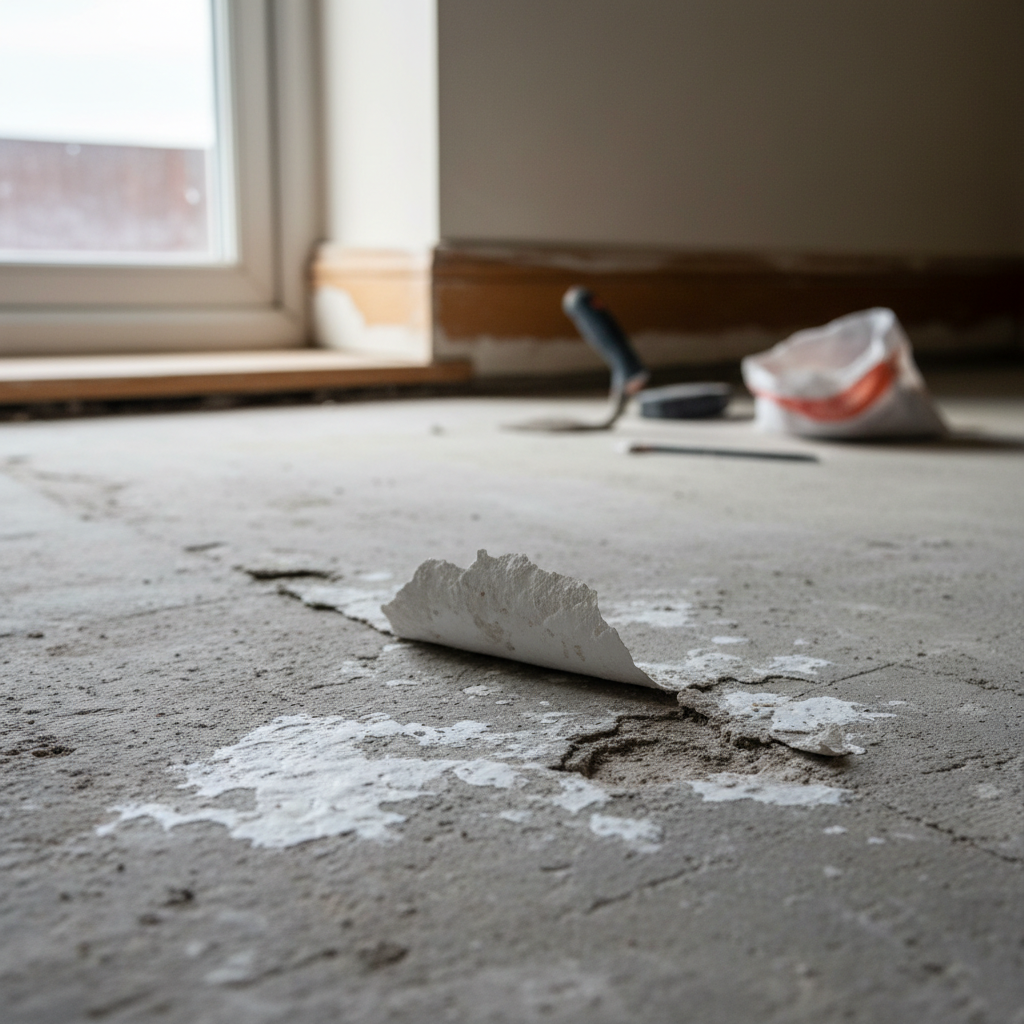
It is a situation I encounter frequently. A homeowner has a beautiful new floor, often a luxury vinyl tile or similar, laid only a few months ago. Now, tiles are beginning to lift at the edges, or unsightly ridges are appearing through the surface. The installation company might suggest a product fault, while the manufacturer may point to the fitting. When I am called to investigate, the problem is often found in the layers beneath the floor itself. For homeowners caught in this situation, having the causes of screed and latex compound failures explained in a clear, evidence-based way is the first step towards a resolution.
What is happening under your floor?
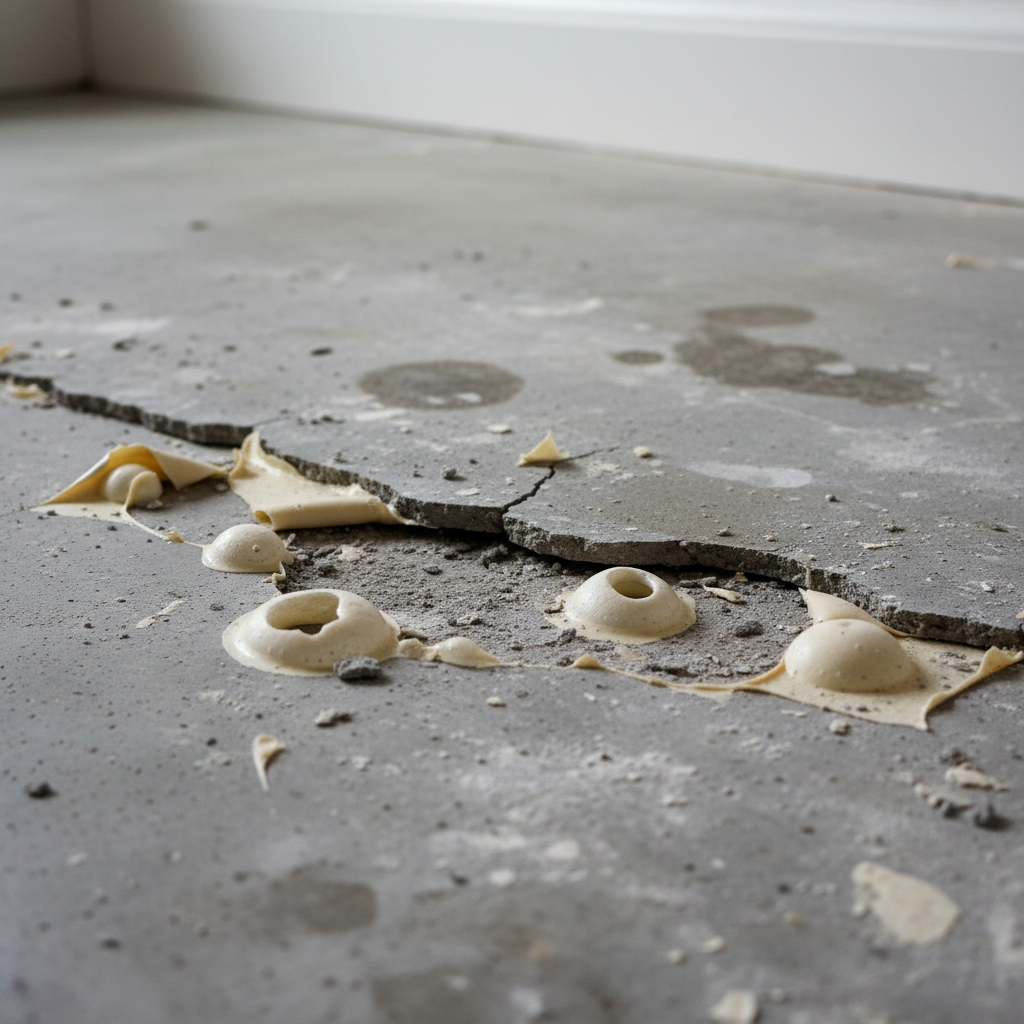
Before any floor covering is installed, the base it is being laid upon, known as the sub-floor, must be suitable. In most properties, this involves either a concrete or sand and cement screed, or timber floorboards. To achieve the perfectly flat and smooth surface required for modern flooring, a smoothing compound (often referred to as a latex compound, though not all are latex-based) is applied over the structural sub-floor.
This compound serves two purposes: it levels out imperfections in the screed and provides a non-absorbent, stable surface for the adhesive to bond to. The success of the entire flooring system, from the screed right up to the surface you walk on, depends on each layer being correctly prepared, applied, and cured. A failure in the screed or the smoothing compound will almost inevitably manifest as a problem with the final floor covering.
The role of moisture in screed and latex compound failures explained
In my experience, the most common cause of a breakdown in the sub-floor preparation is moisture. A newly laid sand and cement screed contains a significant amount of water from the mixing process. This must be allowed to dry naturally. Guidance in British Standards suggests a drying time, but this is only a guide and can be affected by site conditions like temperature and humidity. It is not a substitute for proper measurement.
When a smoothing compound and floor covering are laid over a screed that has not dried sufficiently, the residual moisture becomes trapped. This trapped moisture vapour can cause a number of problems:
- It can break down the flooring adhesive, causing the floor to de-bond from the sub-floor.
- It can soften the smoothing compound itself, causing it to lose its structural integrity and crumble.
- It can create a high-alkaline environment which attacks the adhesive, a process known as saponification.
At the time of inspection, my first task is to establish the moisture condition of the sub-floor. I use a calibrated digital hygrometer to measure the relative humidity (RH) of the air trapped between the sub-floor and the impermeable metre. This is a key test method recognised by British Standards. I will also use a pinless surface moisture metre to map out any areas of concern. These readings, when compared to the manufacturer's stated tolerances for their adhesive and flooring, provide clear, factual evidence about the conditions at the time the floor was installed. If the RH level is found to be above the maximum limit, it strongly indicates the screed was not suitably dry.
Other common causes of failure
While moisture is the leading cause, it is not the only one. My investigation on site also looks for other potential issues. Incorrect mixing of the smoothing compound, for instance, can lead to a weak and friable surface that offers no strength. I have seen compounds mixed with too much water that have simply turned to dust under the flooring.
Contamination is another factor. If the screed is not properly cleaned of dust, debris, or old adhesive residues before the new compound is applied, a proper bond cannot be achieved. The compound may look fine initially but will de-laminate from the screed under normal foot traffic. Similarly, a failure to use the correct primer can prevent the compound from adhering correctly. My inspection involves carefully lifting a section of the flooring system (with permission) to examine these layers. Based on the findings, I can observe the condition of the compound, how well it is bonded, and what it is bonded to.
How an inspection provides clarity
When I am called out to a job like this, my role is to be impartial and to report only on the evidence I find. The process begins with a non-destructive visual assessment of the entire floor. I then conduct a series of tests, primarily focused on moisture, to build a picture of the sub-floor's condition.
Where necessary and where permission is granted, a small section of the floor covering and smoothing compound may be lifted for analysis. I examine the back of the flooring, the state of the adhesive, the integrity of the smoothing compound, and the surface of the structural screed below. Each layer tells a part of the story. The evidence is documented with high-resolution photographs.
In my professional opinion, a detailed report compiling this evidence is the most effective way to resolve a dispute. It moves the discussion away from opinion and towards the facts of the matter. The report will identify the most probable cause of the failure, referencing the collected data and, where applicable, the relevant British Standards and the manufacturer's own installation guidance. No evidence is ignored; the report presents a balanced view based on what could be observed on the day of the inspection.
When to call an independent inspector
If your new flooring is failing and you find yourself in a dispute with your retailer or installer, an independent inspection report provides the impartial, expert evidence you need to move forward. As a fully independent inspector, I cover the whole of the UK, providing clear, factual reports to help resolve flooring disputes.
I am a recognised expert, and my reports are trusted by retailers, manufacturers, and organisations such as the Furniture and Home Improvement Ombudsman. For more information on the different types of inspection report I offer, please see my inspection packages. To arrange an inspection or to discuss your issue, please use the contact form on this website.
Have a flooring problem of your own?
We are independent UK flooring inspectors. Tell us about your case and we will recommend the right inspection package, with a fixed fee in writing before any work begins.