
Underfloor Heating and Wood Floors: What Can Go Wrong
An expert flooring inspector explains the common issues with underfloor heating and wood floors. Learn what can go wrong and what an insurer or retailer looks for.
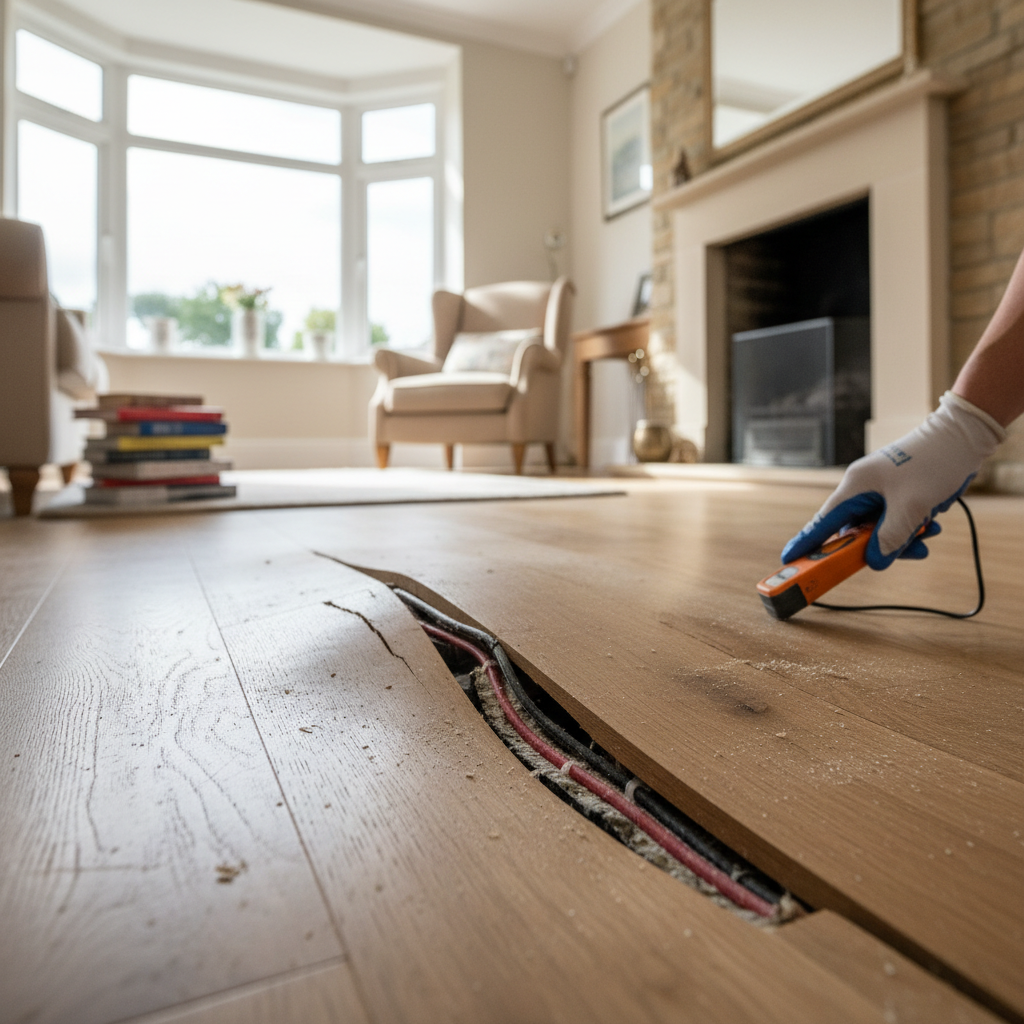
It is a call I receive quite often. A homeowner has invested in a beautiful new wood floor, complete with the comfort of underfloor heating. For the first few months, everything seems perfect. Then, gaps start appearing between the boards, or the boards themselves begin to cup, their edges lifting slightly. This is a classic example of underfloor heating and wood floors: what can go wrong. When a floor begins to fail in this way, the question of liability becomes the central issue, and a detailed, evidence-based report is often required to establish the facts.
Is your wood flooring suitable for underfloor heating?
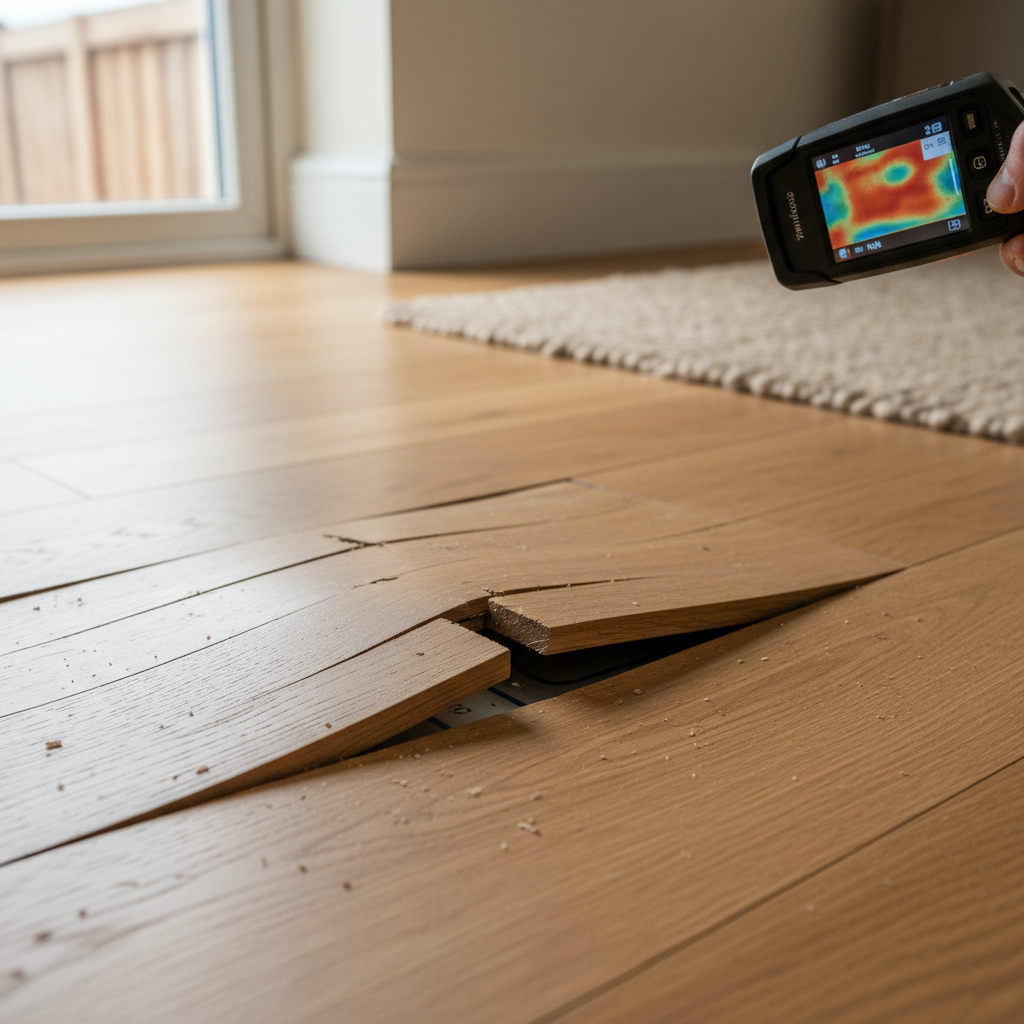
Not all wood flooring is created equal, especially when it comes to underfloor heating (UFH). As a general rule, engineered wood flooring is more stable than solid wood. Its layered construction makes it less susceptible to movement caused by changes in temperature and humidity. Solid wood, being a single piece of timber, is more prone to expand and contract.
However, even with engineered wood, it is not a given that it is suitable. The manufacturer's own technical specifications are the primary source of guidance. When I am instructed to investigate a failure, one of the first documents I request is the product data sheet. This should state clearly whether the flooring is compatible with UFH systems and provide any specific requirements, such as maximum board width or thickness. If a product not rated for UFH has been installed over it, this will be a significant finding in any report.
What is a commissioning record and why does it matter?
This is perhaps the most critical piece of evidence, and often the most overlooked. A 'wet' or hydronic UFH system cannot simply be switched on to full temperature. It must be 'commissioned'. This involves a gradual and controlled heating process, typically over several days, to allow the screed subfloor to dry out completely and to acclimatise the entire structure.
The installer of the UFH system should follow a specific procedure and provide the homeowner with a commissioning record. This document proves the system was brought to its operating temperature correctly before the flooring was installed. In my experience, the absence of this record is a significant issue. When a retailer or manufacturer is presented with a complaint, one of their first questions will be 'Can we see the commissioning record?'. Without it, they may argue that the UFH system was not properly prepared, potentially contributing to the flooring's failure.
Underfloor heating and wood floors: what can go wrong with temperature?
Wood is a natural material. It responds to its environment. When heated, it loses moisture and shrinks; when it cools and absorbs moisture, it expands. Underfloor heating systems create a unique environment directly beneath the flooring. The key to success is control.
There is a widely recognised surface temperature limit for wood flooring, which is typically around 27°C. Running the system hotter than this can cause excessive drying, leading to shrinkage, gapping, and in severe cases, cracking of the boards. During an inspection, I use a calibrated surface thermometer to measure the temperature across the floor while the heating is operational. If readings exceed the recommended limits, this provides clear, factual evidence that the conditions are outside the tolerances for the flooring material. Insurers and manufacturers will pay close attention to these findings.
What an inspection report will document
When I am called out to a site with a suspected UFH-related flooring failure, my role is to gather factual data. The aim is to build a picture of the conditions on site at the time of inspection. This typically involves:
- A visual inspection of the entire floor, noting any cupping, gapping, or other distortion.
- Checking for adequate expansion gaps around the perimeter of the room. Wood floors need space to move.
- Taking moisture readings. I use a professional pinless moisture metre to assess the moisture content of the wood flooring itself, and a concrete moisture metre or hygrometer box to test the subfloor. High subfloor moisture can be just as damaging as excessive heat.
- Reviewing all available documentation: the flooring specification, the UFH commissioning record, and any installer paperwork.
Based on the findings, I produce a report that presents the evidence without bias. This document is not about assigning blame, but about presenting the facts as observed. It is this factual basis that allows retailers, manufacturers, or an Ombudsman to make an informed decision.
When to call an independent inspector
If you find yourself in a dispute with a retailer or installer regarding a wood floor fitted over underfloor heating, an independent report can provide the clarity needed to move forward. My role is to provide an impartial, evidence-based assessment of the situation. I am trusted by consumers, retailers, and the Furniture and Home Improvement Ombudsman to deliver fair and accurate reports.
I provide services across the United Kingdom. My inspection services are offered in three main tiers to suit different requirements: Silver, Gold, and Diamond. You can find more detail on what each includes on my packages page. To discuss your specific situation or to book an inspection, please use the form on my contact page.
Have a flooring problem of your own?
We are independent UK flooring inspectors. Tell us about your case and we will recommend the right inspection package, with a fixed fee in writing before any work begins.