
Why Engineered Wood Flooring Cups and Crowns: An Inspector's View
An independent inspector explains why engineered wood flooring cups and crowns. Learn the common causes, like sub-floor moisture, and what to check yourself.
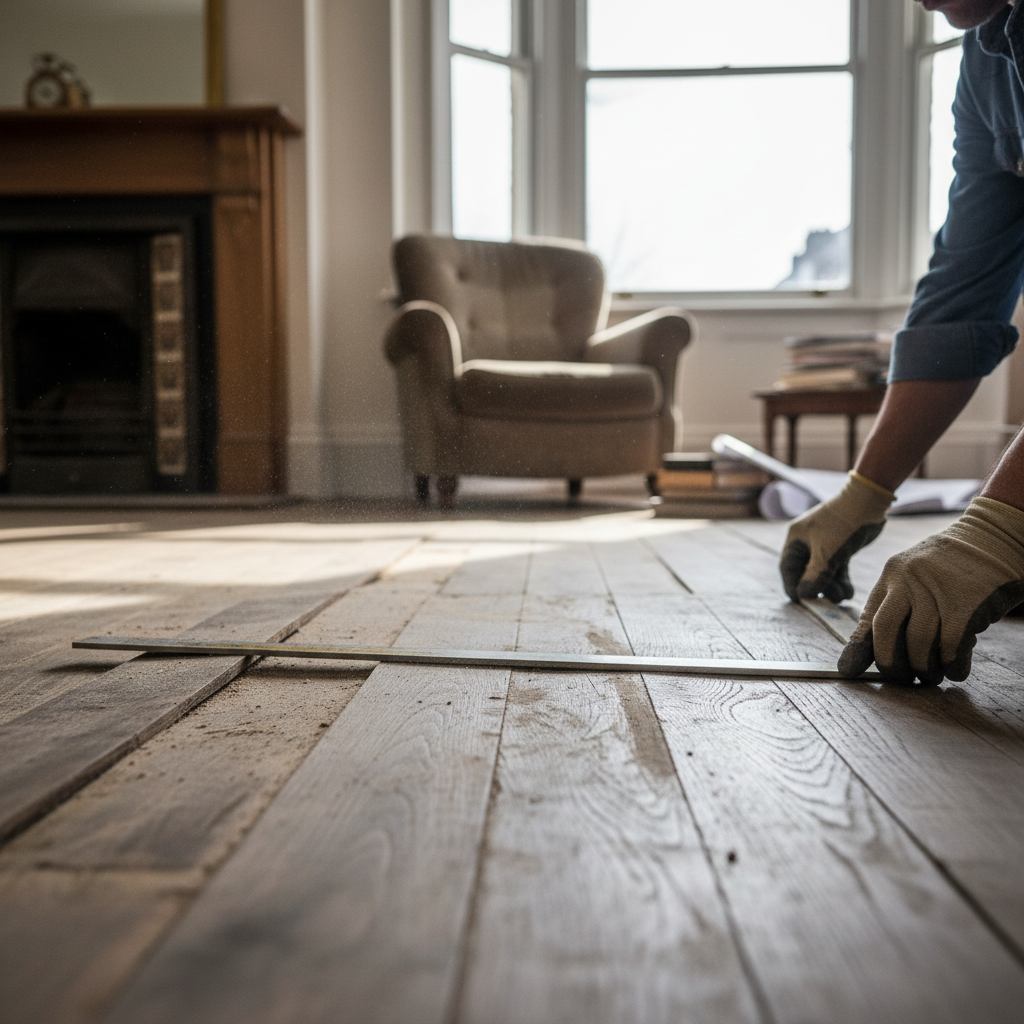
A common call out I receive is to a relatively new engineered wood floor that no longer appears flat. The homeowner will describe how the boards have developed a concave, dipped shape, or are arching upwards along their length. This distortion is a clear sign that something is amiss with the floor or the environment it is in. Understanding why engineered wood flooring cups and crowns is the first step in identifying the cause and finding a resolution.
In my experience, the problem is most often related to a moisture imbalance within the boards themselves. The floor is reacting to its environment, and the shape it takes is a direct physical result of that reaction.
What are cupping and crowning?
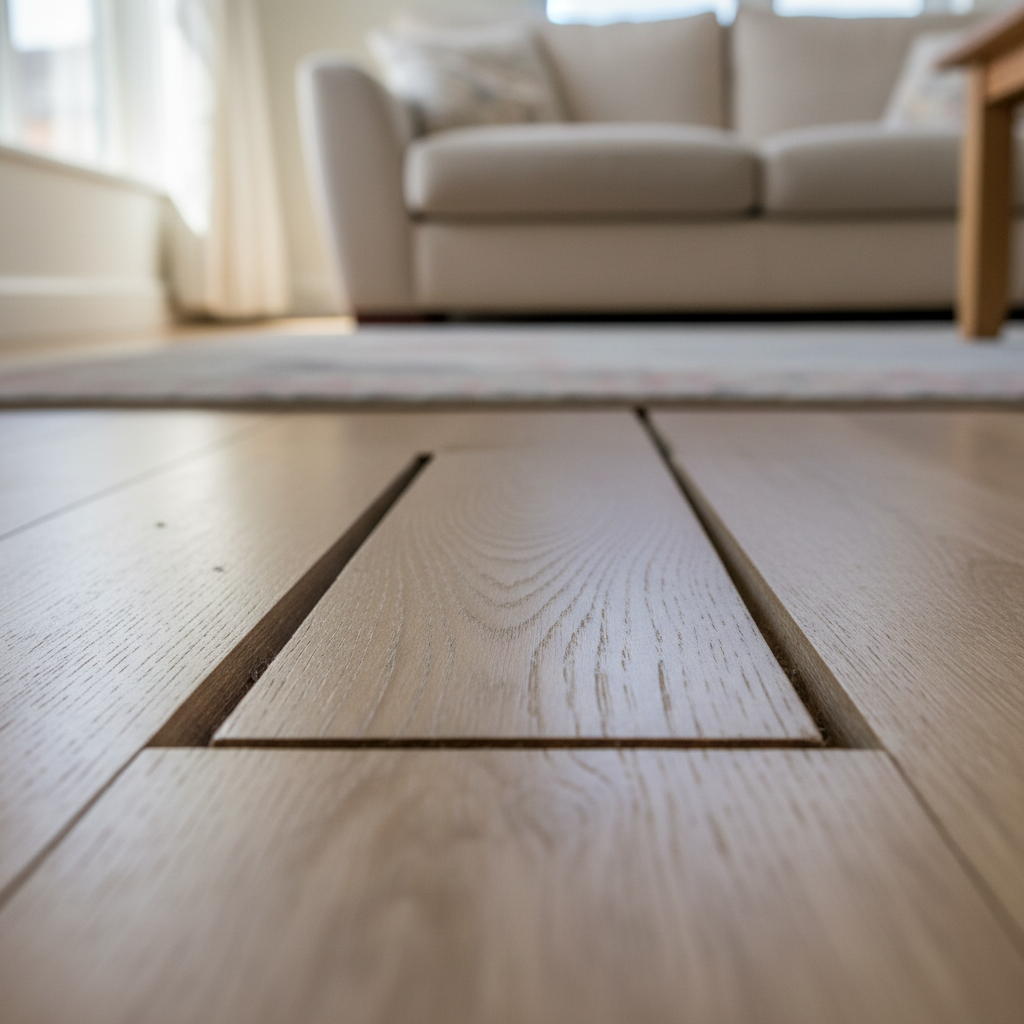
It is useful to first define the terms. When a floor 'cups', the edges of the plank are higher than the centre, creating a concave or 'U' shape across its width. 'Crowning' is the opposite, where the centre of the plank is higher than its edges, creating a convex or slight arch.
Engineered wood is constructed from multiple layers of material, typically plywood or a similar composite, bonded together with a top layer or 'wear layer' of solid wood. This construction makes it more dimensionally stable than a solid wood floor. However, it is not immune to the effects of moisture. When one part of the board absorbs more moisture than another, the wood fibres expand, and this differential movement causes the board to change shape.
So why engineered wood flooring cups and crowns
The primary cause of cupping is excessive moisture present on the underside of the flooring. This moisture is absorbed by the bottom layers of the engineered board, causing them to expand. The top surface, in a drier environment, does not expand as much. This imbalance forces the edges of the board to curl upwards. The source of this moisture is very often a sub-floor that has not been correctly prepared or has become damp. A new concrete slab that has not been allowed to dry sufficiently, or an older one without an effective damp proof membrane, is a frequent finding in my reports.
Crowning can be more complex. It can occur when there is more moisture on the surface of the floor than on the bottom. This might be caused by a water leak, very high humidity in the room, or consistently using wet cleaning methods. Crowning can also be an unintended consequence of attempting to fix a cupped floor. If a cupped floor is sanded flat before the underlying moisture issue is resolved and the boards have returned to a normal moisture content, the boards may then crown as they dry out and the bottom layers contract back to their original size.
Before you call an inspector: what can you check?
Before engaging a professional, there are a few simple observations a homeowner can make. These checks do not replace a formal inspection but may provide useful context.
- Expansion Gaps: Check the perimeter of your floor. Is there a small gap between the edge of the flooring and the walls or skirting boards? British Standards such as BS 8201 recommend an expansion gap to allow the entire floor to move as a single unit with changes in temperature and humidity. If the flooring is fitted tight against a wall, this can cause pressure and distortion as it expands.
- Visible Water Sources: Look for any obvious signs of water. Check under radiators, near external doors, and around appliances in a kitchen. A small, persistent leak can introduce a significant amount of moisture into a sub-floor over time.
- Sub-floor Ventilation: If you have a suspended timber ground floor, check the air bricks on the outside of your property. These are vital for providing ventilation to the sub-floor void and preventing a build-up of damp. Ensure they are not blocked by soil, paving, decking or other obstructions.
What an inspector looks for on site
When I am called out to a job like this, my investigation is methodical and evidence-based. My first action upon attendance is to measure and record the ambient conditions in the room: the temperature and the relative humidity. These readings provide a baseline for the environment the floor is living in.
I then conduct a series of moisture readings. Using a non-invasive moisture metre, I can survey the entire floor surface to identify patterns and areas of concern. This is often followed by readings with a pin-type metre for more specific data. Critically, my inspection will always seek to establish the moisture condition of the sub-floor. This may involve seeking permission to carefully lift a board to gain access. On concrete sub-floors, I will use a specialist concrete moisture metre or, where required, conduct a formal surface hygrometer test in accordance with BS 8203. No evidence of a functioning damp proof membrane or elevated moisture readings in the sub-floor are significant findings.
Finally, I will ask for any documentation relating to the installation. Acclimatisation is a key part of any successful wood flooring installation. The flooring should be left in the room where it will be installed for a set period to allow it to adjust to the ambient conditions. In my professional opinion, a failure to do this is a common contributing factor to flooring failures.
When to call an independent inspector
If you have identified a problem with your floor and cannot reach an agreement with your retailer or installer, an independent report is the appropriate next step. A report from a certified inspector provides an impartial, factual assessment of the floor, which can be used to help resolve disputes.
I conduct inspections across the entire UK and am a registered and trusted inspector for the Furniture and Home Improvement Ombudsman. My reports are designed to be clear, evidence-based, and fair to all parties. I offer several inspection levels, from Silver to Diamond, to suit different requirements. To discuss your specific situation, please review my packages or get in contact.
Have a flooring problem of your own?
We are independent UK flooring inspectors. Tell us about your case and we will recommend the right inspection package, with a fixed fee in writing before any work begins.