
Why Engineered Wood Flooring Cups and Crowns
Understanding why engineered wood flooring cups and crowns comes down to moisture readings and site conditions. Here is what an independent report reveals.
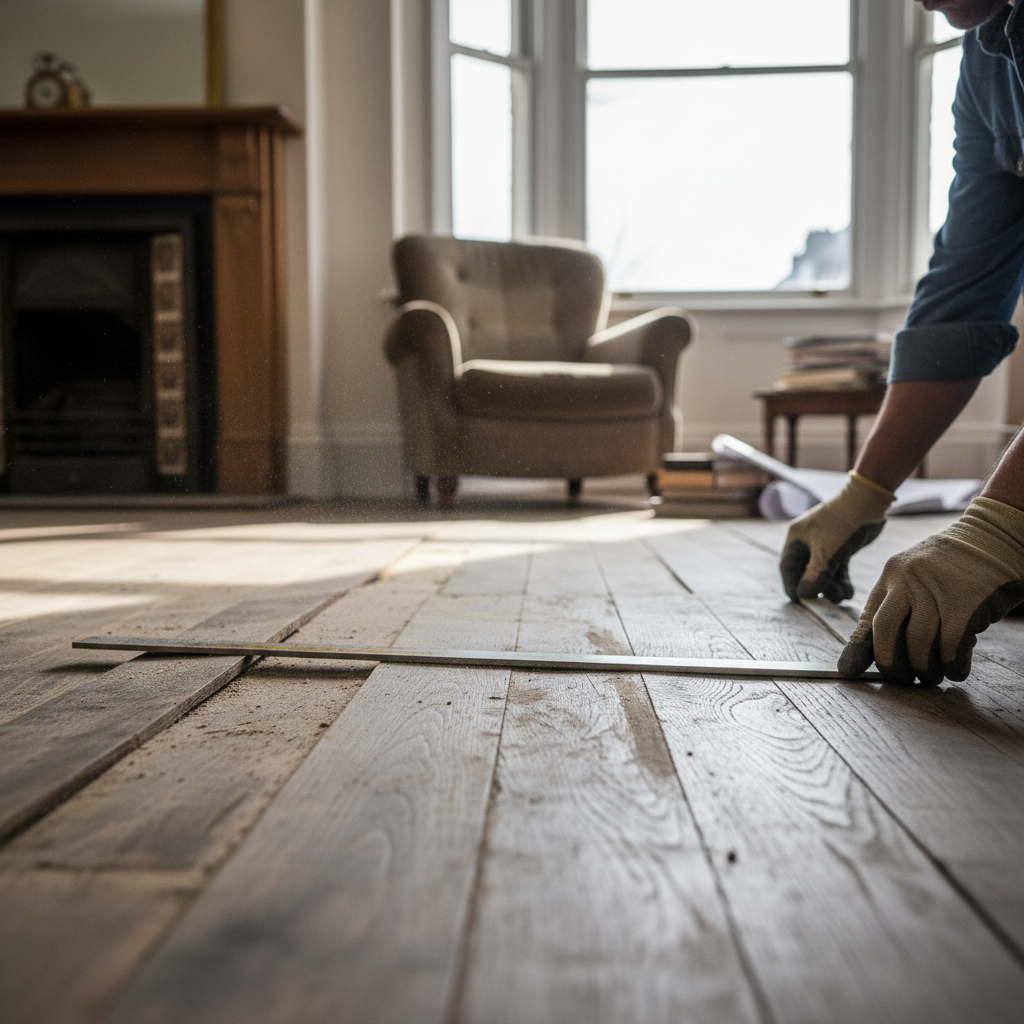
When I step into a hallway and feel ripples underfoot, the discussion between the homeowner and the fitter is usually already strained. Both parties often look at the distorted boards and point fingers in opposite directions. Understanding why engineered wood flooring cups and crowns requires looking past the surface finish and examining what is happening within the structure of the timber itself.
In most homes, people choose engineered boards because they believe the cross-laminated plywood core makes the floor completely stable. While engineered construction reduces movement compared to solid timber, the boards still respond to moisture. When the environment changes unevenly, the timber moves.
What cupping and crowning actually look like on site
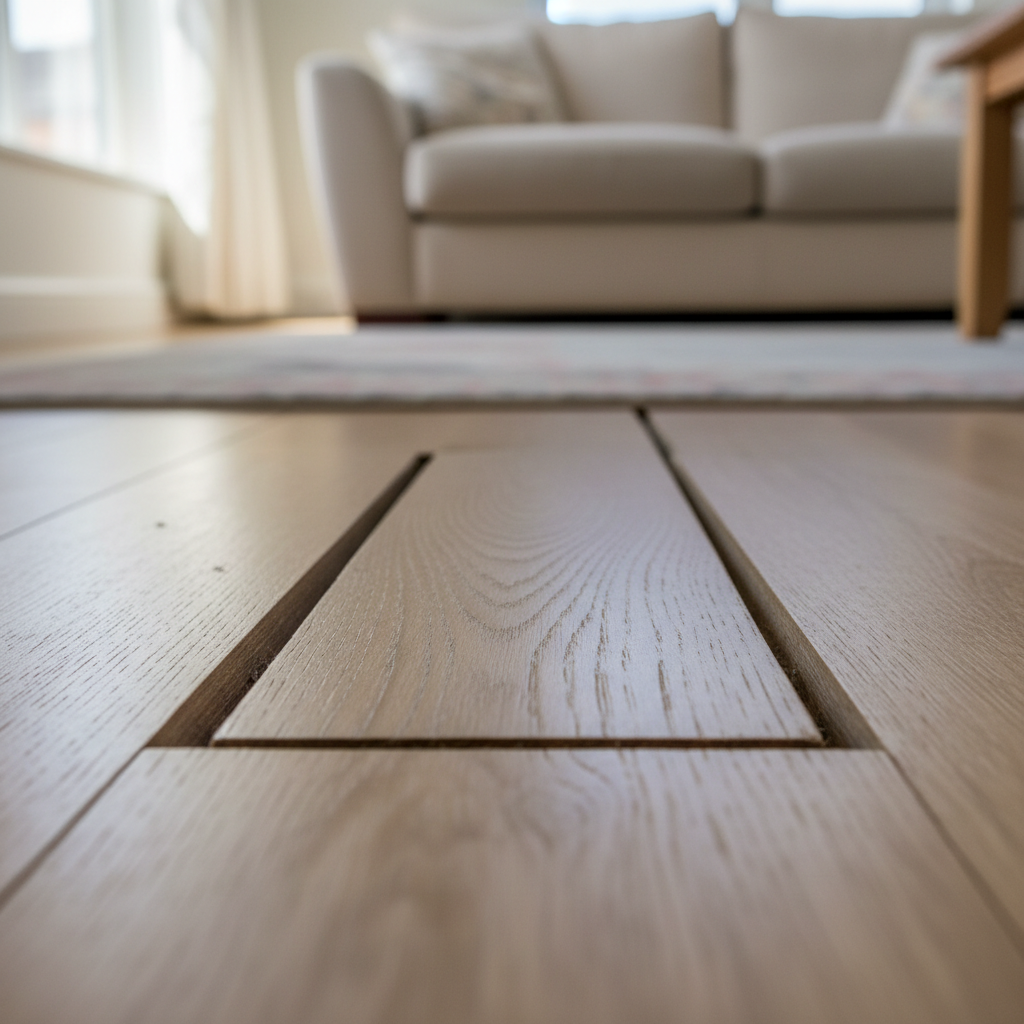
On site, the physical shape of the board tells an immediate story. Cupping occurs when the edges of an individual plank rise higher than its centre, creating a concave profile across the width of the board. When you run your hand across a cupped floor, you can feel distinct ridges along every joint line.
Crowning is the exact reverse. The centre of the plank humps upward, leaving the edges lower. Homeowners often mistake one for the other, or find that a floor that was cupped during the winter has crowned by early summer.
In my professional opinion, these shapes are not random manufacturing faults in the vast majority of cases. They are the direct physical result of a moisture imbalance between the top wear layer of hardwood and the softwood or plywood backing beneath it. Timber expands as it absorbs moisture and contracts as it dries out. When one face of the plank absorbs more moisture than the other, the wetter side swells more, forcing the plank to bend.
Why engineered wood flooring cups and crowns
Investigating why engineered wood flooring cups and crowns invariably leads back to site conditions during or after installation.
Cupping is most commonly caused by excess moisture entering the underside of the plank. When an uninsulated or damp concrete screed releases vapour into the sub-floor void without an effective damp proof membrane, the lower layers of the engineered board absorb that vapour. The backing expands, but the top surface exposed to the dry room air stays relatively stable. The result is an upward curl along the edges.
In other cases, cupping happens from above if ambient relative humidity drops dramatically. If a homeowner turns on underfloor heating too quickly or runs high central heating in dry winter conditions, the top oak wear layer can dry out and shrink rapidly while the lower plies remain stable.
Crowning, conversely, often occurs when a floor that was previously cupped is sanded flat before the underlying moisture issue is resolved. Once the sub-floor finally dries out, the expanded bottom layers shrink back, pulling the edges down and leaving the sanded centre raised. Crowning can also develop if high surface moisture, such as regular wet mopping or an undetected plumbing leak, saturates the top face of the board while the underside stays dry.
A failure to follow basic acclimatisation guidelines also plays a significant part. If packs are brought straight from a cold delivery vehicle and laid immediately over an unheated sub-floor, the boards will inevitably distort as the building reaches normal living conditions.
The moisture and humidity readings that decide disputes
When an independent inspector attends site, we do not rely on visual opinion alone. Resolving a dispute requires objective readings taken with calibrated instruments.
On a typical inspection, I use both non-destructive pinless radio frequency metres and invasive electrical resistance pin metres. By driving insulated pins to varying depths through the wear layer and into the core backing, I can measure the moisture gradient across the board thickness.
If readings at the bottom of the board are substantially higher than those near the surface, that establishes clear physical evidence of moisture rising from the sub-floor. Conversely, if the wear layer holds more moisture than the backing, the issue originated from the living space above.
For concrete sub-floors, surface readings are rarely enough. Following the principles of BS 8201, which sets out the code of practice for installing wood flooring, we evaluate sub-floor moisture using surface-mounted hygrometer boxes or in-situ sleeve probes. These instruments measure the equilibrium relative humidity of the screed.
At the time of inspection, checking perimeter expansion gaps is equally necessary. If a floor expands against skirting boards or door frames, the resulting lateral pressure can lift boards off the sub-floor, creating distortions that mimic true moisture cupping.
What an independent report can prove
When retailers, contractors, and homeowners reach an impasse, an independent technical report provides clarity. Based on the findings gathered on site, the report separates speculation from physical evidence.
An independent report establishes:
- Whether moisture levels within the sub-floor complied with recognised British Standards prior to laying.
- The exact moisture differential across the plank profile to confirm whether water entered from above or below.
- Whether adequate perimeter expansion was provided beneath skirting boards and door thresholds.
- The operational status of the indoor environment, including ambient temperature and air humidity.
In my experience, no evidence of manufacturer defect is identified in most cupping disputes. Instead, the data usually points either to sub-floor preparation failings, missing damp proofing, or environmental shock within the property. Having this documented in a formal, evidence-based report allows parties to resolve the matter fairly, whether through negotiation or formal dispute channels.
When to call an independent inspector
If you are dealing with distorted boards and cannot reach agreement with your installer or supplier, obtaining an independent inspection is sensible. I provide independent assessments across the entire United Kingdom, delivering formal reports trusted by the Furniture and Home Improvement Ombudsman as well as court proceedings.
Whether you require a standard assessment or a comprehensive forensic investigation, you can review my Silver, Gold and Diamond inspection packages to find the right level of service. If you would like to discuss your floor before booking, please feel free to contact me directly.
Have a flooring problem of your own?
We are independent UK flooring inspectors. Tell us about your case and we will recommend the right inspection package, with a fixed fee in writing before any work begins.