
Why LVT Lifts, Telegraphs and Gaps
An independent inspector explains why LVT lifts, telegraphs and gaps, debunking common retailer myths about sub-floor prep, adhesives, and underfloor heating.
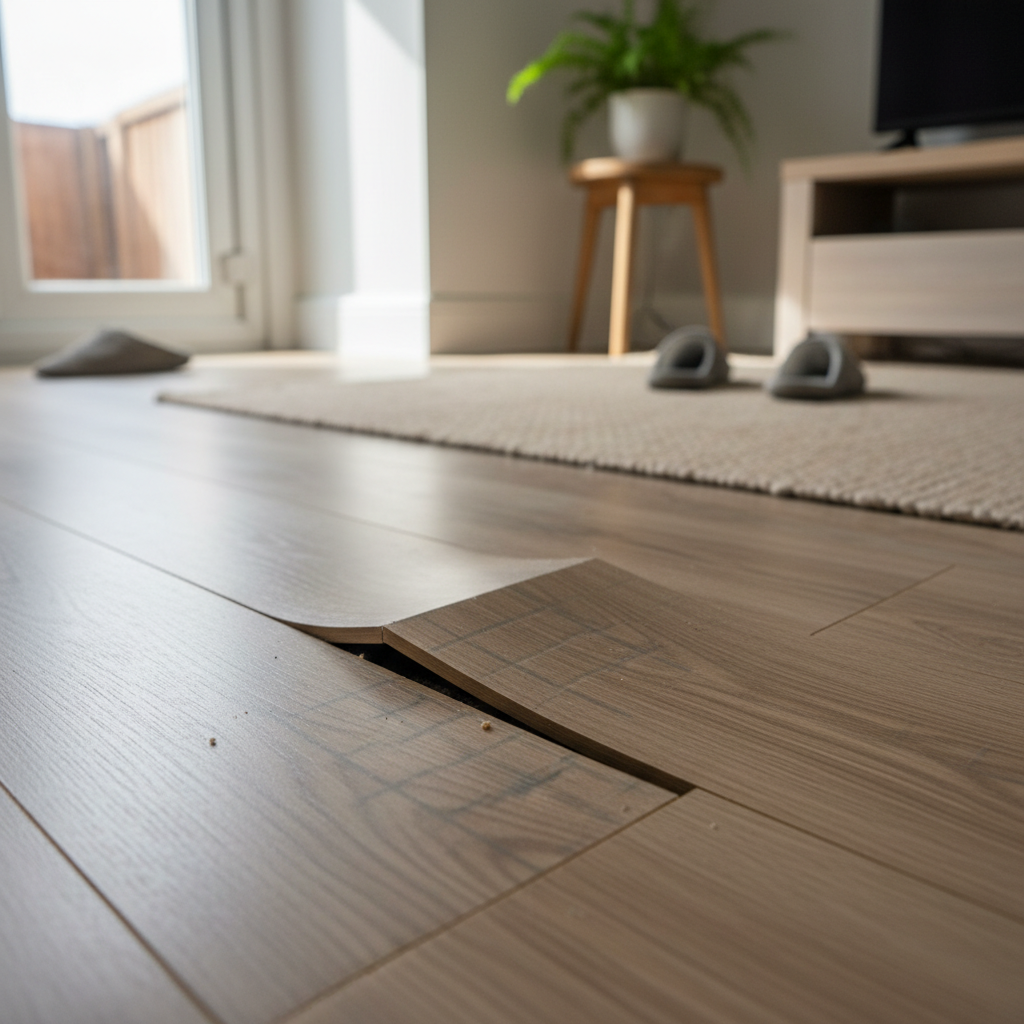
A common site visit begins with a homeowner showing me a kitchen floor that looked pristine six months ago, but now displays distinct ridges, raised tile edges, or open joints. Frequently, the retailer has already inspected the site or reviewed photographs, leaving the client with an explanation that blames domestic cleaning routines or natural building movement. In reality, understanding why LVT lifts, telegraphs and gaps requires looking past these standard dismissals and examining the physical build-up below the decorative wear layer.
Luxury vinyl tile is a flexible product that mirrors whatever sits beneath it. When installed correctly over a sound, flat, and dry base, it behaves remarkably well. When short-cuts occur during the preparation stages, the floor will eventually register those errors on the surface.
Retail excuses and why LVT lifts, telegraphs and gaps
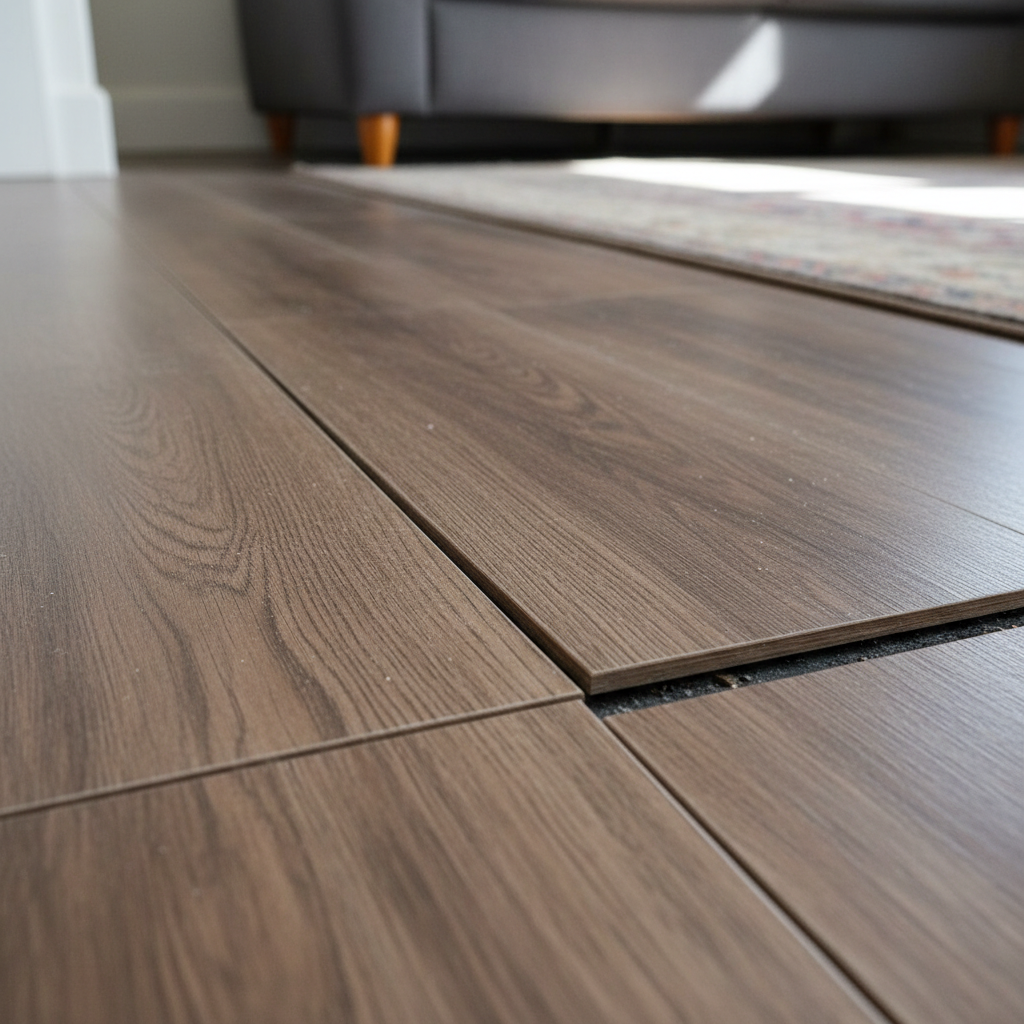
When a floor develops faults, homeowners often contact the supply-and-fit company only to receive a defensive response. In my experience, certain explanations recur with predictable regularity across dispute cases.
Clients are routinely told that the house has settled, that the room was mopped with too much water, or that the temperature swings in a modern kitchen are simply too demanding for the floor. Another frequent claim is that everyday foot traffic has dragged the tiles apart. In my professional opinion, these explanations rarely hold up under close technical scrutiny.
While direct liquid ingress through unbonded seams can affect an installation, surface damp mopping does not cause tiles to curl upwards or slide across a room unless the adhesive bed has already failed. Similarly, minor structural settling in a property does not make individual vinyl planks gap at random intervals across a hallway. When clients ask why LVT lifts, telegraphs and gaps in open-plan areas, the evidence gathered on site almost always points to sub-floor preparation, glue selection, or thermal management rather than homeowner maintenance.
Sub-floor preparation and telegraphing
Telegraphing occurs when imperfections in the sub-floor translate directly through the vinyl, showing up as visible lines, bumps, or trowel marks in raking light. Because LVT is relatively thin and malleable, it cannot bridge voids or flatten ridges on its own.
British Standard BS 8203, which covers the installation of resilient floor coverings, sets clear expectations for sub-floor smoothness and level. On site, I routinely find that telegraphing stems from one of three preparation faults:
- Plywood sheets fitted over floorboards without adequate fixing centres, or with joint gaps that were not skimmed with a suitable feathering compound.
- Smoothing compounds applied without proper surface preparation, leaving ridges, pinholes, or trowel marks frozen into the screed.
- Inadequate cleaning prior to adhesive application, leaving grit, drywall screws, or old adhesive residues trapped directly under the tiles.
During an inspection, running a hand over the affected area or placing a precision straightedge across it reveals the truth. If a visible line in the vinyl corresponds precisely with a seam in the plywood sub-structure beneath, the problem is not product failure. It is sub-floor telegraphing caused by improper timber preparation.
Incompatible adhesives and lifting edges
When tiles lift at the perimeter, peak at the seams, or release completely from the floor, the adhesive bond has failed. Installers must match the adhesive to the environmental conditions of the room.
A standard pressure-sensitive adhesive allows for easy placement and good initial grab, but it remains pliable. In areas subject to solar gain, such as south-facing patio doors, bi-fold extensions, or glazed conservatories, standard adhesives soften. As the vinyl warms up, it naturally expands. If the adhesive cannot restrain that movement, the tiles tent upwards at the joints. When the room cools, the material contracts, but because the tiles have shifted, they fail to return to their original position, leaving permanent peaks and gaps.
Moisture within the base slab is another leading cause of adhesion loss. At the time of inspection, testing the sub-floor with non-destructive impedance metres and calibrated hygrometer equipment often reveals elevated relative humidity. If an installer laid smoothing compound and vinyl over a concrete slab without checking for damp or installing an appropriate surface damp-proof membrane, moisture vapour breaks down the bond over time. When I lift an affected tile during an assessment, no evidence was identified of sound adhesive transfer, showing only a wet, emulsified paste or dry, unbonded ribs.
Underfloor heating limits and gap formation
Underfloor heating systems are increasingly common beneath luxury vinyl tile, but they require strict operating protocols. British Standards and product manufacturers state that the surface temperature of the sub-floor must not exceed twenty-seven degrees Celsius.
When heating systems are forced on too quickly after installation, or run at excessively high temperatures, the vinyl undergoes severe thermal shock. High heat softens the tiles and strains the adhesive. If the system is subsequently shut off, the vinyl contracts sharply. This rapid shrinkage pulls seams apart, leaving visible gaps between planks that cannot close naturally again.
Furthermore, heating pipes or cables buried at inconsistent depths within a screed create localised hot spots. In those specific areas, the floor will expand and contract at a different rate to the rest of the room. Based on the findings of thermal imaging cameras during winter surveys, gaps frequently correspond directly with uninsulated pipe runs beneath the screed.
In almost every case where an installation fails, the root explanation for why LVT lifts, telegraphs and gaps often traces back to the installer rushing past moisture tests, using the wrong adhesive specification, or failing to prepare a truly flat surface.
When to call an independent inspector
If your luxury vinyl floor is failing and the retailer or installer insists the issue is down to your cleaning habits, household heating, or normal wear, an independent inspection can clarify the true cause. An objective, evidence-based report provides the technical facts required to resolve disputes fairly.
I provide independent flooring inspection services across the entire UK and am trusted by the Furniture and Home Improvement Ombudsman to assess domestic and commercial flooring failures. You can review my Silver, Gold and Diamond inspection packages to see which service suits your dispute, or contact me directly to discuss your situation.
Have a flooring problem of your own?
We are independent UK flooring inspectors. Tell us about your case and we will recommend the right inspection package, with a fixed fee in writing before any work begins.